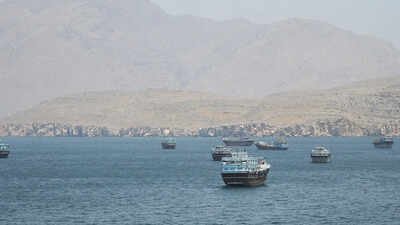
Persian Gulf energy producers are reportedly becoming increasingly resigned to Iran retaining significant control over the Strait of Hormuz, as efforts to reopen the vital waterway face a standoff and regional governments weigh the risks of renewed war against disruption to oil and gas exports.A proposed arrangement to reopen the strategic waterway has become the preferred option for several Gulf states despite their concerns over Iranian oversight, as per a report by Wall Street Journal. The alternative, they fear, is a wider US-Iran confrontation that could put oil, gas, power and water facilities across the region at greater risk.Although, negotiations have stalled in recent days. Iran is seeking financial relief and a prohibition on US and Israeli warships in the strait, while Washington has rejected any arrangement that would allow Tehran to impose restrictions on shipping.The impasse has prolonged the disruption to one of the world’s most important energy routes. Oil shipments through Hormuz have fallen sharply since the conflict began, with Kpler estimating crude exports at around 2.2 million barrels per day last week, compared with about 8.5 million barrels a month earlier. Before the war, the waterway carried roughly 20 million barrels of oil and petroleum products a day.
Struggle to find alternatives
Regional producers have tried to keep exports moving without relying entirely on the strait, but those efforts have offered only limited protection.The UAE managed to bring its oil exports back to prewar levels by mid-year by routing oil across the desert around the Hormuz blockade and moving some ships through the strait, according to ship tracker Vortexa. Those gains have since been eroded by Iranian attacks.Saudi Arabia has also used an alternative export route, pumping oil across the desert to a port on the Red Sea. But that route has come under attack from the Iran-backed Houthi militia in Yemen.The threat has extended beyond the Gulf. A drone attack on a gas tanker at Egypt’s port of Damietta, which set two ships on fire, meaning that energy shipments remain vulnerable even outside Hormuz.“In this background the Arab Gulf states cannot really ensure complete safety and openness of the Strait of Hormuz and can no longer rely upon it for transport or trade,” said Umer Karim, a researcher in Gulf security matters at the University of Birmingham. “Thus there is no other option for now but to concede to a degree to Iranian demands.”The wider security threat is also making alternative routes harder to rely on. Between February 28 and July 30, Iran and allied militias in Iraq carried out at least 172 attacks on non-military infrastructure across the six Arab Gulf states, according to the Armed Conflict Location and Event Data project. Energy facilities, including oil infrastructure, gas plants, power stations and desalination facilities, accounted for about half of those.Gulf states are consequently looking at longer-term ways to reduce their dependence on Hormuz, including expanding pipelines to the Red Sea and Gulf of Oman and increasing storage capacity. Producers have also tried moving cargoes through the strait with their location beacons switched off.
Why Gulf states may accept ‘bad deal’
The immediate concern for Gulf governments is that renewed fighting could cause even greater damage to energy infrastructure and further deter foreign investment and tourism.Oil prices have eased from their wartime highs amid subdued demand in major economies, but global inventories have fallen by more than 400 million barrels over the past six months. That leaves the market with less of a cushion against another supply shock.Iranian officials have also signalled that reopening Hormuz will come with conditions. Foreign Ministry spokesman Esmail Baghaei said Monday that the waterway would not be opened until the US stops what Tehran describes as aggressive actions and makes amends, including over the blockade of Iranian ports.For Gulf states, a temporary arrangement could therefore restore some energy flows without resolving the broader security threat.“A near-term deal to reopen the strait could ease Gulf energy shipments but wouldn’t remove the threat,” said Ellen Wald, senior fellow at the Atlantic Council’s Global Energy Center. “But ceding control over inbound and outbound traffic to Iran, even on a ‘temporary’ basis, will not resolve the larger issues and leaves their exports subject to Tehran’s whims for the foreseeable future.”Thus, the result boils down to a tough choice for region’s energy exporters: accept a degree of Iranian control over the world’s most important oil chokepoint, or risk a wider conflict that could threaten both their energy infrastructure and global supplies.