While many science fair winners build robots, develop medical technologies or tackle climate challenges, one 18-year-old student from Bulgaria impressed judges with something far less visible but equally powerful: pure mathematics. Nikola Veselinov, a student at the Sofia High School of Mathematics, developed a new mathematical theorem that explains when certain equations cannot be solved using basic mathematical functions. His research earned him the prestigious $75,000 Regeneron Young Scientist Award at the 2026 Regeneron International Science and Engineering Fair (ISEF), the world’s largest pre-college STEM competition.His work stood out among more than 1,700 finalists from around the world, demonstrating how abstract mathematical ideas can help answer questions that have challenged mathematicians for centuries while opening new possibilities for physics and engineering.
A mathematical mystery that goes beyond classroom algebra
Many equations taught in school can be solved using familiar mathematical operations such as addition, subtraction, multiplication, division, roots and logarithms. However, mathematicians have long known that some equations resist these standard methods.Nikola focused on these difficult cases, studying equations of the form f(x) = a that cannot be solved exactly using basic mathematical functions. Instead of examining isolated examples, he searched for a common mathematical principle that explained why these equations become unsolvable in the traditional sense.According to the Center for Excellence in Education (CEE), he combined advanced concepts from topology, symmetry and Galois theory to identify the conditions under which such equations cannot be solved using elementary functions. By bringing together these different branches of mathematics, he developed a new theorem that offers a broader framework for understanding these complex problems.Rather than finding numerical answers to individual equations, his research explains the mathematical rules that determine when exact solutions are impossible.
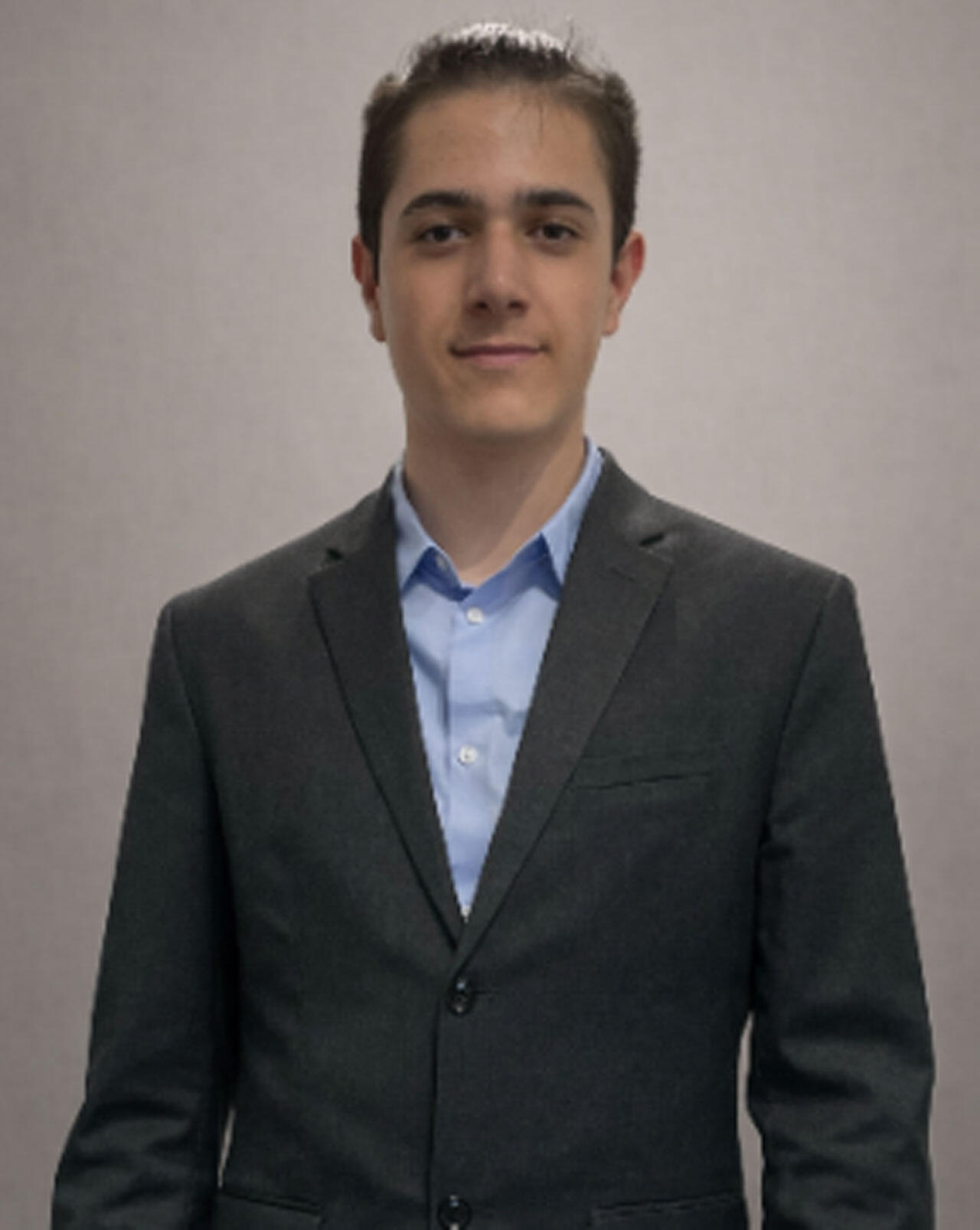
Bulgarian teen wins $75,000 global science award after solving a maths puzzle that challenged algebra for centuries
Combining advanced mathematical ideas into a single theorem
Nikola’s work demonstrates how different areas of mathematics can work together to solve longstanding theoretical questions.Topology studies the properties of shapes and spaces that remain unchanged even when they are stretched or bent. Symmetry helps mathematicians understand patterns and transformations, while Galois theory explores why certain equations can—or cannot—be solved using algebraic methods.By connecting these concepts, Nikola created a unified mathematical approach that identifies when an equation crosses the boundary from being solvable to fundamentally unsolvable using elementary mathematical functions.Although highly theoretical, such research forms the foundation for many practical scientific fields. Mathematical models describing physical systems, wave motion, engineering problems and the movement of objects through space often rely on complex equations. Better understanding the limits of those equations can help researchers choose more appropriate mathematical tools and improve future models.
Recognition at the world’s largest student science competition
Nikola presented his research at the 2026 Regeneron International Science and Engineering Fair (ISEF), where students from around the globe showcased original research across mathematics, engineering, environmental science, biology and physics.His mathematical theorem earned him the competition’s highest individual honour—the $75,000 Regeneron Young Scientist Award. The recognition celebrates students whose research combines scientific excellence with the potential to make a lasting contribution to their field.Following his success at ISEF, Nikola will also attend the prestigious Research Science Institute (RSI), organised by the Center for Excellence in Education in collaboration with the Massachusetts Institute of Technology (MIT). The internationally renowned summer research programme brings together some of the world’s most talented high school students to conduct advanced scientific research under expert mentorship.
From abstract equations to future scientific discoveries
Unlike inventions that can be held in the hand or tested in a laboratory, mathematical discoveries often begin with ideas. Yet history has shown that today’s abstract mathematics frequently becomes tomorrow’s scientific breakthrough.Nikola Veselinov’s research illustrates this perfectly. By investigating why some equations cannot be solved using conventional mathematical methods, he has contributed a fresh perspective to one of mathematics’ enduring challenges.His achievement also highlights the growing impact of young researchers on global science. At just 18 years old, Nikola demonstrated that curiosity, persistence and deep mathematical thinking can lead to discoveries recognised on the world’s biggest student science stage.Disclaimer: This article is based on information released by the Center for Excellence in Education (CEE) regarding the 2026 Regeneron International Science and Engineering Fair (ISEF). The potential scientific applications described are based on the information shared by the organisers and the student’s research summary.