
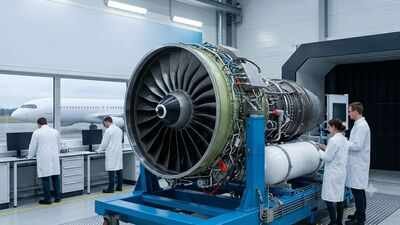
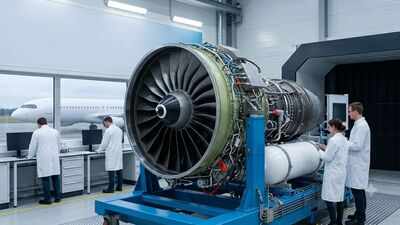
Hydrogen-powered flight has often been discussed as one of aviation’s possible long-term answers to cutting emissions, but moving from research programmes to commercial aircraft has remained a difficult task. That landscape may now be beginning to change. As reported in the official press release, Airbus and Germany’s MTU Aero Engines have announced plans to create a dedicated joint venture that will focus entirely on hydrogen fuel cell propulsion systems, bringing together expertise that has until now been developed separately. Rather than simply expanding an existing partnership, the companies intend to establish a standalone business responsible for taking the technology through each stage, from engineering and testing to certification and eventual market introduction. The venture is expected to begin operating in 2027, pending regulatory approval, and reflects a broader effort within Europe’s aerospace sector to prepare technologies that could support lower-emission commercial aviation in the decades ahead.
Airbus and MTU Aero Engines plan a hydrogen propulsion joint venture
The planned joint venture will concentrate on building electric propulsion systems powered by hydrogen fuel cells for future aircraft. Instead of splitting responsibilities across different organisations, Airbus and MTU aim to place the entire development process within one company, allowing engineers, certification specialists and manufacturing teams to work under the same structure.The decision follows a memorandum of understanding signed by the two companies during the Paris Air Show in 2025. Since then, discussions have moved beyond research cooperation towards creating a business that can eventually deliver products suitable for commercial aviation.Airbus’ press release reveals that Bruno Fichefeux, Head of Future Programmes at Airbus, said, “Our planned joint venture is the next logical step in our shared vision of a hydrogen-based propulsion concept for aviation,”.“By pooling our respective technology and expertise into a dedicated entity, we are establishing a European powerhouse capable of transforming advanced research into industrialised, certifiable electric propulsion systems. This new company will help secure strategic sovereignty in the next generation of aviation technologies while strengthening our ability to achieve the long-term ZEROe ambition.”Airbus believes combining resources in this way will shorten development timelines while helping Europe retain expertise in advanced aircraft propulsion technologies.
How hydrogen fuel cells differ from jet engines
Unlike today’s aircraft engines, which burn aviation fuel to generate thrust, hydrogen fuel cell systems produce electricity through a chemical reaction between hydrogen and oxygen. That electricity powers electric motors connected to propellers or ducted fans, depending on the aircraft design.The process does not involve combustion in the conventional sense, and the reaction produces water as its primary by-product. While this offers the possibility of reducing carbon emissions during flight, engineers still face major technical challenges involving power output, weight, storage of liquid hydrogen and integration into commercial aircraft.Developing a system that meets aviation safety standards while remaining practical for airline operations remains one of the industry’s biggest engineering challenges.
Airbus and MTU bring complementary expertise to hydrogen aviation
Each partner is expected to contribute different strengths to the new venture.Airbus brings experience in commercial aircraft design together with years of research into liquid hydrogen storage and fuel cell propulsion under its ZEROe programme. MTU Aero Engines, meanwhile, has longstanding expertise in aircraft engine engineering, certification, maintenance and propulsion integration, alongside several years of work on hydrogen fuel cell technologies.According to Airbus, establishing a dedicated company should make it easier to convert laboratory research into propulsion systems that can eventually satisfy certification requirements for passenger aircraft.MTU also views the venture as an opportunity to expand beyond its traditional role as an engine manufacturer by participating throughout the entire life cycle of hydrogen-powered propulsion systems, from development and testing to long-term commercial support.
Airbus moves hydrogen research towards production
The announcement fits into Airbus’ broader strategy to examine several hydrogen-powered aircraft concepts through its ZEROe initiative. Rather than pursuing a single design, the programme is assessing different technologies that could support cleaner aviation in the future. Hydrogen fuel cells represent one possible route. Other concepts continue to be studied as the company evaluates which technologies can meet commercial performance, operational requirements and environmental targets.Creating a separate business dedicated to propulsion reflects a shift from early-stage research towards preparing technologies that could eventually enter industrial production if technical and regulatory milestones are achieved.
The infrastructure challenge still lies ahead
Developing an engine is only one part of introducing hydrogen-powered aircraft into airline service.Airports would require entirely new systems for producing, transporting, storing and refuelling hydrogen. Aircraft manufacturers, fuel suppliers, airport operators and regulators would all need to establish standards covering safety, handling procedures and certification before commercial operations could become routine.Those wider changes are expected to take years, and both Airbus and MTU have acknowledged that continued cooperation with governments, industry partners and aviation authorities will be necessary before hydrogen aircraft become a practical option for airlines.The planned joint venture does not remove those challenges, but it marks a further industrial commitment towards developing propulsion technology that could play a role in the aviation sector’s longer-term transition to lower-emission flight.