
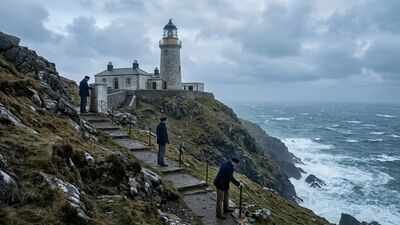
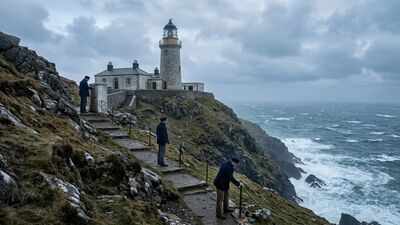
In the final days of 1900, an ordinary relief visit to one of Scotland’s most isolated lighthouses turned into one of the country’s most enduring historical mysteries. Three experienced lighthouse keepers stationed on Eilean Mor, the largest of the Flannan Islands, had vanished without trace. No bodies were recovered, no witness ever came forward and no explanation has gained universal acceptance. More than a century later, the case continues to sit in an uneasy space between documented fact and folklore. Official records provide a handful of solid details, while later retellings have added layers of mystery that are often difficult to separate from the original events. That uncertainty is exactly what has kept the disappearance alive in public memory.
The lonely Eilean Mor lighthouse and its three keepers
Eilean Mor lies off Scotland’s Outer Hebrides, surrounded by powerful Atlantic waters and steep cliffs that make access difficult even in favourable weather. Apart from its lighthouse, the island had no permanent population. It had long been associated with local traditions linked to St Flannan, an Irish cleric from the sixth century, and stories passed through generations gave the island an unusual reputation. Shepherds sometimes brought animals there to graze but were said to avoid remaining overnight.By the end of the nineteenth century, the lighthouse had become an important navigation point for ships travelling along the western coast of Scotland. Three keepers lived on the island at any one time, maintaining the light in shifts while remaining largely cut off from the mainland for weeks at a stretch.
What the crew found inside the Eilean Mor lighthouse
As reported by the BBC, the mystery began shortly after Christmas in December 1900 when a supply vessel reached the island carrying a replacement keeper. Relief visits followed a regular schedule, and the lighthouse staff would normally be waiting at the landing area to receive supplies and greet the arriving crew.Signals from the ship produced no reply. There was no movement around the station and nothing suggested anyone was preparing to meet the visitors. One of the arriving men eventually made the climb from the landing platform to the lighthouse to investigate.The building itself appeared strangely undisturbed. Inside, signs suggested the keepers had left in haste. One outdoor oilskin remained hanging indoors while two others were gone. A meal had been left unfinished and a chair was found out of place. The clock inside had stopped. Most striking of all, the three keepers had disappeared completely.
Who were the three missing Eilean Mor lighthouse keepers
According to National Records of Scotland, four lighthouse keepers were assigned to the station. James Ducat served as the Principal Keeper, Thomas Marshall was the Assistant Keeper, and Donald McArthur was acting as the Occasional Keeper, temporarily filling in for Assistant Keeper William Ross, who was away on sick leave. Meanwhile, Assistant Keeper Joseph Moore was stationed on shore duty at Breasclete and was due to join the island as part of the routine relief rotation.All three were experienced seamen familiar with difficult weather and the demands of lighthouse service. Their disappearance therefore came as a surprise even to colleagues who understood the risks of working on remote islands.News was quickly sent to the mainland, where the Northern Lighthouse Board was informed that an apparent accident had taken place. Initial assumptions focused on the sea rather than any criminal explanation. The island’s cliffs and landing platforms had always presented hazards during rough conditions. Yet the lack of any physical evidence immediately complicated that theory.
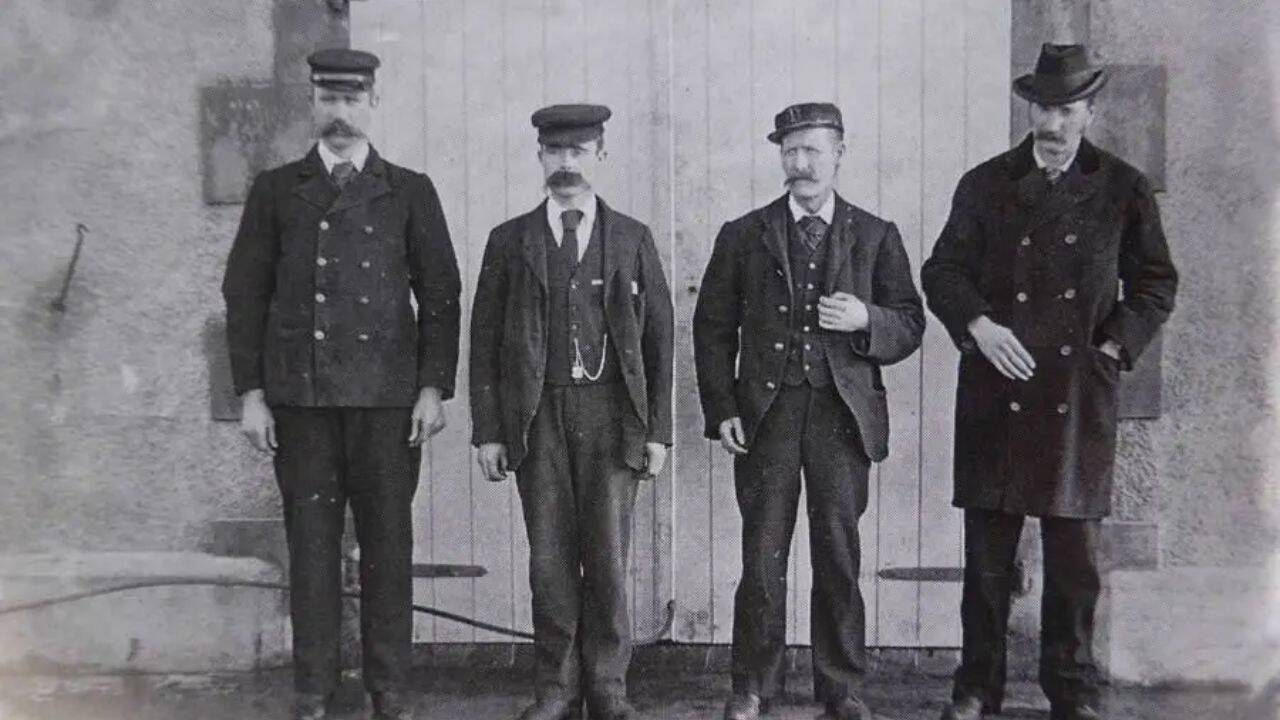
PC: National Records of Scotland
The investigation uncovered more unanswered questions
A senior official from the Northern Lighthouse Board travelled to Eilean Mor to examine the scene personally.His inspection largely confirmed what had already been reported. There were no obvious signs of violence inside the lighthouse, no evidence of a struggle and nothing to suggest that outsiders had landed on the island.Attention soon turned to the station records, including the lighthouse log. According to later accounts, the final entries described unusually severe weather over several days and referred to emotional behaviour among the keepers that seemed difficult to explain. One entry suggested the men had been praying as the storm continued, while the final recorded note stated simply that the sea had become calm and ended with the words, “God is over all.“Those entries have become some of the most discussed parts of the entire case, although historians have since questioned whether every detail attributed to the log actually appeared in the original official records.
The weather mystery that refuses to go away
The apparent contradiction between the recorded weather and independent meteorological observations has remained central to discussions about what happened. Some reports suggested the keepers experienced violent storms around the middle of December. Weather records from nearby locations, however, indicate conditions may have been relatively calm during at least part of that period, with stronger storms arriving several days later.That discrepancy has encouraged decades of speculation. It has also raised the possibility that later versions of the story may have blended factual documents with details added over time.Even without the disputed log entries, the disappearance itself remains difficult to explain.
How a rogue wave became the leading explanation
The investigation eventually concluded that the most likely cause was an accident connected with heavy seas near the western landing place.Evidence found around the shoreline suggested equipment stored near a crane had become displaced. The theory proposed that one keeper went outside to secure or recover the gear while the other two followed to assist. At some point an exceptionally large wave may have swept all three men into the sea.Although unusual, such waves are well documented around exposed coastlines. Freak waves can reach surprising heights and strike unexpectedly, particularly where steep cliffs and Atlantic swells combine.The explanation also fitted the practical nature of lighthouse work, where protecting equipment during poor weather formed part of the keepers’ responsibilities.
The unanswered details
Despite its practicality, the accident theory has never answered every question.Lighthouse regulations generally required at least one keeper to remain inside the station at all times. If all three men left together, they would have ignored standard operating procedure.The remaining oilskin coat also attracted attention. If one keeper had gone outside without suitable protection during winter, it suggested either unusual urgency or weather conditions that appeared less threatening when he stepped outside.None of the bodies was ever recovered. While that is not impossible in rough Atlantic waters, the absence of any remains helped fuel public fascination with the case.
How folklore filled the gaps
Stories surrounding the Flannan Islands soon expanded well beyond the available evidence.Local traditions already linked the islands with supernatural legends long before the lighthouse was built. Against that backdrop, the unexplained disappearance naturally invited imaginative explanations. Tales emerged of ghostly voices carried on the wind, mysterious strangers landing on the island and even fantastical theories involving unknown forces.Many of these stories appeared years after the event and have little historical support. Even so, they became closely associated with the mystery, particularly through books, poems, documentaries and television programmes.Separating documented facts from later embellishment has become increasingly difficult as the story has been retold across generations.
A mystery that remains open
More than 125 years have passed since the three lighthouse keepers were last seen, yet no definitive answer has emerged.The most widely accepted explanation remains that an unexpected wave claimed the men while they were working near the shore, a tragedy made possible by the exposed nature of the island and the unforgiving Atlantic. At the same time, the limited evidence leaves room for uncertainty, particularly where disputed log entries and conflicting weather reports are concerned.Without new evidence, the disappearance of James Ducat, Thomas Marshall and Donald McArthur is unlikely to be solved. The lighthouse still stands above the cliffs of Eilean Mor, while the fate of the three men remains one of Scotland’s most enduring maritime mysteries.