


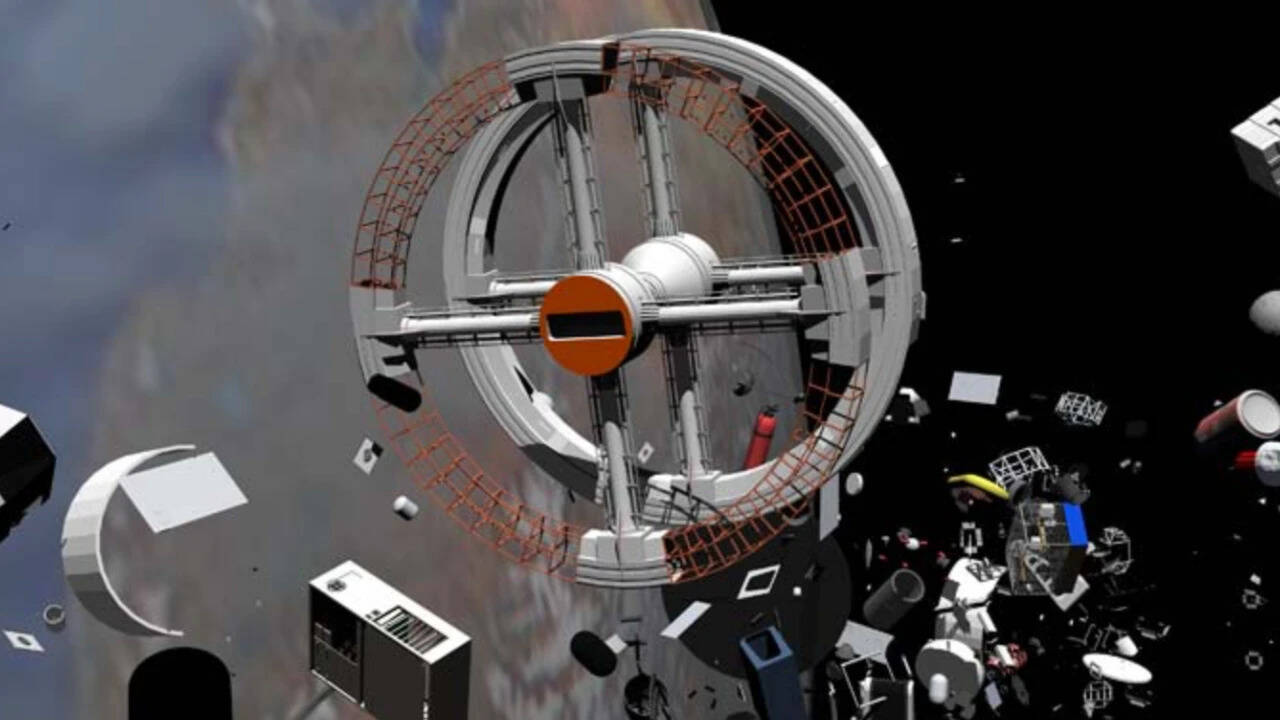
The satellite debris in space poses an immense problem in Earth’s orbit, which is increasingly crowded, especially with defunct satellites that continue to circle the planet. According to Smithsonian magazine, the United Kingdom is preparing a mission to declutter Earth’s orbit. It is preparing to tackle part of the growing problem of satellites debris with an unusual spacecraft featuring giant robotic claws. The spacecraft is designed to capture two defunct satellites and bring them down into the atmosphere to incinerate them. This is a first-of-its-kind clean-up mission due to launch in 2029, and the public can help name it.Rob Atchison, Managing Director of ClearSpace UK in a statement dated 15th October 2026 shared, “Our next step is to design, build and test a spacecraft that can get close, safely, to an object never designed to be caught, and take control of it. We will do this with partners across the UK supply chain, working towards launch in 2029.” The mission, known as the UK Active Debris Removal (UK ADR) programme, is developed with the UK Space Agency and ClearSpace UK. The project will demonstrate how specially designed robotic equipment can remove objects from orbit rather than leave them there indefinitely. Furthermore, the spacecraft is expected to complete its mission by 2032, marking a significant step toward making space operations more sustainable.
How the robotic claws will capture dead satellites
Unlike a conventional spacecraft designed to carry equipment or people, the proposed vehicle will have to approach objects that were never built to be captured. Its robotic claws are intended to grip satellites that may be moving or tumbling through space, making the operation considerably more complicated than simply reaching out and grabbing an object.
(Image credit: Wikimedia Commons)
The spacecraft will need to match the movement of its targets before attempting to capture them. This requires carefully controlled manoeuvres and precise navigation to bring the vehicle close enough to the satellites without causing an additional collision. Once secured, the spacecraft will guide them toward a lower orbit, allowing Earth’s atmosphere to slow them down and generate the heat that causes them to disintegrate during re-entry.The technology is being developed by ClearSpace UK, the British branch of an in-orbit services company specialising in spacecraft operations. The mission will use a refuelable spacecraft designed with the possibility of future use in mind, potentially opening the door to vehicles that can undertake further work in orbit instead of being discarded after a single operation.
Why removing space junk matters
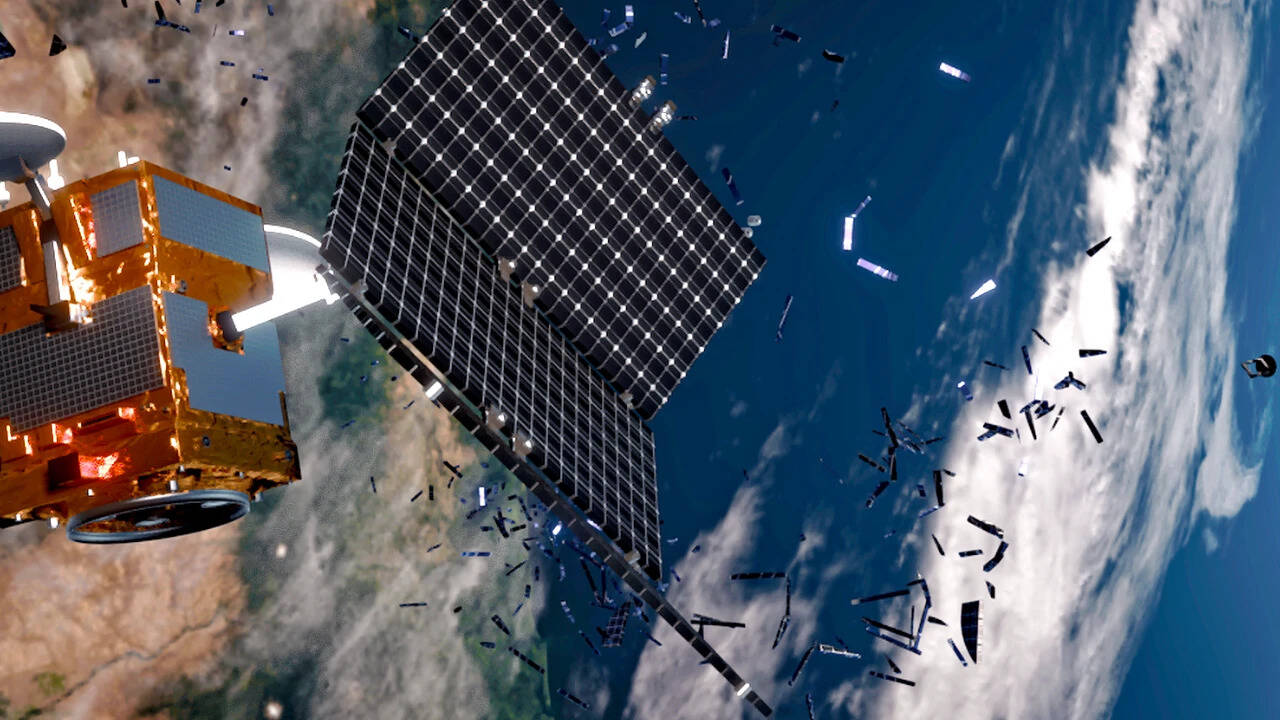
Satellites have become an important part of everyday life, supporting services that people often take for granted. GPS navigation, weather forecasting, communications and several other systems rely on equipment operating above Earth. When satellites stop functioning, however, they can remain in orbit and become potential hazards for other spacecraft.The problem extends beyond old satellites. Defunct rocket stages and fragments left behind by previous space activities also contribute to orbital debris where even relatively smaller pieces can pose a threat because objects in orbit travel at extraordinary speeds. According to the official orbital radar data, there are nearly 32,000 tracked objects. Smithsonian Magazine in its report on the same states that roughly half of these objects are space debris. With so much junk present in the orbit, a collision can damage an operational satellite and produce additional fragments, creating further risks for other objects sharing the same region of space.
(Image credit: Wikimedia Commons)
As more satellites are launched to meet the growing demand for communications and other services, managing the debris already in orbit becomes incredibly crucial. However, one mission alone cannot clear the entire orbital environment of waste and junk that has perhaps been present for years now. But, The UK ADR programme aims to illustrate that a single spacecraft can remove more than one satellite during an operation, an approach that could help make future debris-removal missions more practical.
A mission the public can help name
Alongside the technical work, the UK Space Agency has launched a public competition for its trash disposal mission, inviting people to suggest a name for the spacecraft. The initiative offers the public an opportunity to contribute to the country’s first nationally commissioned active debris-removal mission.Entries for the UK Space Agency competition are open until December 10, 2026. According to the agency, the selected name will be displayed on the spacecraft, giving the winning suggestion a place in the history of the project. The naming competition also offers a way to bring attention to an issue that can otherwise seem distant from everyday concerns. Although space debris may appear far removed from life on the ground, the satellites affected by it support technologies used by millions of people. Keeping their orbital environment safe is therefore closely connected to maintaining the services people depend on.As Dr Alice Bunn, Co-Director of the UK Space Agency in a statement has noted, “This mission is about much more than removing debris. It is about developing the capabilities that will enable future servicing, assembly and manufacturing in orbit.” Future spacecraft may be designed not only to remove unwanted objects but also to inspect, repair or refuel satellites that are still useful. Such capabilities could reduce the need to replace expensive equipment and help make long-term space activity more sustainable.