


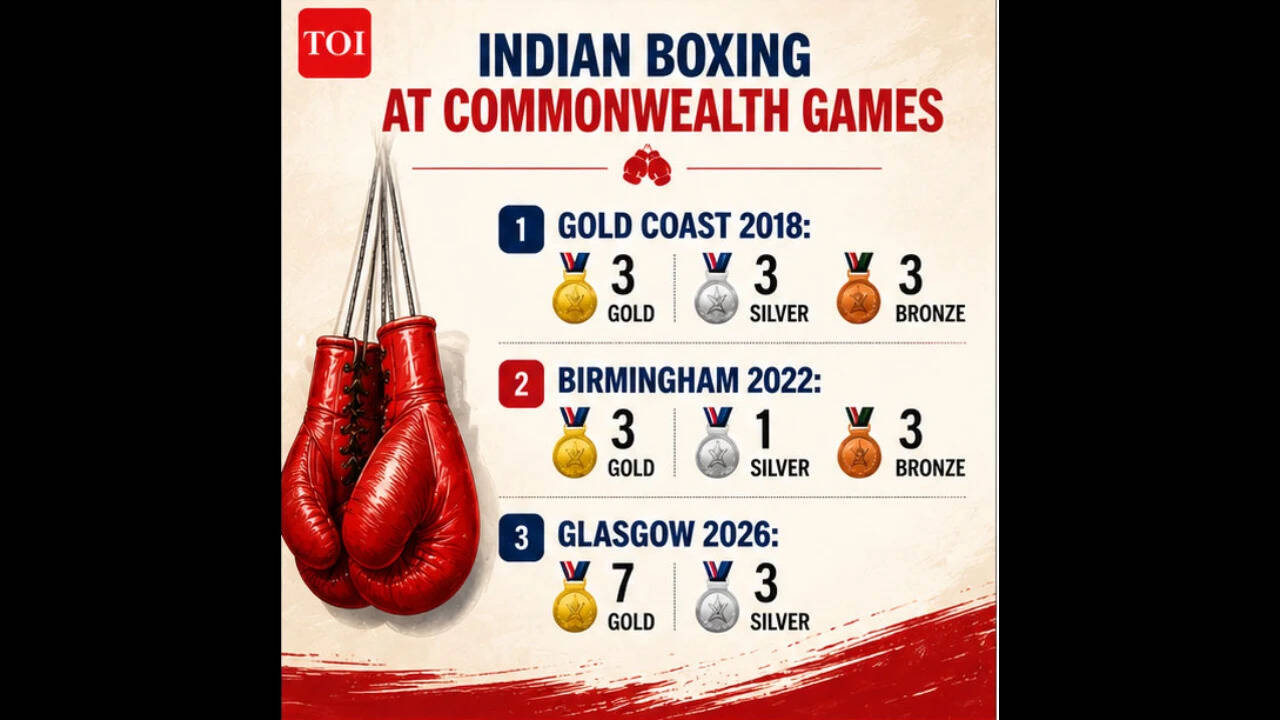
NEW DELHI: Ten medals – seven gold and three silver. The No. 1 boxing nation at the Commonwealth Games for the first time in history.India’s campaign at the 2026 Commonwealth Games in Glasgow deserves every bit of the celebration it has received. The contingent finished ahead of traditional Commonwealth boxing powers such as England, Australia and Ireland, with the women’s team accounting for six of the seven gold medals.Yet, beneath the celebrations lies a bigger question. Has Indian boxing finally reached the level where it can consistently challenge the world’s best, or will Glasgow become another memorable Commonwealth Games campaign that fails to translate into sustained success at the Asian Games and the Olympics?For former world champion Laishram Sarita Devi and Olympian-turned-selector Venkatesan Devarajan, Glasgow was never the destination. It was simply the first step towards a much bigger target — proving India’s credentials against Asia’s finest before taking that momentum into the Los Angeles Olympics in 2028.
A landmark achievement for Indian boxing
Seven gold medals do not happen by accident. India’s dominance reflected years of investment in coaching, sports science, nutrition, overseas exposure and a fiercely competitive domestic circuit. The performance also followed India’s encouraging campaign at the 2025 World Championships in Liverpool, where India returned with two golds, one silver and one bronze.“It was a historic performance by the boxing team. It was a proud moment for India. We have never achieved such a performance before,” Sarita Devi told TimesofIndia.com.
Why Commonwealth success is no longer enough
The balance of power in amateur boxing has shifted decisively towards Asia. Countries such as Uzbekistan, Kazakhstan, China, Chinese Taipei, Japan, DPR Korea and the Philippines have emerged as the sport’s dominant forces, consistently producing Olympic and world champions.The numbers underline that shift. Across the last three Olympics, Asian nations have won 16 gold medals compared to just five by Commonwealth countries. Similarly, at the World Championships, excluding India, Asian nations have won 32 world titles, compared to just five by Commonwealth countries.India has been one of the few exceptions, at least at the World Championships, largely due to its consistently successful women’s programme, which has produced seven world titles during that period.Even so, Glasgow alone cannot answer the biggest question surrounding Indian boxing: Can India now consistently defeat the very nations that have dominated Olympic boxing over the past decade?
Asian Games will provide the real verdict
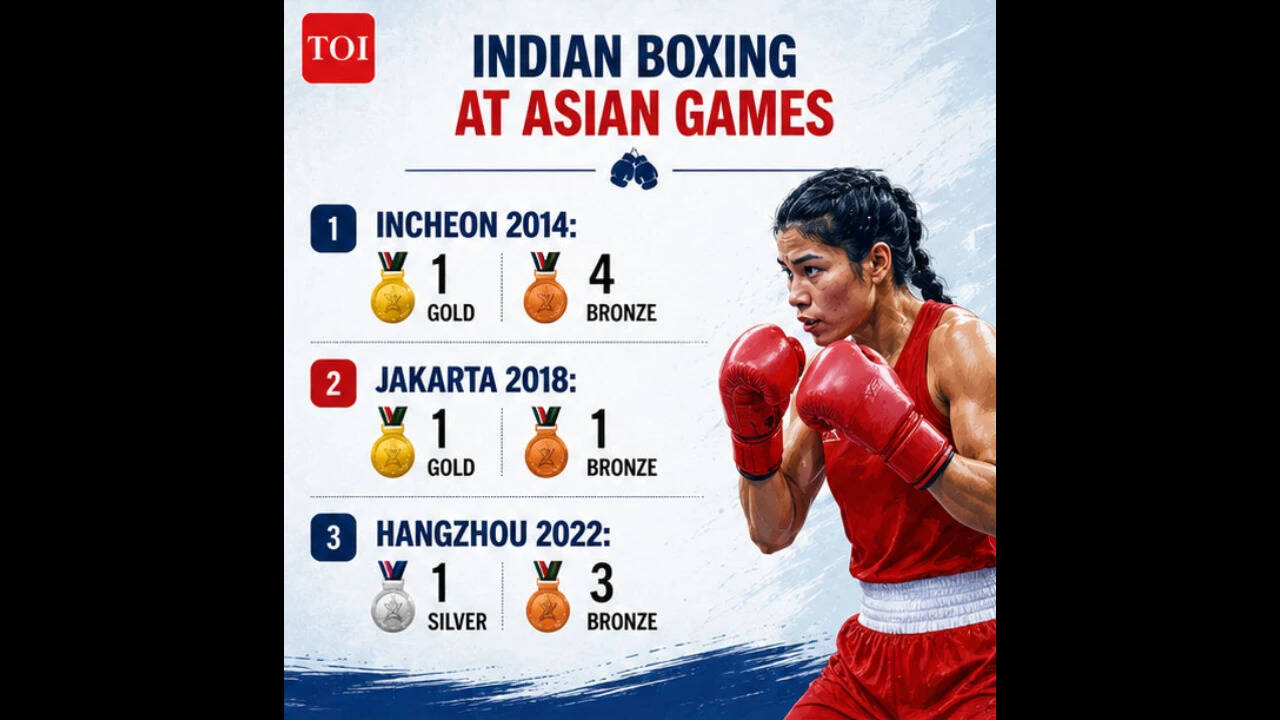
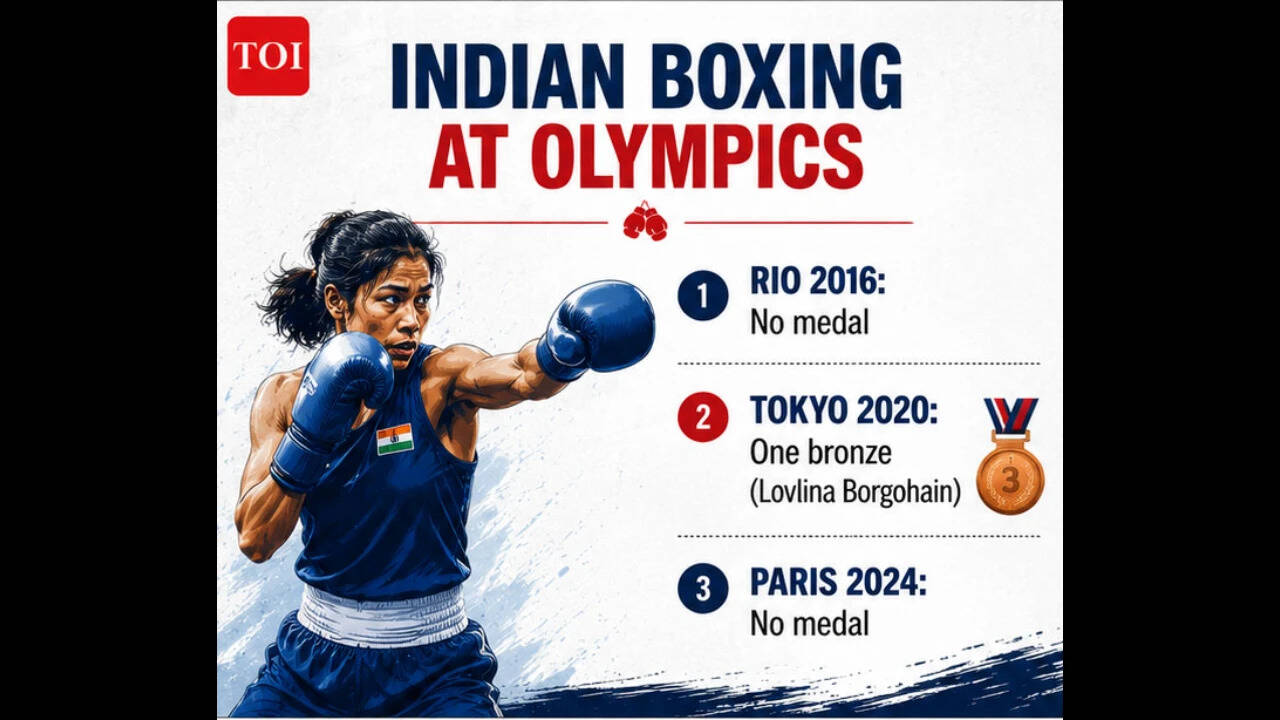
If Glasgow showcased India’s growing depth, the Asian Games will reveal its true standing among the world’s elite.India’s recent record explains why the continental event remains the ultimate benchmark.Across the last three Asian Games, Indian boxing has won only two gold medals alongside one silver and eight bronze medals. At the last three Olympics, the country has returned with just one bronze medal.Sarita Devi believes India is steadily narrowing that gap.“Asian Games level is higher, but our level is not that bad. We are definitely coming to the levels of other Asian powerhouses like Uzbekistan, Kazakhstan, China etc. We won so many medals at the World Cup in India too, we are getting better day by day. These powerhouses also fear Indian boxers,” she said.But she insists the upcoming Asian Games will determine whether this Indian team has genuinely crossed into the sport’s top tier.
The biggest challenge starts after winning medals
Sarita Devi believes the toughest task begins after returning home with medals. Managing success, she says, is often harder than chasing it.“But we can’t just stop after these performances. Other countries are also working hard with their eyes on the next Olympics. In the near future, the Asian Games are just round the corner,” she said. “In my opinion, the most important thing now is the recovery path. They just competed in a big massive event, and they have to start preparing for another massive tournament in the Asian Games.”“The medallists should remain grounded and keep the fire lit inside like they did when they started at the grassroots level. If we prolonged our celebrations for the CWG success and did not perform at the level we wanted at the Asian Games, the dreams we have from our boxers will not be fulfilled,” she added.As a coach herself, Sarita pointed to Commonwealth silver medallist Jadumani Singh Mandengbam, explaining how easily post-Games celebrations can disrupt an athlete’s rhythm. “For example, Jadumani will be reaching Manipur on Thursday, and I have to take good care of him as a coach for the next five days, so that he does not lose focus on the game due to excess celebration,” she explained.“Only after putting up a similar performance in the coming Asian Games with a bigger medal haul than before, we can prove that Indian boxing’s level is up to the Asian and world level,” she said.
A stronger system is finally delivering results
Sarita credits improved government support, sports science, nutrition, coaching and overseas exposure for transforming Indian boxing.“The Indian government has provided a lot of facilities nowadays regarding sports science, nutrition and good coaches. It has made sure that athletes have all the necessary facilities,” she said. “It was different during our times, but now the exposure they got is immense. They got the opportunity to train abroad, exposure of big tournaments.”She also credits the increasingly competitive domestic circuit for producing world-class talent across multiple weight divisions.“That’s the reason why good boxers are coming out from every corner of the country. Since the competition has become intense, those who become No. 1 in the country are also at world level now,” she said.“BFI hosting big tournaments in India like World Cups gives a lot of motivation to the budding boxers. When we host big tournaments in India with world-class boxers coming to compete here, it motivates the boxers here a lot. It brings a big change,” she concluded.
Devarajan sees echoes of Cuba’s golden era
Olympian-turned-selector and Arjuna awardee Venkatesan Devarajan believes the investment made in Indian boxing over the last decade and a half is finally paying dividends.“Actually this one is really the proud moment of our Indian boxing. Whatever we have done over the last 15 years, now we are getting the benefits,” he told TimesofIndia.com.Having recently visited Rohtak, one of India’s leading boxing hubs, Devarajan said the training ecosystem reminded him of Cuba.“When I was in the 90s… when I visited Cuba… I now see the same infrastructure and the same system in Haryana, Rohtak and nearby Bhiwani,” he said. “So many people come and stay outside and do training at Rohtak.”For him, perhaps the biggest transformation is that talent is no longer concentrated in a handful of states.
Exposure and depth have changed Indian boxing
Training camps abroad, joint sessions with foreign teams and regular participation in international tournaments have become routine for India’s elite boxers — something Devarajan believes has significantly narrowed the gap with the world’s best.“Before the Commonwealth Games they went to Ireland for training. So that helped so much. Nowadays everyone does combined training… international camps with many countries… that’s all a good sign,” he said.Another encouraging sign, according to Devarajan, is the depth now available across almost every weight category. Domestic trials have become so competitive that even world champions can no longer take selection for granted.“Actually now whatever I’m seeing in India… same like 90s Cuba. First, second and third… no difference,” he said proudly.He cited the example of world champion Nikhat Zareen losing at the trials to underline how competitive selection has become.“Nikhat Zareen is the world champion, right? That day another girl (Sakshi Chaudhary) won the fight,” he cited. “Previous performance is not counted. Present performance is very important.”
The next battle is as much mental as technical
Devarajan believes the biggest challenge after Glasgow will be psychological, with success bringing greater expectations. He remains optimistic about India’s prospects at the Asian Games.“Olympics are important. We will do well in the Asian Games. Two or three gold medals will come,” he said.“There should not be overconfidence. Mind balance is very important. When victories come, so many people don’t know how to balance the mind,” he said.He believes experienced coaches, support staff and sports psychologists become invaluable in such situations. His message closely mirrors Sarita Devi’s advice that the medal winners must stay grounded and quickly shift their focus to the next challenge.There is little doubt that Indian boxing has entered one of the strongest phases in its history. Better infrastructure, coaching, exposure and domestic competition have produced unprecedented depth, but Glasgow has also raised expectations.If India converts its Commonwealth dominance into Asian titles and consistently beats Asia’s best, Glasgow will be remembered as the tournament that marked India’s arrival as a genuine global boxing force. If not, it may ultimately be remembered as another outstanding Commonwealth campaign that stopped just short of the sport’s highest level.