
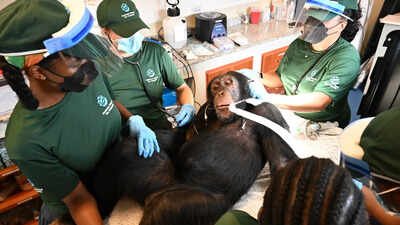
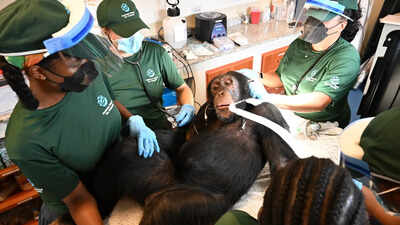
Chimpanzees once used in hepatitis B vaccine experiments have undergone comprehensive health checks at a sanctuary in Liberia as part of long-term care aimed at giving the animals a chance to live out their lives in safety.The West African chimpanzees were examined at Humane World for Animals’ Second Chance Chimpanzee Refuge in central Liberia, where veterinary teams carried out procedures including dental checks, X-rays, blood tests and nail trimming, sanctuary director Liliana Pacheco Ricote told The Associated Press.More than 400 chimpanzees were used by American researchers in hepatitis B vaccine experiments in Liberia from the 1970s until the early 2000s, Ricote said. Many had been captured from the wild as infants and subjected to invasive procedures during the research.Humane World for Animals said it assumed permanent responsibility in 2015 for the 60 chimpanzees that remained after the research programme ended. The animals now live mainly on a group of mangrove-covered islands at the sanctuary.The latest examinations were conducted under anaesthesia and were designed to provide a head-to-toe assessment of the chimpanzees’ health, identify early signs of disease and help veterinarians develop individual care plans as the animals age, the organisation said.The checks included examinations of the teeth, heart, lungs and nervous system, along with blood tests. The chimpanzees also received booster vaccinations and nail trims, with plans to examine the remaining animals.“The health checks are a vital part of caring for these chimpanzees who have been through so much,” said Belen Perez Hernando, the sanctuary’s veterinarian.The chimpanzees are now typically between 30 and 35 years old. The full findings from the latest assessments are still being compiled, so the long-term effects of their time in research remain unclear.Ricote said the physical and behavioural effects of the experiments were nevertheless still apparent in some of the animals.“They were used in very invasive research … (and) went through a lot of experiments and pain,” she said.Liberia has the second-largest population of chimpanzees in West Africa after Guinea. West African chimpanzees are classified as critically endangered as their numbers continue to decline.For the sanctuary, the health programme is part of an effort to provide the former research animals with specialised care for the rest of their lives.“Seeing how much they hurt about what we’ve done, it gives me a lot of pleasure … to give them this second chance to live with dignity the life that they deserve,” Ricote said.