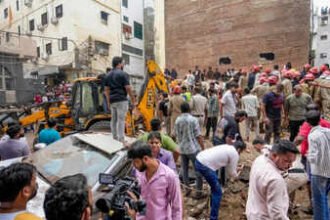
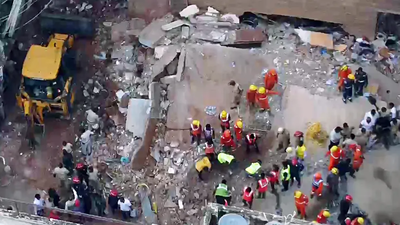
NEW DELHI: The collapse of a five-storey boys’ PG in Satya Niketan on Sunday has brought back a question Delhi has repeatedly failed to answer: how safe are the buildings in which thousands of students live? The building, close to Delhi University’s South Campus, was being used as paying-guest accommodation and had a basement and five upper floors. Repair work was reportedly being carried out in the basement when the structure came down around 1.30pm. By evening, five people had died and several others had been pulled out of the rubble, while rescue teams continued to search for those who could still be trapped.
The building, located close to Delhi University’s South Campus
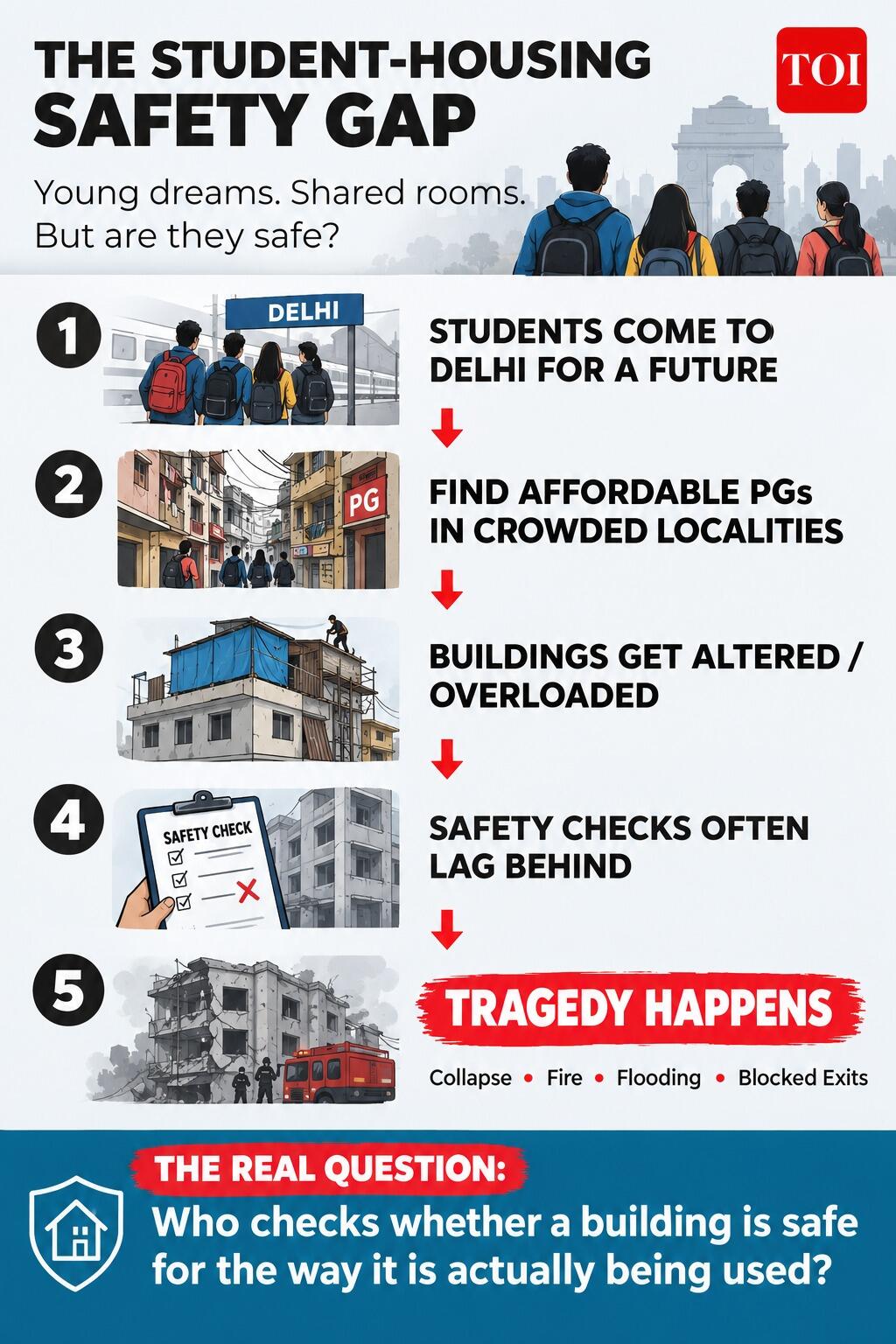
Delhi’s student colonies have grown faster than regulationSatya Niketan is hardly an exception. Delhi has dozens of neighbourhoods that have gradually turned into student colonies, driven by the city’s universities, coaching centres and private institutes. Katwaria Sarai, Saket, Munirka, Ber Sarai, Mukherjee Nagar, Malviya Nagar, Kamla Nagar, Kingsway Camp, Model Town and Roop Nagar etc. are packed with students during the academic year and have developed similar ecosystems. Satya Niketan is part of this larger story.The problem is not simply a shortage of roomsNo government can provide accommodation to every student or aspirant who comes to Delhi. Nor can every family afford university hostels or purpose-built private accommodation. But a shortage of affordable housing cannot become a justification for unsafe buildings. In several student hubs, every square foot of a property can have commercial value. Buildings are divided into smaller rooms, additional occupants are accommodated and spaces such as basements and terraces can acquire uses for which they may never have been designed.
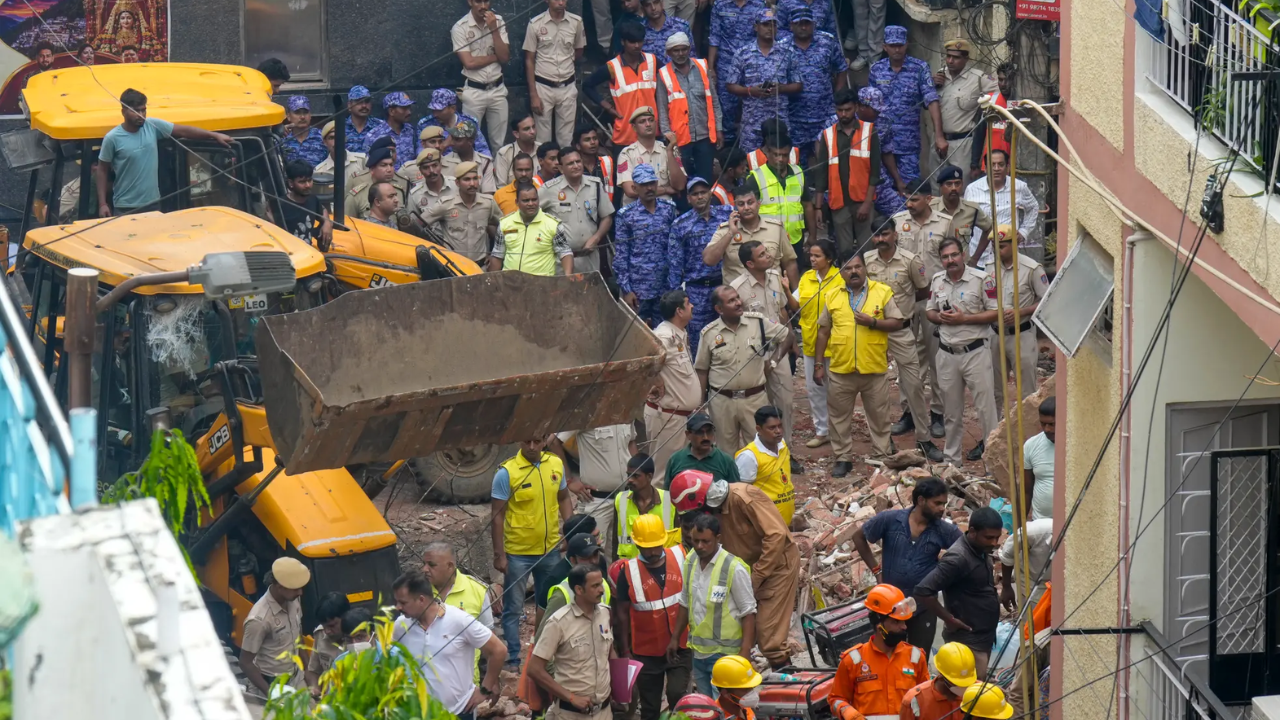
A 50-year-old five-storey building housing a boys’ hostel collapsed
The problem becomes particularly serious when old buildings undergo repeated alterations without proper structural assessment. A basement may be modified, walls may be removed, additional floors or rooms may be added and electrical or plumbing systems may be stretched to cope with a much larger population. In Satya Niketan, repair work in the basement at the time of the collapse will naturally be examined as part of the investigation. But the precise cause must come from a proper structural inquiry, not from assumptions made in the immediate aftermath of a tragedy.
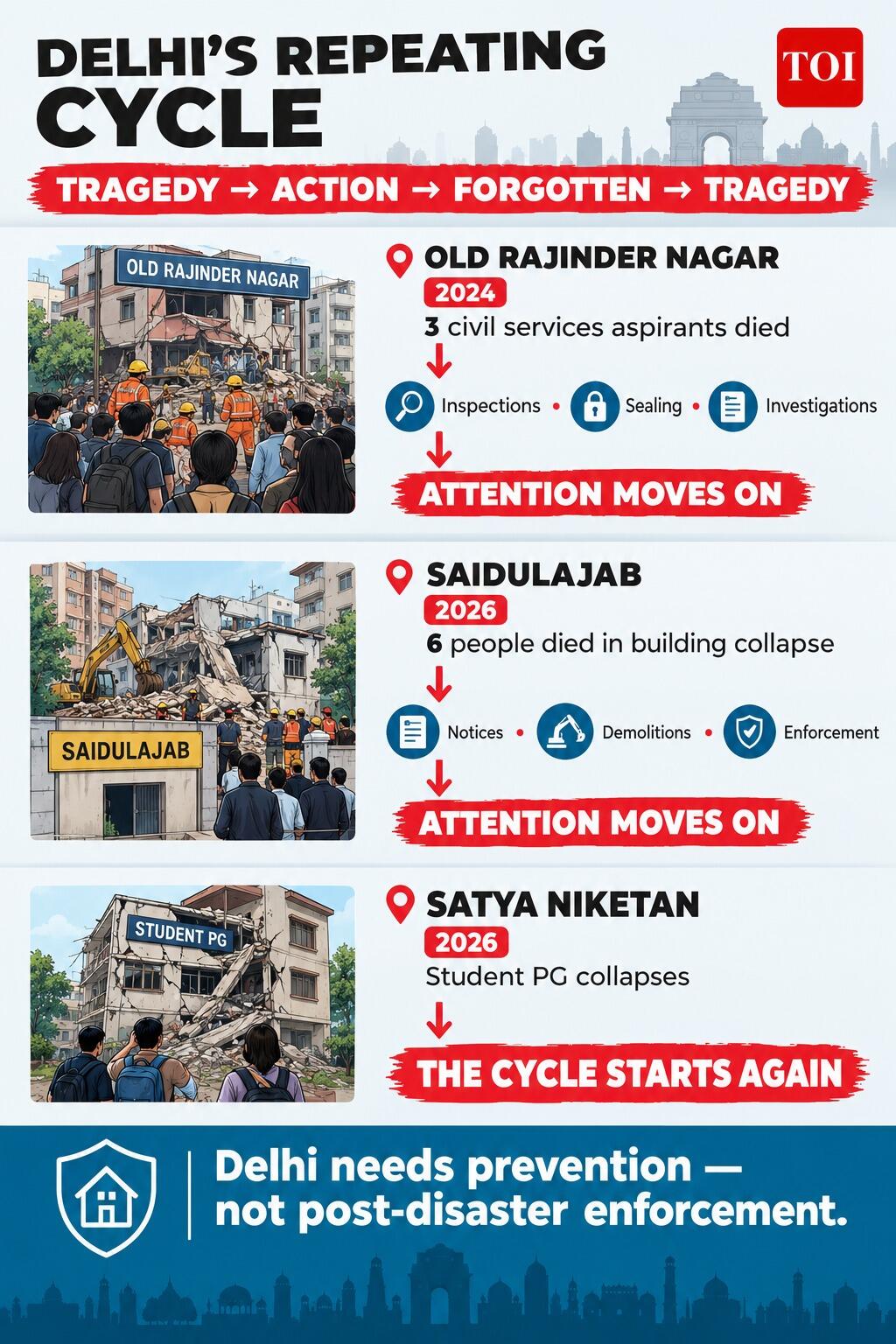
The familiar pattern was repeated: tragedy, scrutiny and enforcement.
Delhi has already seen the warning signsThe capital does not have to look far for reminders of what can happen when regulation comes after disaster instead of before it. In July 2024, three civil services aspirants died after the basement of a coaching centre in Old Rajinder Nagar was flooded. The tragedy triggered inspections, sealing drives and a nationwide debate over the safety of coaching hubs. Yet nearly two years later, questions about compliance and enforcement in the area have not disappeared. The CBI has also alleged lapses by three junior MCD officials in the discharge of their duties.
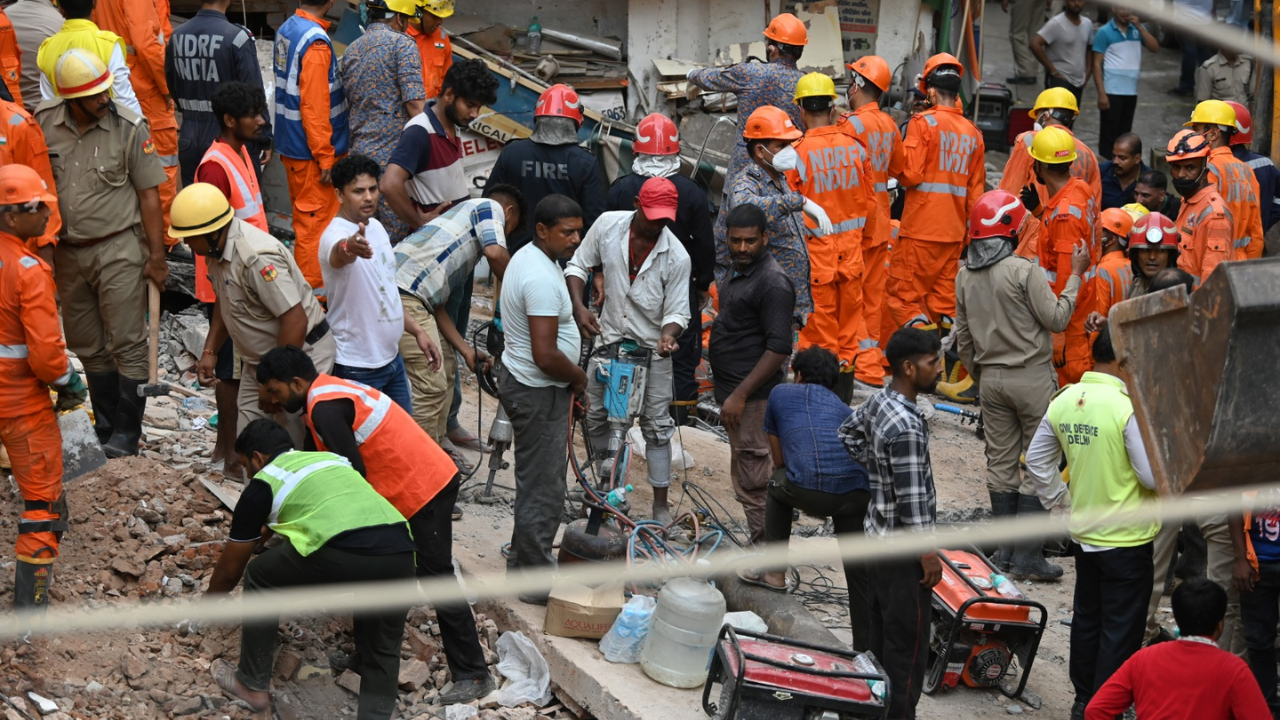
NDRF, fire department officials during a rescue operation
Then came the building collapse in Saidulajab near Saket in May this year. Six people died, including five young medical and engineering graduates. The tragedy again turned the spotlight on unauthorised construction. Police had reportedly flagged illegal construction at the four-storey building before its collapse. Following the incident, MCD launched action in the area, while officials said notices had been issued to hundreds of potentially illegal structures in the wider Mehrauli-Chhattarpur belt. The familiar pattern was repeated: tragedy, scrutiny and enforcement.
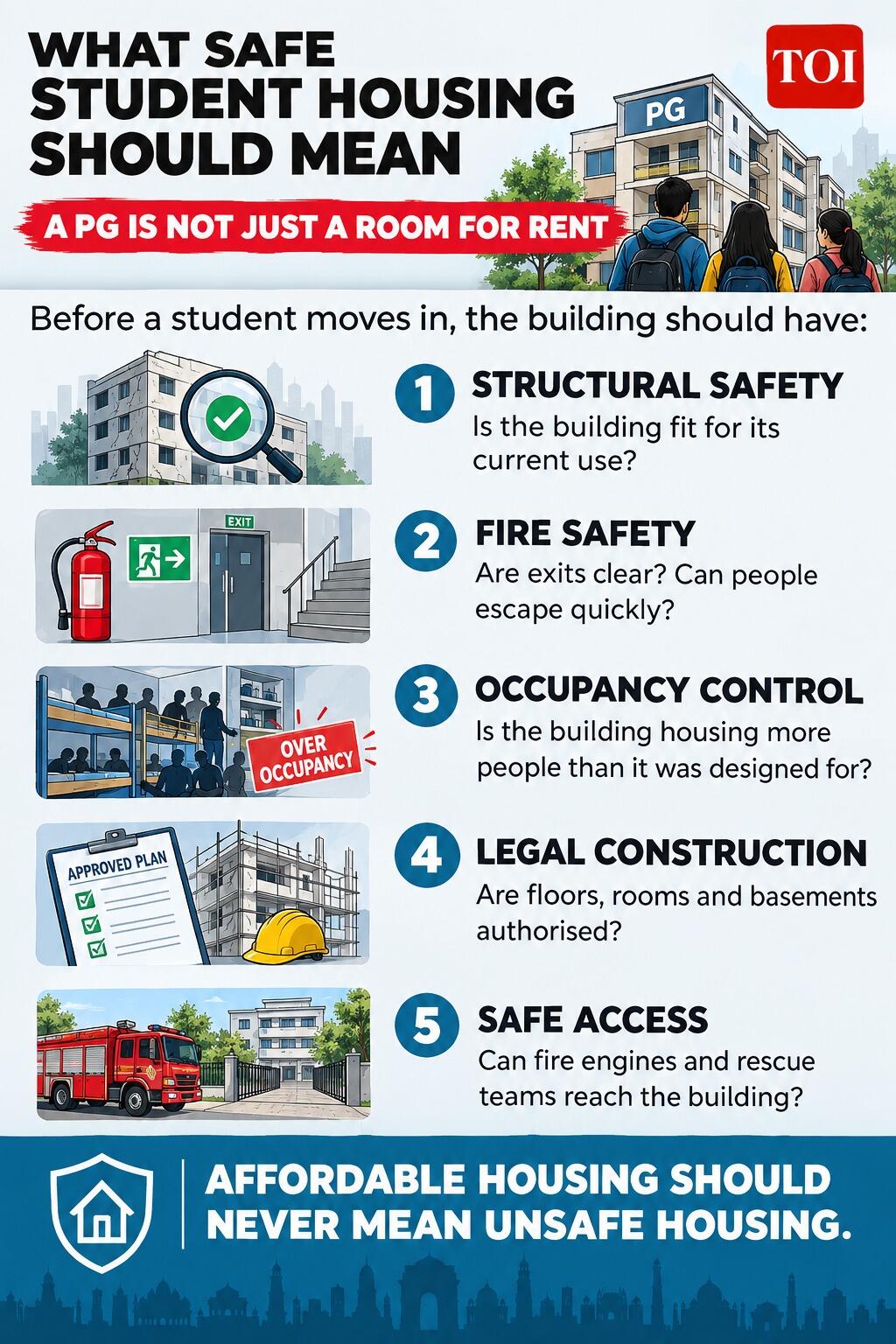
Satya Niketan has exposed a hard truth that the capital can no longer afford to ignore
The numbers raise another uncomfortable questionThe scale of enforcement action itself shows how widespread the problem can be. After a series of deadly incidents in June, MCD said 82 properties had been demolished and another 43 sealed during a citywide drive against illegal and unauthorised structures. The numbers are significant, but they also leave Delhi with a much more difficult question. How many buildings are being occupied today that have never been properly inspected? And how many violations are visible to residents, landlords and local officials but remain unaddressed until something goes wrong?A July 2026 report of the Supreme Court-constituted Monitoring Committee also highlighted non-compliance with fire-safety norms involving residential properties being used for mixed or commercial purposes. This is important in the context of student neighbourhoods, where residential buildings can gradually become high-density accommodation or commercial premises. The issue is therefore not merely whether a building has a valid address or whether rent is being paid. It is whether the building is being used in a manner consistent with its structural, fire and occupancy requirements.Students should not have to choose between education and safetyFor a young person arriving in Delhi, a PG is rarely a matter of lifestyle. It is often the most practical way to stay close to a university or coaching centre while keeping costs under control. A student and their parents may compare rent, distance, food and basic facilities, but they cannot reasonably be expected to judge whether a basement alteration has compromised a building or whether a five-storey structure is carrying more occupants than it was designed to support. That responsibility lies with the regulatory system.Delhi therefore needs a system that works before a building collapses. Student-heavy neighbourhoods should be mapped and buildings being used as PGs and hostels should face periodic structural and fire-safety checks. Occupancy limits must mean something. Unauthorised construction and basement conversions cannot be overlooked simply because there is strong demand for rooms. Open drains, narrow access lanes, blocked exits and ageing structures may look like routine inconveniences on an ordinary day, but during an emergency they can become matters of life and death.Satya Niketan cannot become another forgotten warningThe danger now is that Satya Niketan will follow the familiar script: an inquiry will be ordered, responsibility will be debated, notices will be issued and attention will eventually move elsewhere. Delhi has already been through this cycle after Old Rajinder Nagar and Saidulajab. Yet students continue to arrive, landlords continue to rent out rooms and neighbourhoods continue to become more crowded.Students come to Delhi to prepare for exams, attend college, start careers and build a future. They should not have to calculate the risk of the building in which they sleep. Satya Niketan has exposed a hard truth that the capital can no longer afford to ignore: Delhi’s student-housing problem is not only about affordability or availability. It is about safety, accountability and regulation. And the question after yet another collapse is painfully simple — how many more students have to die before the city treats safe student housing as a basic requirement rather than an afterthought?