At the Ankara Summit on July 7-8, Nato will attempt to execute its most radical reset since the end of the Cold War
At the Ankara Summit on July 7-8, Nato will attempt to execute its most radical reset since the end of the Cold War: turning itself from a US-led security club built on dependency, into a more Europeanised battle-ready coalition of capable partners that can deter Russia even if Washington becomes less reliable.The reset has been dubbed by analysts as ‘Nato 3.0’.Far from a rebranding exercise or a slogan for burden-sharing, it is a stark admission that Europe’s post-Cold War era of dependency has expired. In its place, the alliance is forcing a new bargain — one forged on genuine partnership, speed, industrial depth, and cold political realism.
The problem is that this transition is happening under pressure, not in peacetime, and the summit may end up exposing how fragile the alliance has truly become.
Why the urgency to reset?
According to a report by the European Policy Centre (EPC), the core reason Nato must restructure is brutally simple: the post-Cold War assumption that the US would always remain the backbone of European security is no longer dependable.
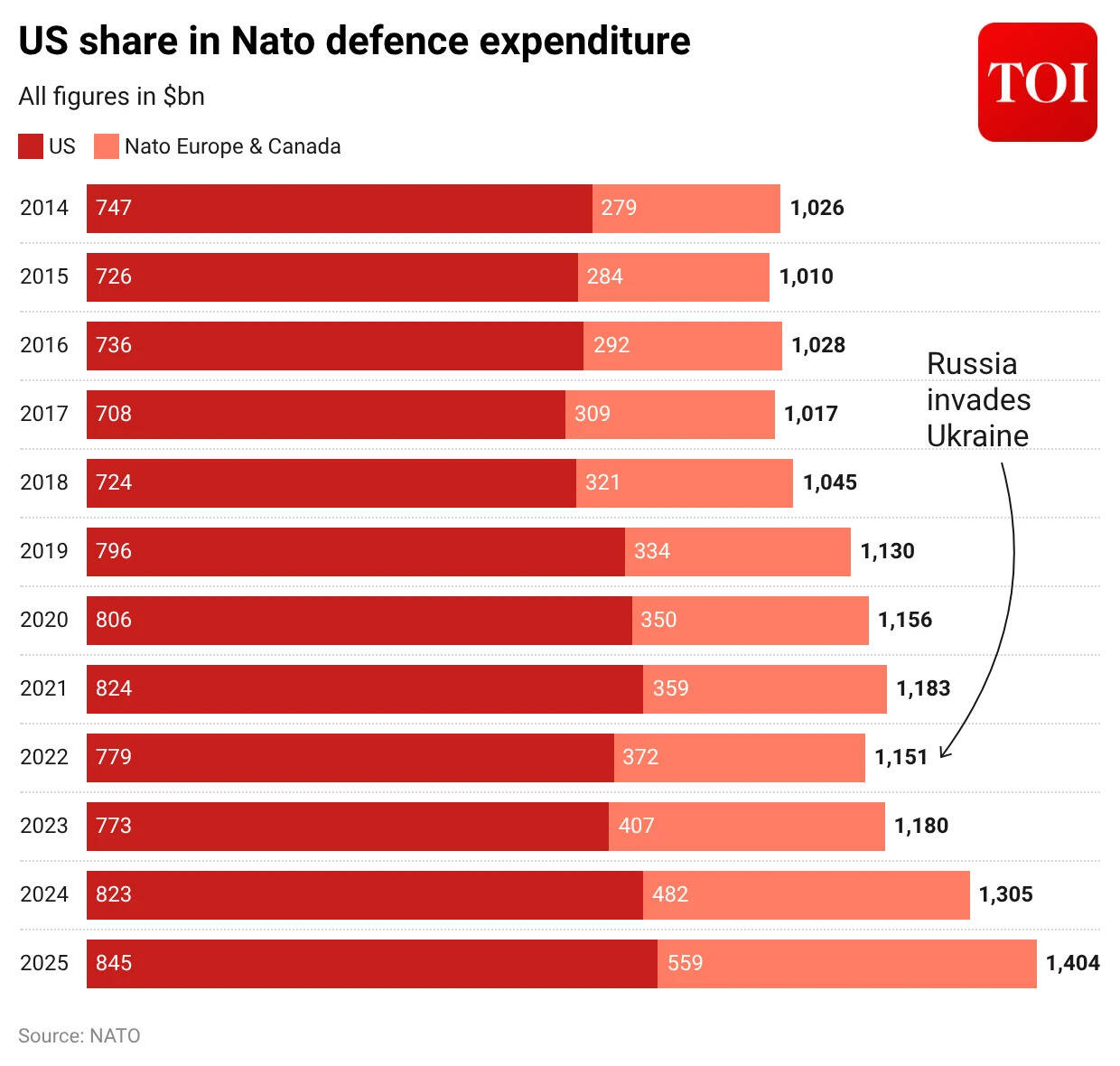
US share in Nato defence expenditure
The strategic environment has changed faster than the alliance’s habits.Europe is no longer operating in a benign security landscape, Russia remains a live military threat, Ukraine has become the proving ground for industrial warfare, and crises in the Middle East are now feeding directly into allied cohesion, energy security, and transatlantic politics.1. Trump‘s threats and US commitmentsThe EPC report describes a widening US-Europe rupture over Russia and a more transactional approach from the Trump administration.In fact, Trump’s threats are not a side issue; they are now shaping the summit agenda itself.The report points to Trump’s questioning of Nato’s value, his punishing tone toward allies, and his willingness to use troop withdrawals as leverage against European criticism.
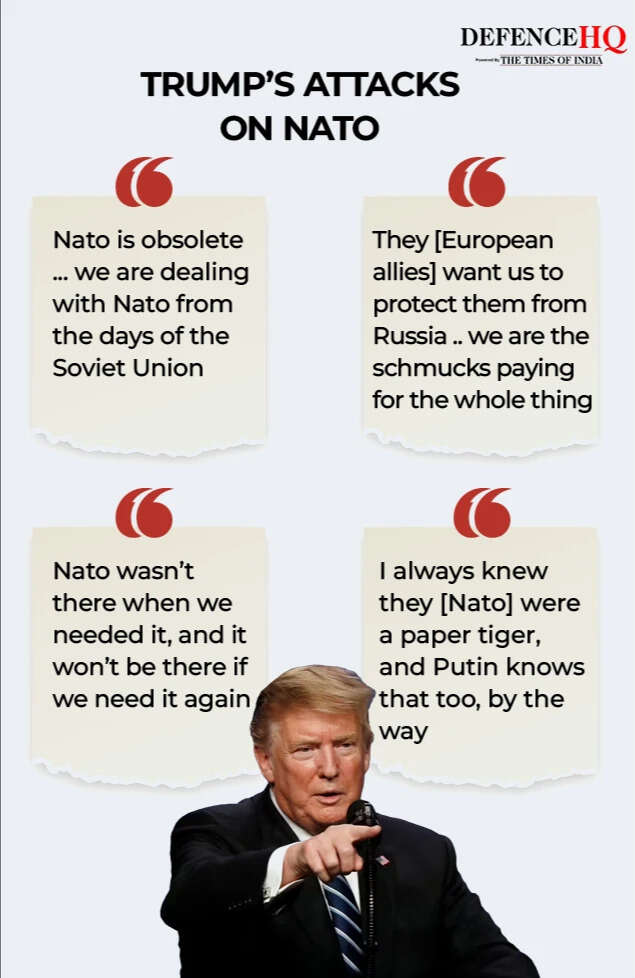
The report further states that future US reductions may be partly permanent, especially if Washington continues to see Nato as a tool for American power projection rather than an alliance focused on Europe’s defence.That means Europe has to plan for scenarios in which US help is delayed, limited, or politically blocked.The war in Ukraine has made that urgency visible.2. Aggressive Russia Russia’s invasion has not only restored territorial defence to the centre of Nato’s mission, it has exposed a terrible truth: the alliance has a capability problem.For decades, Nato leaned heavily on US enablers, US logistics, US strike depth, US intelligence, and US industrial scale, while European militaries invested too little in mass, resilience, and high-end warfighting capacity.Now, Nato is being forced to rebuild those missing layers at speed, because deterrence without production, and spending without usable force, will not hold in a war of attrition.
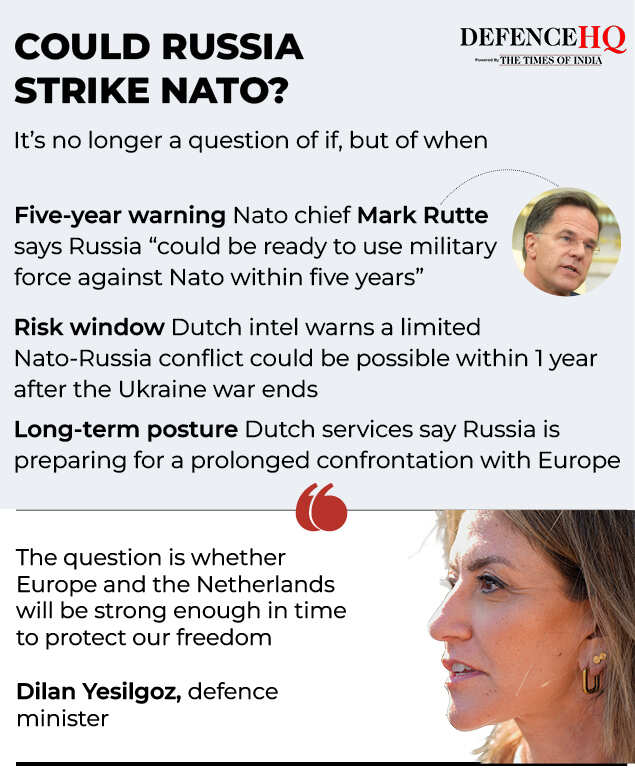
European allies view Moscow as an existential threat, while the US increasingly treats it as a persistent but manageable one, and that gap is now central to Nato’s internal tension.
European allies view Moscow as an existential threat, while the US increasingly treats it as a persistent but manageable one, and that gap is now central to Nato’s internal tension.The war in Ukraine has hardened Europe’s threat perception, pushed allies to sustain Kyiv’s war effort, and raised the stakes for Nato’s eastern flank.3. Ukraine’s war-fighting abilitiesUkraine will sit at the centre of the summit, but not only as a beneficiary of aid.Kyiv is increasingly being treated as a source of innovation, operational experience, and industrial know-how that Nato itself needs.That is why mechanisms such as the Prioritised Ukraine Requirements List, Nato Security Assistance and Training for Ukraine, the Comprehensive Assistance Package, the Nato-Ukraine Council, and the Joint Analysis, Training and Education Centre matter.These are not just support channels; they are becoming part of Nato’s own adaptation process.The strategic significance is clear.Ukraine has become a laboratory for drone warfare, electronic warfare, air defence adaptation, and rapid field innovation under fire.Nato wants that experience folded back into doctrine, procurement, and training, because the alliance knows its own models were built for a different kind of war.The message from Ankara may be blunt: supporting Ukraine is no longer just an act of solidarity, it is part of Nato’s own adaptation to modern war.
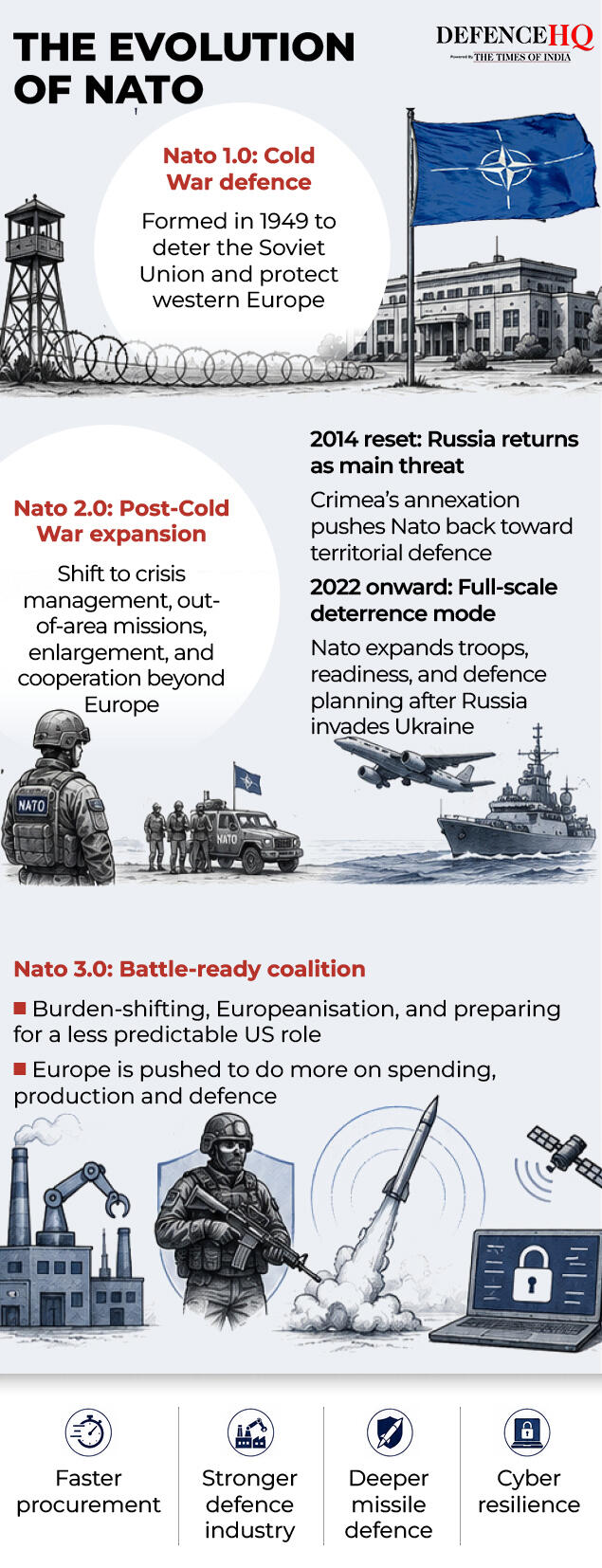
Nato 3.0
According to the EPC report, Nato is no longer debating whether Europe should do more; it is debating how quickly Europe can do more without creating dangerous gaps in deterrence. That is why Ankara is being treated as a stress test for unity rather than a ceremonial summit.‘Nato 3.0’ is best understood as a transition from dependency to partnership.In this model, the US still provides the nuclear umbrella and major enablers, but Europeans are expected to carry much more of the conventional defence load, maintain greater readiness, and build the industrial and political structures needed to sustain operations without waiting for Washington’s full attention.
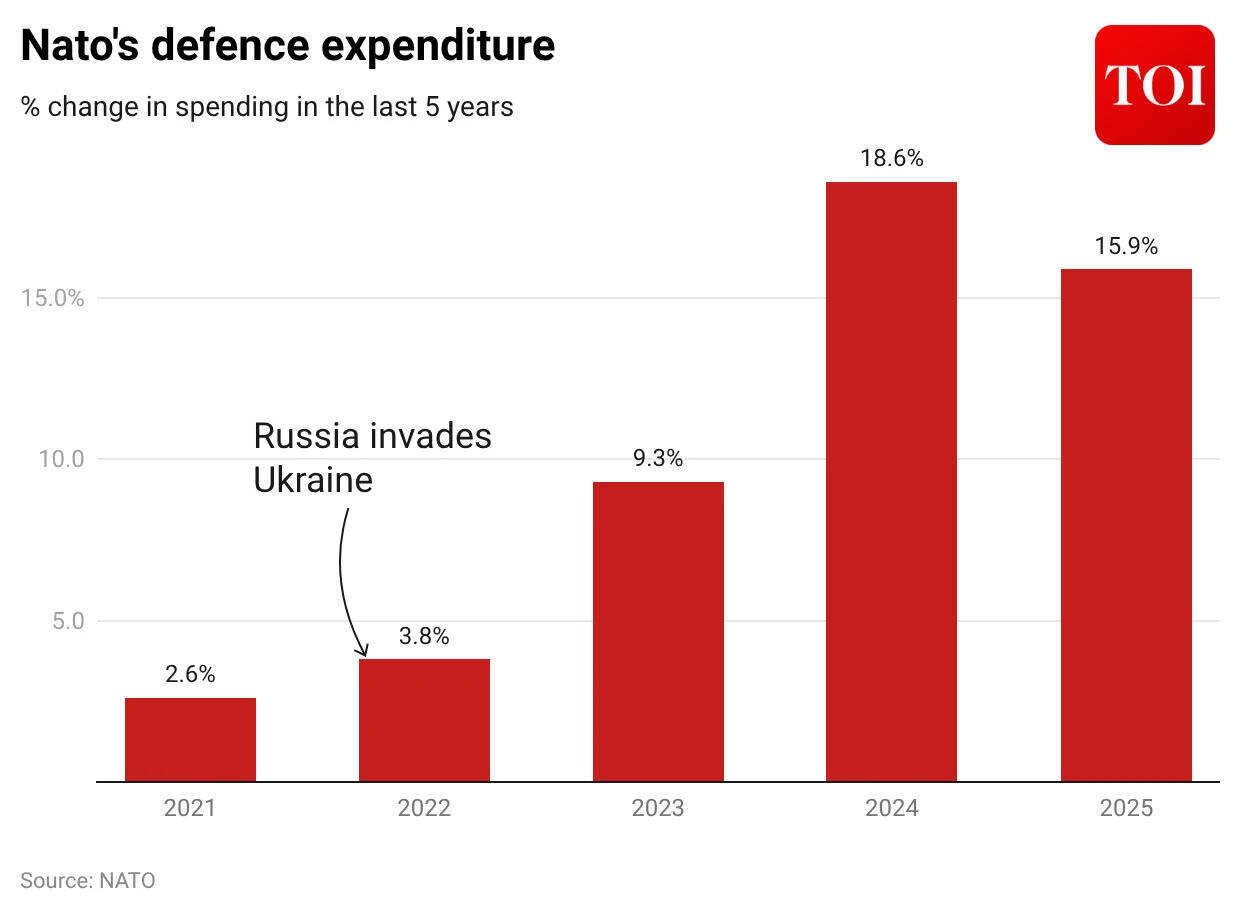
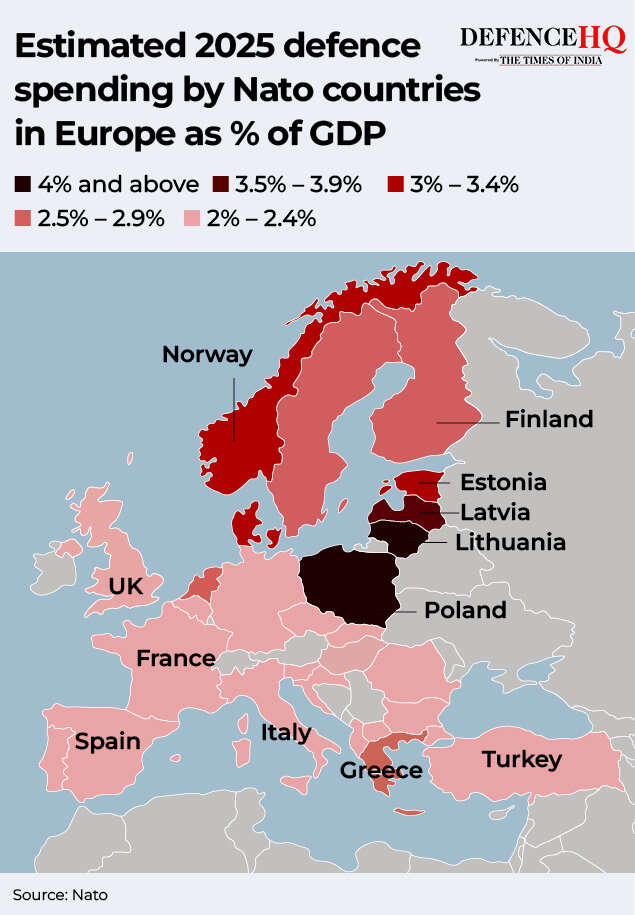
Nato’s defence expenditure
This shift is already visible.Europeans are already taking command of Nato’s regional joint commands, the European pillar is becoming more prominent, and the alliance is increasingly preparing for scenarios in which Europe must lead the conventional fight.
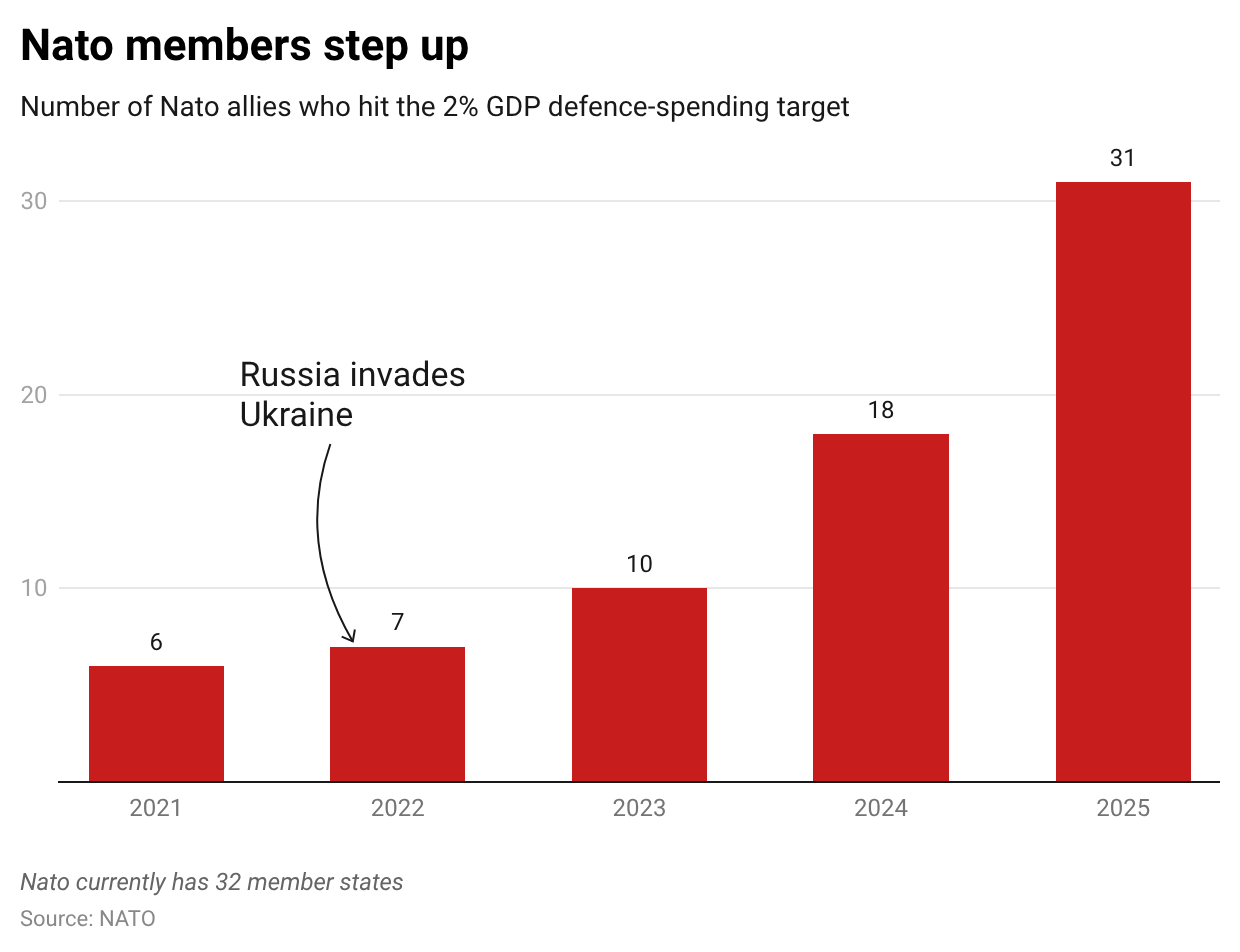
Nato members step up
So, the question in Ankara is not whether this Europeanisation is happening, but how far it will go.This is also why Nato 3.0 is controversial.It implies that the alliance is no longer a purely US-led bloc with European support, but a more asymmetrical partnership in which Europe must become capable of acting even when American support is late, limited, or politically constrained.That is a hard truth for allies that spent decades assuming the old model would last indefinitely.
What Nato is planning
As per the EPC report, Nato 3.0 is not a single dramatic reform but a bundle of military, industrial, and political measures.The headline item in Ankara is likely to be defence spending.
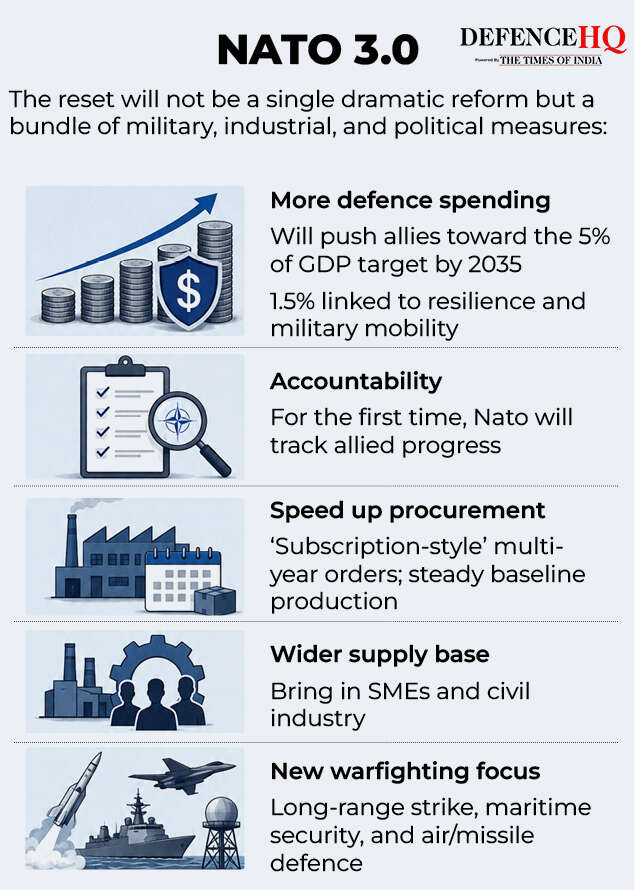
The summit is expected to push allies toward a “clear and credible path” to the 5% of GDP target agreed at The Hague in 2025, and for the first time there will also be reporting on the 1.5% resilience and military mobility component of that commitment.This matters because the 5% debate is not just about budgets; it is about whether Nato members can generate the forces, stockpiles, transport corridors, and industrial capacity needed for sustained defence.
The point of the target is not to reward spending for its own sake, but to force governments to build actual warfighting capacity, especially after years in which many European militaries became smaller, thinner, and more dependent on US support.The most dramatic political effect of this shift is that spending has become a proxy for seriousness.Allies that do not move quickly toward the new benchmark will be seen as free-riding on a system they still depend on, while those that do will gain more leverage in shaping Nato’s future division of labour.Ankara is therefore likely to sharpen an already uncomfortable divide between countries that want to move faster and those that hope to slow the pace or narrow the ambition.The most revealing part of the Ankara agenda may be industrial rather than operational.Nato is moving toward a model where it aggregates capability requirements, gives clearer demand signals to industry, speeds up procurement, and brings SMEs, start-ups, and even civilian manufacturing sectors into defence production.That is a major shift.Nato is no longer thinking only in terms of how much money allies spend, but how quickly that money can be converted into missiles, drones, air defence interceptors, munitions, transport capacity, electronic warfare, and logistics.In other words, procurement itself is becoming a strategic domain.The EPC report points to “subscription-style” procurement as one possible answer: multi-year orders, framework contracts, and steady baseline production that can scale when demand spikes. That may sound technocratic, but it reflects a deeper wartime reality.Modern conflict burns through stocks quickly, and alliance members cannot keep pretending that buying in small batches every few years is enough to sustain high-intensity war.
Article 5 rethink
One of the most revealing agenda items is the quiet re-examination of what could trigger Article 5 and how Nato would actually respond.The EPC report notes that Nato has long preserved strategic ambiguity around Article 5 thresholds, but that the alliance now needs a confidential, serious discussion about what level of aggression would require an armed response.This matters because the threat is no longer just a tank crossing a border; it can include air incursions, cyberattacks, sabotage, disinformation, and hybrid coercion designed to stay below the threshold of formal war.The Article 5 issue is also about credibility, not just legal wording.Nato needs to show that it has real operational plans for defending the Baltics and other eastern allies if Russia probes or attacks, and that those plans are matched by political will. In other words, deterrence now depends on whether allies believe that collective defence would work in practice, not only in principle.
Facing the tough questions
The most striking summit items are not likely to be abstract communiqués but the hard security questions hiding underneath them.One is whether allies will openly accept that the US may provide only around half of Nato’s military combat power from 2027 onward, or even less if recent reductions continue.Another is whether Europe can build enough credible deep-strike and air-defence capacity to make up for the shrinking American footprint.A third is whether Nato can define a workable political framework for crisis leadership in Europe if Washington’s support becomes inconsistent.The most revealing debate may be the one about endurance.Nato is learning that modern war is not won by one-off purchases or short bursts of spending, but by steady industrial capacity, stockpiles, logistics, and readiness.That is why the Ankara summit is being described as a make-or-break moment: it will show whether Nato is genuinely restructuring for a harsher world, or merely dressing up old dependencies in new language.
Ankara summit: Nato’s reckoning
Ankara will not just be another Nato summit, but a reckoning with the alliance’s future.The drama lies in the collision between three realities: a more aggressive Russia, a less predictable America, and a Europe that is finally spending more but still lacks full strategic autonomy.Nato is being forced to become something closer to a wartime coalition of capable partners than a comfort-zone security club.The summit’s real test will be whether leaders can turn anxiety into long-term security architecture, and whether that transformation can be managed cleanly.If Nato succeeds, it will emerge more European, more industrially resilient, and more credible on Article 5.If it fails, the alliance could be left with a sharper gap between rhetoric and deterrence than at any point in decades; and Ankara may be remembered as the moment Europe discovered that unity without capability is only a temporary illusion.