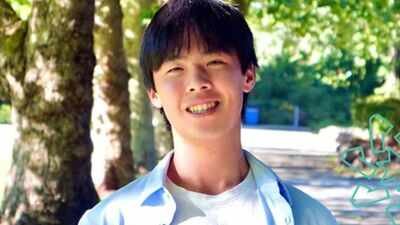
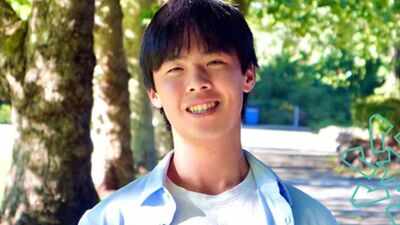
Meet Khaos Kook, an 18-year-old violinist from Shoreline, Washington, whose concussion and seizure in 2024 kept him from playing for more than six months and forced him to rethink what it means to be a musician. During his recovery, he turned his personal struggle into a structured, evidence-based return-to-instrument protocol for injured musicians, alongside a broader framework that defines musicianship through listening, research, teaching and advocacy as well as performance. For this work, he was named a 2026 Davidson Fellow and awarded a $25,000 scholarship, one of the most prestigious honours for students 18 and under in the United States, according to the Davidson Institute and local reporting.
A head injury that changed everything
Khaos Kook had been playing violin for more than 14 years when a serious head injury and seizure upended his life in 2024. The concussion left him unable to practice or perform for over half a year and required a full year of medical leave from school. For someone whose identity had been tightly bound to daily practice, rehearsals and concerts, the sudden loss of access to his instrument was not just a physical setback but an existential crisis.In that period of forced stillness, Kook began asking a question that would become the core of his Davidson project: What makes someone a musician when they can no longer perform? He realised that classical music culture often equates musicianship with continuous physical performance and relentless practice, leaving little room for artists who are injured, disabled, aging or otherwise constrained. His own experience became a lens through which he examined this narrow definition and searched for a more inclusive model.
Turning recovery into research
Over the next 16 months, Kook explored multiple pathways for staying connected to music without relying solely on playing. He immersed himself in score study, historical research, scientific inquiry and deep listening, while also engaging in teaching, advocacy and community work. He gradually reintroduced physical practice and performance as his health allowed, but he treated these as just one part of a broader artistic life rather than the sole measure of his identity.A key outcome of this process was the development of an original return-to-instrument protocol tailored to musicians recovering from traumatic brain injury. Existing concussion literature offers general guidance on returning to school, work and sport, but it lacks music-specific steps that account for the cognitive, sensory and motor demands of playing an instrument. Kook’s protocol fills that gap with an evidence-based, stepwise approach that helps musicians and their teachers navigate the transition from complete rest to structured practice and eventual performance.
Challenging the performance-only model
Kook’s project goes beyond medical recovery. It challenges the assumption that musicianship is defined only by the ability to perform on an instrument. He proposes a broader framework in which sustained artistic, intellectual and social engagement all count as legitimate forms of musical life. In this model, an injured violinist who cannot yet play can still be a musician by studying scores, researching repertoire history, writing about music, teaching theory, advocating for hearing health or organising community concerts.This perspective is particularly important for classical music, which often celebrates prodigious technical skill and continuous performance schedules. By widening the definition, Kook aims to make the field more welcoming to people who face physical or cognitive limitations at any stage of their careers. He argues that injured, disabled, aging or otherwise constrained musicians should not feel that their identity disappears when performance becomes difficult or impossible.
From personal project to public resource
Kook has already begun applying his philosophy in practice. He founded Project CliKK, a music nonprofit focused on expanding access to high-level music education. Through this organisation, he leads hearing health seminars and advocacy efforts, drawing on his own research experience with Dr. Sharon Kujawa at Mass Eye and Ear. These activities reflect his belief that musicians can have impact not only through concerts but also through research, education and public service.His return-to-instrument protocol is intended as a practical resource for other musicians and teachers facing similar challenges. By offering structured, music-specific guidance, it gives injured artists a clearer path back to their instruments while validating the work they can do in the meantime. In a field where recovery is often unstructured and isolating, such a protocol can provide both direction and reassurance.
Recognition and next steps
In 2026, Kook was named a Davidson Fellow in Music, receiving a $25,000 scholarship. The Davidson Institute, founded by Bob Davidson in 1999, recognises profoundly intelligent young people and supports them in developing their talents to make a positive difference. Kook is one of three Washington teens honoured that year, alongside Aditya Sengupta and Bryan Zhu of Bellevue, who together share $150,000 in scholarships.For Kook, the fellowship is more than financial support. It is affirmation that adversity can be transformed into a powerful source of inquiry. He has described the award as especially meaningful because his work emerged from a period when he felt cut off from classical music, an integral part of his identity for more than a decade. The recognition validates his effort to turn a personal crisis into a contribution that can help others in similar situations.
A musician beyond the instrument
Kook’s background extends well beyond the concussion and recovery. He has studied at international music institutes including Heifetz, Keshet Eilon and Mozarteum’s ISA, and has been invited to solo with six professional orchestras across the United States and Europe. He was also named a 2026 YoungArts Winner with Distinction in Classical Music and is a nationally recognised poet and essayist. His interests span English and music, with plans to continue exploring across disciplines in college.Outside of music and research, he enjoys off-piste skiing, cheering for Tottenham Hotspur and spending time with his Goldendoodle and Aussie Shepherd. These details paint a picture of a teenager whose life is rich and varied, even as he navigates the demands of high-level artistry and academic work. They also underscore his belief that a musician’s identity can be multifaceted, rooted in more than just hours of practice and stage time.
Why this matters for young artists
Kook’s story offers a model for other young musicians who face injury, illness or burnout. Instead of framing a break from performance as a failure or an end, he shows how it can become a period of growth, reflection and new kinds of contribution. His return-to-instrument protocol and broader framework provide language and structure for conversations that many students and teachers struggle to have.In a culture that often prizes constant productivity and visible achievement, Kook’s work is a reminder that rest, recovery and intellectual engagement are also part of a meaningful artistic life. By redefining what it means to be a musician, he is helping to create space for more diverse paths and longer, healthier careers in classical music.