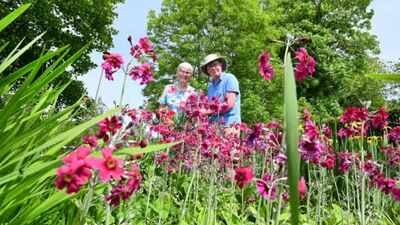
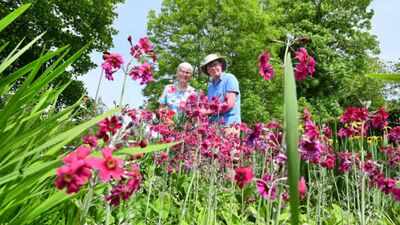
A former football lawn in New Longton, Lancashire, has become a thriving wildlife sanctuary after Karen and Stephen Brooke spent 4 years transforming their garden into a space for nature. What began as a family garden has developed into an 80-metre haven featuring a large pond, a bog garden, plants for pollinators and areas for growing vegetables. The couple’s efforts have attracted frogs, newts, dragonflies and other wildlife, with the garden now opening to visitors through the National Garden Scheme to support charitable causes.
Karen and Stephen Brooke turned their son’s football lawn into a sanctuary
According to the Lancashire Evening Post, the garden at 319 Chapel Lane in New Longton was once used as a football pitch by the couple’s son. Karen and Stephen, who have lived at the property for more than 35 years, began reworking the outdoor space around four years ago after retiring.Stephen initially had little enthusiasm for gardening. He described himself as a reluctant gardener who associated having more garden beds with additional work. Retirement, he felt, should leave room for other activities rather than tie him down to maintaining a garden.However, encouragement from Karen and advice from John Foley of Holden Clough Nurseries helped the couple begin planning a different kind of outdoor space. Their approach gradually shifted towards creating habitats for wildlife rather than simply maintaining a traditional lawn.
What made the garden attractive to wildlife
The National Garden Scheme describes the garden as a long, flat space backing onto a communal field and recreation area. Its design focuses on supporting birds and wildlife through a combination of water, planting and sheltered areas.A large wildlife pond, accompanied by a bog garden, has become one of its most important features. Raised vegetable beds, a broad herbaceous border designed to attract pollinators and several seating areas also form part of the garden.The Lancashire Evening Post reported that the pond quickly began attracting wildlife after it was created. Stephen was surprised by how rapidly frogs, newts and insects appeared, suggesting that even a relatively small garden could provide valuable habitat when designed with nature in mind.The National Garden Scheme listing also notes the presence of Victorian outhouses and a gravel driveway, with clematis and trailing vegetables growing around the structures. A summerhouse provides another place to sit and enjoy the surroundings.
How many frogs and newts have made the pond their home
The wildlife pond has become a particularly rewarding part of the project. The Lancashire Evening Post reported that the pond hosted 40 mating pairs of frogs during the previous year, alongside numerous newts, damselflies, dragonflies, butterflies and bees.The transformation has also given the couple a different perspective on gardening. Stephen, who initially worried that additional beds would mean more maintenance, eventually began enjoying the garden and even volunteered to open it to visitors after attending the Southport Flower Show, according to the Lancashire Evening Post.
The garden combines wildlife habitats with growing spaces
The garden is not exclusively devoted to wildlife. Its layout also includes practical areas for growing produce and spaces where visitors can sit and appreciate the surroundings.The National Garden Scheme’s official listing describes the garden as newly established in 2022, with its features arranged to support wildlife while maintaining an attractive and usable outdoor space.Among its features are raised produce beds, a wide herbaceous border for pollinators and a summerhouse. The Victorian outhouses provide additional growing opportunities, with clematis and trailing vegetables supported around the structures.Water habitats support amphibians and insects, flowering plants provide resources for pollinators, while vegetable beds make the space productive for the couple.The garden also reflects Karen and Stephen’s concern about increasing urbanisation. As explained in the Lancashire Evening Post, the carefully planned habitats were intended to encourage biodiversity and give local species a place to thrive.
Karen and Stephen Brooke decided to open their garden for charity
The couple’s transformation has now reached a stage where they are ready to share it with other people. Having previously visited several National Garden Scheme gardens, Karen and Stephen decided to welcome visitors to their own property for the first time in 2026.The Lancashire Evening Post reported that their garden was scheduled to open on June 5 and June 7 under the National Garden Scheme. The initiative allows visitors to explore private gardens while raising money for charitable organisations through admission fees and refreshments.According to the National Garden Scheme, the garden is located at 319 Chapel Lane, New Longton, Preston, Lancashire, PR4 4AB.
The garden supports charities beyond its wildlife mission
The National Garden Scheme raises money for nursing and health charities by opening private gardens to visitors across England, Wales, Northern Ireland and the Channel Islands.At the Brookes’ garden, admission proceeds support the scheme, while refreshments provide another opportunity to raise funds. The couple also planned to donate a portion of their catering proceeds to Horatio’s Garden, a charity that creates accessible gardens within NHS spinal injury centres.Karen explained to the Lancashire Evening Post that the family had seen Horatio’s Garden’s work when her nephew was a patient, which motivated them to support the organisation.