
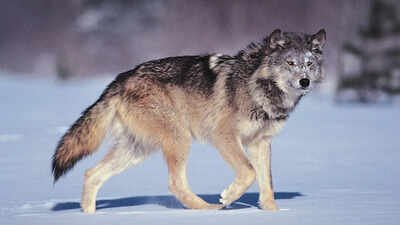
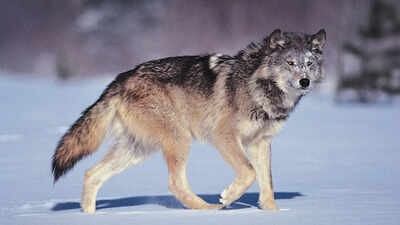
A politician promises to change after a scandal. A friend swears they have given up a harmful habit, only to fall back into it weeks later. A company rebrands itself after a public controversy, yet its culture remains exactly the same.Moments like these explain why one old Italian saying has survived for centuries.“Il lupo perde il pelo ma non il vizio.”Literally translated, it means, “The wolf loses its fur but not its vice.” The proverb carries a simple but enduring message: people may change their appearance, circumstances or behaviour for a while, but deeply rooted habits and character are far harder to alter.It remains one of Italy’s most recognisable proverbs and continues to be used in everyday conversations, politics, journalism and literature.
What does the proverb really mean?
The expression is commonly used to describe someone who returns to old habits after appearing to have changed.In Italian, the word “vizio” does not simply mean “vice” in the narrow sense of smoking or drinking. It also refers to ingrained habits, flaws, behavioural tendencies or recurring patterns of conduct. According to Treccani, Italy’s leading encyclopaedic and language institution, the proverb is used to suggest that people with bad tendencies rarely abandon them completely.The image of the wolf is deliberate.Every year, a wolf naturally sheds its fur as the seasons change. Its outward appearance changes, but its instincts remain exactly the same. The proverb uses this biological fact as a metaphor for human behaviour.
An old saying with even older roots
Although the exact origin of the Italian proverb cannot be traced to a single author, its underlying idea dates back to classical antiquity.One of the earliest known parallels appears in the writings of the Roman historian Suetonius, who attributes the Latin phrase “Vulpis pilum mutat, non mores” to a herdsman speaking about Emperor Vespasian. It translates as, “The fox changes its fur, but not its behaviour.”During the Renaissance, the Dutch scholar Desiderius Erasmus included a similar expression in his famous collection Adagia, writing “Lupus pilum mutat, non mentem”, meaning, “The wolf changes its fur, not its mind.”These earlier versions reveal that the idea long predates the modern Italian wording. Over time, the wolf replaced the fox as the central image, giving the proverb a stronger symbolic force.
Why a wolf?
Across Europe, wolves have occupied a unique place in folklore for centuries.They were often portrayed as clever, dangerous, persistent and difficult to tame. Italian contains dozens of expressions involving wolves, from “in bocca al lupo” (“into the wolf’s mouth”) to “lupo non mangia lupo” (“a wolf does not eat another wolf”).The Accademia della Crusca, Italy’s foremost authority on the Italian language, notes that the wolf frequently symbolises persistence in one’s nature, which explains why it appears in so many proverbs about human behaviour.The proverb does not criticise wolves themselves. Instead, the animal becomes a mirror through which people have long understood recurring human traits.
Does modern psychology agree?
Interestingly, the proverb echoes ideas explored in psychology.Research suggests that habits formed through repeated behaviour become deeply embedded over time. While people are capable of meaningful personal change, breaking long-established patterns often requires sustained effort, supportive environments and repeated practice rather than good intentions alone.That is why someone may genuinely wish to change but still find themselves returning to familiar behaviours under stress or pressure.The proverb captures this reality in one memorable sentence.
Where it still appears today
Although centuries old, the saying remains remarkably relevant.It frequently surfaces in political commentary when public figures repeat earlier mistakes despite promising reform.Sports journalists use it when athletes return to undisciplined behaviour after serving suspensions.In business, it describes organisations that announce sweeping changes while continuing the same internal practices.The phrase is equally common in everyday conversations.A family member who repeatedly breaks promises.A colleague who cannot stop arriving late.A friend who keeps returning to unhealthy relationships.In each case, the proverb offers a concise explanation for behaviour people feel they have seen before.
Is it always true?
Not necessarily.The proverb reflects popular wisdom rather than scientific certainty.History is full of people who overcame addiction, transformed their character, rebuilt broken relationships or devoted themselves to causes very different from those they once pursued.For that reason, the saying is best understood as a caution against assuming that outward change automatically reflects inner transformation.It reminds us to judge lasting change through consistent actions rather than first impressions.
Why it continues to endure
Many proverbs disappear because they become tied to the world in which they were created. This one has survived because it speaks to an experience almost everyone recognises.People often change their appearance, job, city or public image. Genuine change in values and behaviour, however, usually takes much longer.That tension between appearance and character is what gives the proverb its lasting power.More than a colourful saying about wolves, “Il lupo perde il pelo ma non il vizio” is a reminder to look beyond surface changes. It encourages scepticism without demanding cynicism, asking us to pay attention not to promises but to patterns.And perhaps that is why, centuries after it first entered the Italian language, it still feels as relevant as ever.