
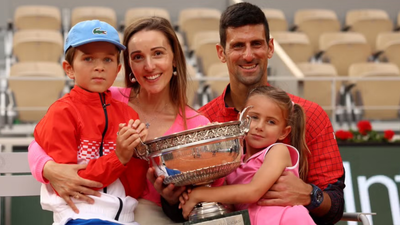
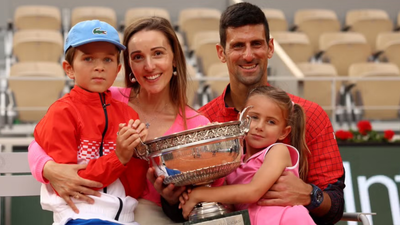
Before Novak Djokovic became the only player to win 24 Grand Slam singles titles and an Olympic gold medal, he was a young boy growing up in one of the hardest times in Serbia’s history. At just 12 years old, he spent nights hiding from air raids during the 1999 NATO bombing of Belgrade. At the same time, his parents were doing everything they could to keep his tennis dream alive, even when they had almost nothing. Years later, Djokovic has often said that those difficult days shaped the person and champion he became, giving him the strength that carried him to the top of world tennis.
How did Novak Djokovic survive war and still keep chasing his tennis dream?
In 1999, life changed overnight for the Djokovic family. During the NATO bombing campaign, they spent 78 straight nights waking up around 2 or 3 a.m. and taking shelter in the basement of Novak’s grandfather’s apartment as bombs fell across Belgrade.Even in those frightening days, Djokovic did not stop playing tennis. He trained whenever he could, sometimes on damaged courts surrounded by bomb craters. Looking back on those days, he said they changed the way he looked at life and competition.“It’s the fear of the unknown. Not knowing if the next bomb is going to hit your head… We were waking up every single night more or less at two, three a.m. for two and a half months. But it made us tougher. It made us more hungry, more hungry for the success.”Those experiences became the foundation of the mental strength that many fans admire in his game today.
How did Novak Djokovic’s parents sacrifice everything for his career?
War was only one challenge. Money was another.Tennis was an expensive sport, and Djokovic’s parents, Srdjan and Dijana, did not have the resources to support a professional tennis career. They ran a small pancake and pizza shop in the mountains and borrowed money from high-interest lenders to pay for coaching, equipment and travel.His mother, Dijana, has spoken about days when there was no money left in the family’s bank account. His father, Srdjan, once placed the family’s last 10-Deutsche Mark note on the table and told everyone that it was all they had.Djokovic has never forgotten those sacrifices.“Serbian history tells that family is the most important thing and you have to stick with the family. My parents went through a lot of hardships, financially, emotionally, every way… To see my parents struggle so much just so I could play tennis, it gave me a responsibility and a drive that never left me.”He has often said that his parents’ struggles became one of the biggest reasons he pushed himself to succeed.
Why did Novak Djokovic publicly defend his family during controversy?
As Djokovic became one of the biggest names in tennis, his family also found themselves in the spotlight. During different controversies over the years, he repeatedly stood by them while making it clear where they stood on violence and war.Speaking about his family’s past, Djokovic said their own experiences left no room for supporting conflict.“My father, my whole family, and myself, have been through several wars during the ’90s. As my father put in a statement, we are against the war, we never will support any violence or any war. We know how devastating that is for the family, for people in any country that is going through the war.”His comments reflected the lessons his family carried from living through years of conflict.
Why does Novak Djokovic’s life story continue to inspire people around the world?
Today, millions know Djokovic for breaking records and winning some of the biggest matches in tennis history. But the story behind those victories began long before the trophies.His childhood was filled with fear, financial struggles and uncertainty. Yet, instead of giving up, his family stayed together and kept believing that a better future was possible.That journey explains why Djokovic often speaks about family, resilience and gratitude. His success was not built only on talent. It also came from the sacrifices made by his parents and the determination he developed while growing up in one of the toughest periods of his country’s history.For many people, that part of his story is just as inspiring as the records he has set on the tennis court.