
In the 1980s, Scotland planted commercial trees across parts of a 9,000-year-old peatland; decades later, conservationists are removing them to protect wildlife and keep its stored carbon in the ground.The massive project centers on the Flow Country, a vast area of wet bog covering over 400,000 hectares across Caithness and Sutherland in northern Scotland. In July 2024, UNESCO named the area a World Heritage Site, placing it alongside natural treasures like the Great Barrier Reef and the Grand Canyon. It became the world’s first peatland to get this special status. King Charles III marked the event by visiting the Royal Society for the Protection of Birds (RSPB) Forsinard Flows reserve to reveal a special plaque.Despite its global fame today, large parts of this ancient landscape were nearly ruined forty years ago. During the 1980s, tax rules and government grants encouraged forestry companies to drain the wet ground, build deer fences, put in roads, and plant long rows of commercial trees.
Destruction of a wild habitat
The quick growth of these tree farms hurt the delicate bog. The trees pulled water out of the muddy ground, causing the deep peat soil to dry out and break down.This loss of open land threatened local birds that need wide, treeless spaces to build their nests. Before government action stopped the planting, the region lost about 900 pairs of Golden Plovers, nearly 800 pairs of Dunlins, and 130 pairs of Greenshanks. The area is also a vital home for Hen Harriers, insect-eating sundew plants, Common Scoters, and Red-throated Divers, which lay eggs near small bog pools.
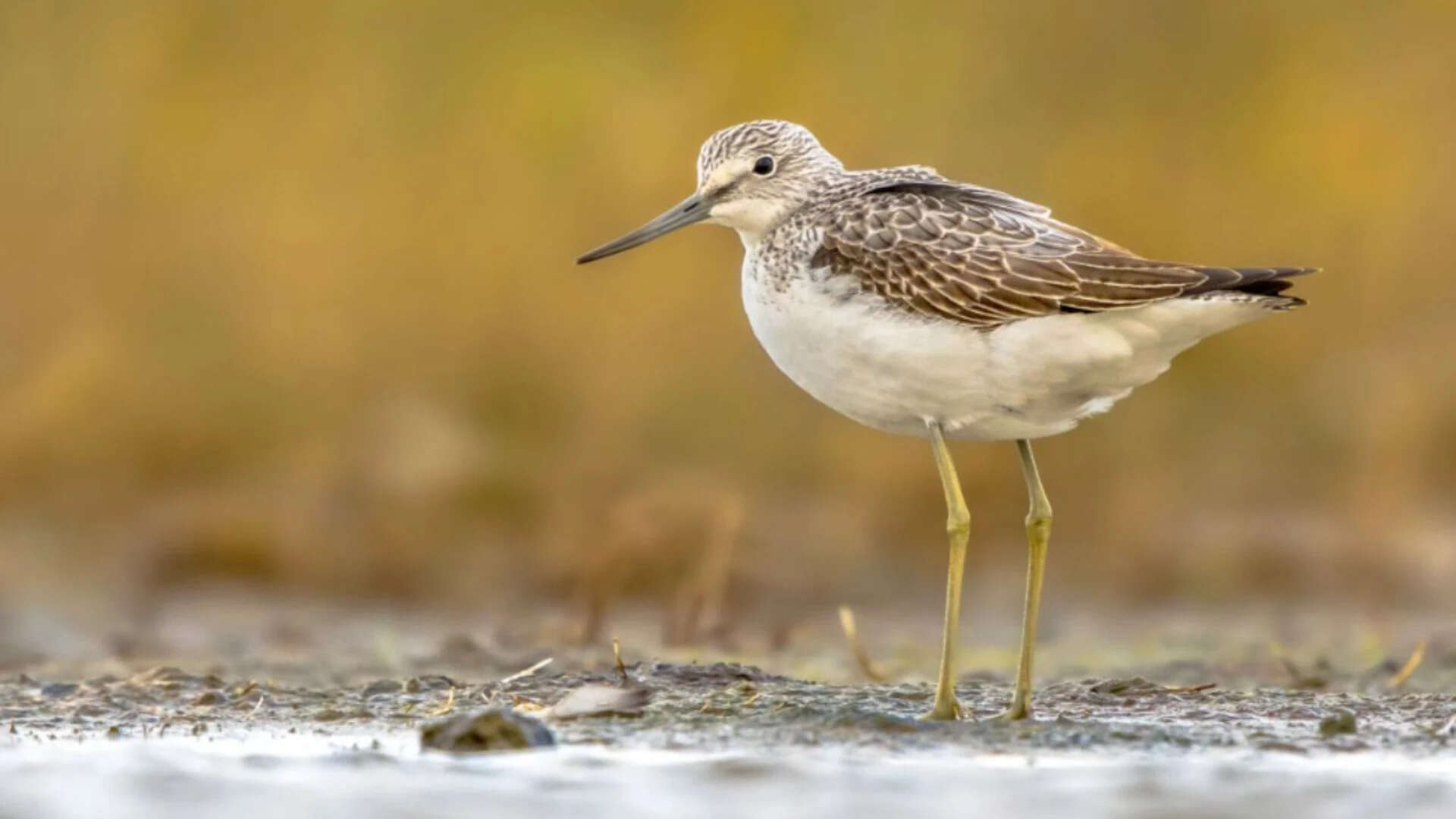
A Common Greenshank stood on the edge of a pool of water.
Pressure from the Nature Conservancy Council, the RSPB, and other green groups eventually forced the government to change its plans. In January 1988, Malcolm Rifkind, who was then Secretary of State for Scotland, announced that the government would protect over 140,000 hectares of peatland as Sites of Special Scientific Interest. Later that year, Nigel Lawson, then Chancellor, ended the tax breaks and grants that made tree planting on peat profitable.
Reversing the damage at Forsinard Flows
Real cleanup work started in 1994 when the RSPB bought the Forsinard Estate in the middle of the Flow Country, paid for by donations from its members. Today, RSPB Forsinard Flows is the largest nature reserve managed by the charity in the UK.Using money from two big European Union LIFE Nature grants, conservation teams tested ways to cut down the commercial trees, block drainage ditches, and soak the ground again. The main goal is to turn thousands of cleared hectares back into healthy, working bogs.The choice to cut down trees goes beyond helping wildlife. Peatlands are often called the lungs of the Earth because they absorb and trap carbon. The Flow Country alone holds roughly 400 million tonnes of carbon in its soil, which is more carbon than all of the UK’s forests and woods combined. When peat dries out, that trapped carbon leaks back into the air as heat-trapping gas.
Government backing and broader targets
Peatlands cover over two million hectares across Scotland, making up 25 per cent of the country’s land area and more than 60 per cent of all UK peatlands.To help fix this land, the Scottish Government promised £250 million over ten years to restore 250,000 hectares of damaged peatlands by 2030 through its Peatland ACTION Programme. Official records show that over 75,000 hectares have been fixed so far, including a record 10,360 hectares completed during the 2023-24 financial year.Scotland’s peatland policy focuses on three main steps: protecting healthy sites, taking care of working land, and fixing damaged areas. New science shows that other practical steps, like keeping farm animals and deer from overgrazing, re-wetting farm soil, and changing how grassy peatlands are used, can cut gas emissions even further.
Bringing communities into the bog
Fixing remote peatlands means working in tough conditions, where cold weather and wet mud make field tasks hard. To gain public and political support, conservation groups built better visitor spots at Forsinard Flows.The reserve now features a Lookout Tower that gives visitors a wide view of the open landscape. New investments have added modern research rooms and housing on site, letting scientists, researchers, and volunteers live at the reserve while studying how healthy bogs trap carbon and bring back rare birds.Beside storing carbon and creating homes for wildlife, the Scottish Government sees peatland repair as a way to create green jobs. The long cleanup effort is bringing countryside work to northern Scotland, helping local hotels and cafes, and building up green tourism.