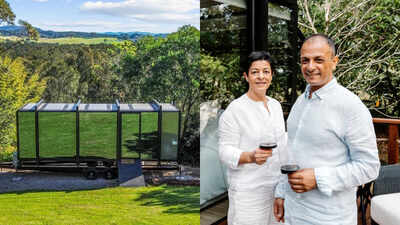
When mortgage repayments suddenly become the biggest expense on a dream property, adding another building might sound like an unlikely solution. For Sunshine Coast homeowners Sibel and Yalcin Karaman, however, a 6-metre-long glass pod on their farm has become a surprisingly powerful income generator. According to Real Estate website report, the couple invested about A$100,000 in the prefabricated tiny home after rising mortgage repayments put pressure on their finances. What took only three days to assemble has since developed into a sought-after short-term rental, bringing in about A$200,000 a year with occupancy running at roughly six nights out of seven.
A tiny home with a big return
The Elsewhere Pod sits on the couple’s Sunshine Coast hinterland property and measures about 6 metres by 2.4 metres, states the online report. Its compact footprint is offset by floor-to-ceiling glass, contemporary interiors and a design aimed at making the most of its rural surroundings. Since launching in May 2025, bookings have doubled, with nightly rates ranging from A$220 to A$580 depending on demand, claims the report by Real Estate.The guest mix has also given the couple a steady stream of visitors. Around 60 per cent are Brisbane couples looking for a quick escape from the city, while domestic travellers make up roughly 30 per cent. International visitors account for as much as another 30 per cent, adds the online report. The pod operates alongside the couple’s larger renovated farmhouse rental, creating two separate sources of accommodation income from the same property.
Three days from flat pack to retreat
The speed of construction is one of the biggest attractions of the pod. Instead of a lengthy conventional building project, the structure arrived as a prefabricated flat-pack kit and was assembled on the property in just three days.That shorter construction timeline can reduce the disruption, labour requirements and uncertainty associated with traditional building projects, adds the online report data.For homeowners with suitable land, the concept offers another way to make underused space productive. A backyard pod can function as a holiday rental, guest accommodation, studio or longer-term living space without requiring the footprint of a conventional house.
Part of Australia’s tiny-home boom
The Karamans are part of a growing group of Australian property owners exploring modular accommodation as housing costs and mortgage pressures reshape the property market.Elsewhere Pods, the company behind the retreat, has expanded its range beyond compact studios. Its designs include granny flats and larger three-bedroom homes with wraparound verandahs, positioning modular construction as an option for investors, downsizers and families. The company now reports annual turnover of about A$9 million, with sales having doubled year-on-year since 2022.
A changing idea of home
Australia’s tiny-home sector has expanded rapidly, with sales reportedly increasing by 120 per cent over five years. The Australian Tiny House Association estimates that more than 10,000 people now live in tiny homes or modular pods across the country, adds the report. And for the Karamans, the appeal is less about downsizing than making their existing property work harder. Their glass pod has transformed a relatively small patch of their farm into a high-demand getaway, while providing an additional income stream alongside the main rental.Image Courtesy: Real Estate