
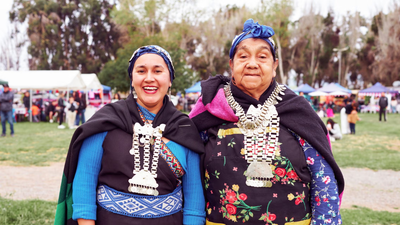
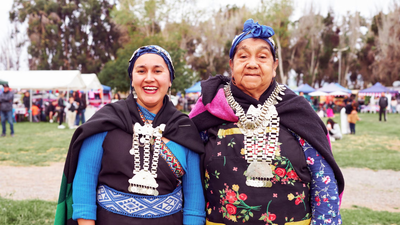
In 1993, Chile passed a major Indigenous Law that created a formal process for returning ancestral land to Indigenous communities. Over the following 30 years, more than 510,000 acres were returned to the Mapuche, Chile’s largest Indigenous group. However, a long-term study found that native forest cover on these lands has changed very little. Researchers from the University of California, Santa Barbara (UCSB) and the University of Talca studied 1,577 parcels returned to Mapuche ownership between 1994 and 2023. The study, published in Nature Sustainability, found that commercial non-native forest plantations decreased by 18%, while agricultural pasture increased by 4.5%. However, there was no statistically significant improvement in biodiversity, carbon storage or soil erosion control. The findings challenge the idea that returning land to Indigenous communities automatically leads to environmental restoration.
Traditional land use shapes the results
The Mapuche resisted Spanish colonial forces for centuries and maintained control over their territory until military campaigns by Chile and Argentina between 1860 and 1881 took control of their lands. The Mapuche population was eventually confined to about 3,000 small reservations. After decades of conflict, Chile’s 1993 Indigenous Law created a system through which the government could purchase land from private owners and return it to Mapuche communities. To study the environmental effects of the program, researchers used satellite images and government data. They compared land that had already been returned with similar parcels that were still waiting for restitution. The results showed that land use after restitution was influenced mainly by traditional economic activities rather than large-scale efforts to restore native forests. Dany Jaimovich, the study’s lead author and a professor of economics at the University of Talca, explained that the increase in pasture was consistent with traditional Mapuche farming practices. “Livestock raising has been central to the Mapuche economy for centuries,” Jaimovich said. He noted that horses, firearms and cattle became important to the Mapuche and helped them maintain their independence before the military campaigns of the 19th century. The researchers were surprised that native forest cover did not increase. Felipe Jordán, an assistant professor at Pontificia Universidad Católica de Chile and a former UCSB postdoctoral researcher, said they had expected native forests to expand because forests have strong cultural importance for the Mapuche.
Land rights and environmental restoration are different goals
The researchers stressed that the main purpose of land restitution is to address historical injustice and restore Indigenous communities’ control over their land. It should not automatically be treated as an environmental restoration program. Robert Heilmayr, senior author of the study and an associate professor at UC Santa Barbara’s Bren School of Environmental Science & Management, said land rights give communities the power to decide how their land should be used. Those decisions may not always match outside environmental expectations. He said that claims that Indigenous land reforms will always produce environmental benefits are too simple. According to Heilmayr, the main goal of restitution should be to restore rights and address historical dispossession. If governments also want environmental restoration, they may need to provide direct financial support so communities can afford expensive conservation projects. Jaimovich said the findings add more detail to the common belief that Indigenous land ownership automatically produces better environmental outcomes.
A different situation from undisturbed indigenous lands
The researchers noted that the returned lands in Chile are different from many Indigenous territories discussed in other environmental studies. Unlike some land-titling programs in relatively undisturbed parts of the Amazon, many of the Chilean properties had already been heavily changed by decades of commercial forestry and agriculture before they were returned. Some of the land also lacked a continuous history of traditional management and was located far from where current Mapuche communities live. Heilmayr said these differences can lead to very different environmental results from those seen in studies of Indigenous communities receiving land in less-developed regions. The researchers are now examining another part of Chile’s Indigenous Law: restrictions that prevent communities from selling, leasing or mortgaging restituted land. They are studying how these rules affect long-term economic development and conservation as Chile and other countries continue to adjust their policies to international frameworks such as the United Nations Declaration on the Rights of Indigenous Peoples. The study ultimately shows that land restitution and environmental restoration are not necessarily the same thing. Returning land can restore ownership, rights and self-determination, while improving damaged ecosystems may require additional funding, planning and long-term conservation support.