
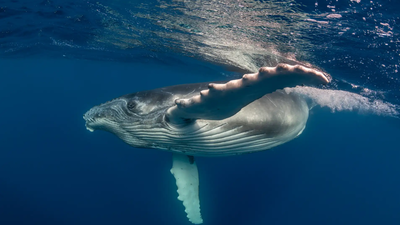
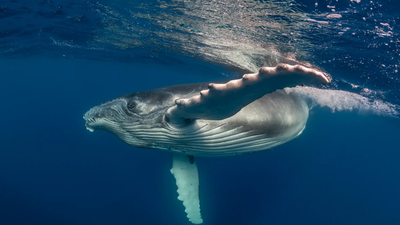
A mother humpback whale was filmed repeatedly returning to her stillborn calf off Australia’s Gold Coast, displaying prolonged attention toward the newborn in an encounter researchers describe as the first scientifically documented case of such behaviour in the species. The footage, recorded in July 2025, is now detailed in a new study published in Discover Animals, with ABC News, AAP and Griffith University also reporting on the findings. The footage was captured near Palm Beach Reef after the whale had apparently given birth. The calf was found lying on the seafloor, with no visible movement or breathing. Rather than leaving the area, the mother repeatedly returned to the calf. Researchers observed her approaching the body, touching it with her head and pectoral fin and positioning herself alongside it. At times, she remained almost motionless beside the newborn, appearing to maintain eye-to-eye contact. The observation lasted at least several hours. Researchers believe the mother and an accompanying adult whale may have remained in the area for longer, potentially over subsequent days, although sightings after the initial encounter could not confirm that the same individuals were involved.
Why the behaviour is so unusual
Scientists have documented animals responding to dead members of their own species before, particularly among socially complex mammals. Dolphins, killer whales and other toothed whales have been observed carrying, supporting or remaining with dead calves.Such behaviour is far less frequently documented among baleen whales, the group that includes humpback whales. The new study notes that the apparent absence may partly reflect how difficult these events are to observe in the open ocean. There is also a biological reason the incident may have been especially difficult to document. Newborn humpback calves have relatively little blubber and can sink after death. That means a mother may lose physical contact with a dead calf relatively quickly, leaving few opportunities for researchers or members of the public to observe what happens afterward.
The mother did not try to bring the calf back to the surface
One detail particularly interested the researchers. After birth, a healthy humpback calf needs help from its mother to reach the surface and breathe. In documented births, mothers have been observed supporting or lifting newborn calves. In this case, however, the mother was not seen attempting to lift the calf from the seafloor. Instead, she repeatedly approached it and remained beside it.Researchers said this could suggest that she recognised the calf was unresponsive, although the observation cannot establish what the whale understood about the calf’s death.
Does this mean whales grieve?
That is where scientists are being deliberately cautious. The researchers describe what they observed as post-mortem attentive behaviour, a broader scientific term for sustained attention toward a dead individual. The behaviour can include touching, remaining nearby, supporting or carrying a body.The new study says the humpback’s actions were consistent with responses documented in other socially complex mammals and could represent a grief-related response. But researchers cannot directly determine an animal’s emotional state from behaviour alone.Possible explanations include maternal attachment, caregiving instincts, confusion or a response to the sudden loss of a newborn. As the study notes, further observations would be needed before scientists could establish what such behaviour means for humpback whales.
A rare window into the bond between mother and calf
The significance of the encounter goes beyond the emotional reaction it evokes in people. Humpback whales already show extensive maternal investment, with mothers caring for calves during a prolonged period of development.Researchers say the footage provides an unusually close look at what may happen when that bond is abruptly interrupted. For now, the Gold Coast observation remains a single documented case. Scientists say continued reporting of rare birth and death events could help determine whether similar responses occur more often than current scientific records suggest.What makes this encounter remarkable, researchers argue, is not that it proves whales experience grief in the same way humans do, but that it opens another window into the complex social and behavioural lives of animals whose experiences remain difficult to observe beneath the ocean’s surface.