
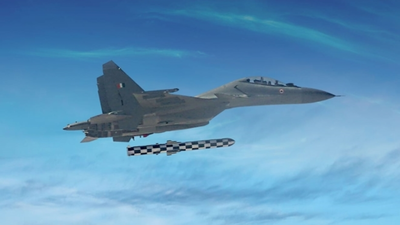
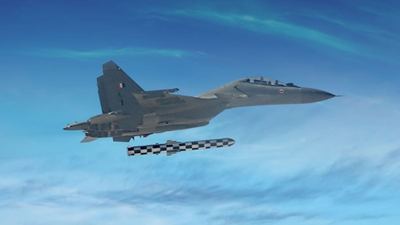
In the early hours of May 7, 2025, India’s supersonic cruise missile the BrahMos cemented its place as one of the most impressive weapons of its class. As the operation progressed, India hit multiple targets in Pakistan, including well-defended air bases with the BrahMos. Soon the missile turned into one of the country’s biggest defence export success stories. Now with a growing line of nations queuing up to acquire the weapon that proved its mettle during Operation Sindoor. The missile has emerged as a potent calling card for New Delhi’s defence diplomacy, particularly among nations wary of China’s expanding footprint.Flying at nearly three times the speed of sound, hugging the earth’s surface to stay under enemy radar, and carrying a low radar cross-section, BrahMos remains an exceptionally difficult target to intercept. With the missile’s combat record now validated in a real conflict, its export appeal has only grown stronger. What makes the missile such an attractive export is the very design philosophy that has kept it ahead of adversarial air defences for over two decades.The Philippines became the first foreign customer, signing a contract worth around USD 375 million in 2022 for the shore-based anti-ship variant. Manila’s decision was driven largely by its maritime disputes with Beijing in the South China Sea, where the missile’s sea-skimming, near-unstoppable profile offers a credible deterrent. Vietnam has followed close behind, with officials confirming that an agreement has effectively been inked. This as Indonesia signed a deal to acquire the BrahMos and the Astra air-to-air missile, during PM Modi’s visit to Jakarta in July this year. Indonesia and India have also agreed to set up a joint committee to deepen cooperation on technology transfer, a factor that could sweeten the deal further for Indonesia’s domestic defence industry.Beyond Southeast Asia, the queue is swelling further west. The UAE is reportedly in early-stage talks for a package that could see it procure the BrahMos, marking the missile’s potential entry into the Gulf. Abu Dhabi’s interest is said to have sharpened after recent regional tensions exposed vulnerabilities to strikes from across the Strait of Hormuz. Countries including Malaysia, Singapore, Brunei, Thailand, South Africa, Qatar, Oman and Brazil have also expressed interest at various points, demonstrating just how wide BrahMos’s appeal has become among nations seeking a relatively affordable, combat-proven deterrent.BrahMos Aerospace, meanwhile, is not resting on this success. Work is underway on a Next-Generation variant that will be lighter and faster, and capable of being carried by smaller platforms such as the Tejas, expanding the missile’s reach well beyond the Sukhoi fleet that currently carries it. As India’s defence export ambitions grow, BrahMos looks set to remain at the very leading edge of that push.