
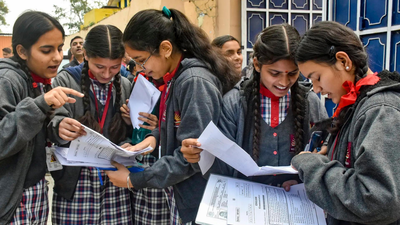
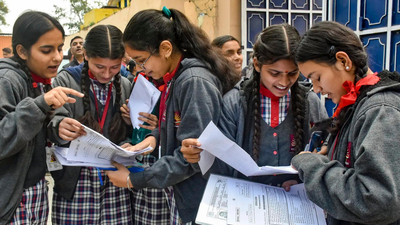
NEW DELHI: After a series of exam-related controversies, including the NEET-UG row, the Prime Minister’s office (PMO) has stepped in to monitor sweeping examination reforms that the ministry of education is working on. The changes – being fast-tracked based on NE recommendations – are being considered for both board exams and high-stakes entrance tests such as NEET and JEE, and propose up to 50% weightage for board marks in admission/merit, closer alignment of entrance tests with school syllabi to reduce dependence on coaching centres, multiple attempts, and a gradual shift towards adaptive on-demand computer-based tests.Govt sources told TOI the immediate focus is on reducing the “high-stakes” nature of one-shot examinations, strengthening exam integrity and moving assessments towards CBT to minimise paper-handling risks. The approach adopted for the NEET-UG re-examination, where multiple govt agencies came together, is expected to become the template for future conduct of major national tests, they added.The reforms have been recommended by MoE’s nine-member committee set up in 2025 to examine students’ dependence on coaching, the spread of “dummy schools” and fairness in high-stakes entrance tests. The panel’s final report is likely to be submitted to govt in coming weeks. The committee has also recommended closer alignment of entrance tests with school syllabi.
For aligning JEE, NEET syllabi, NCERT can act as nodal agency: Panel
Another significant proposal under consideration is about giving school board performance “substantial weightage – up to 50%, suitably normalised – in admission/merit”: a major shift from the current near-total dependence on entrance test scores for access to top professional and undergraduate programmes.The panel has linked any move to give board marks greater weightage with improving board-exam integrity to curb the phenomenon of inflated marking and excessive moderation, showing internal assessment and practical marks separately as grades.The committee has suggested that NCERT be made the nodal agency for aligning Class 11-12 syllabi with JEE and NEET requirements and harmonise syllabus, pedagogy and evaluation “on a par as far as possible”.To reduce one-shot pressure, the panel, in its draft report under preparation, has recommended a multi-attempt framework, with exams “at least twice a year” and a gradual move towards on-demand testing. It has suggested increasing the number of JEE attempts from two to 3-4, scrapping the Dec-Jan JEE attempt to decongest the exam calendar and ensuring a clearer gap between Class 12 boards and entrance tests.In the longer term, draft calls for moving towards “less-coachable, aptitude-oriented and adaptive CBT”, with non-linguistic items where appropriate, while retaining subject-specific evaluation for STEM courses. The panel, however, has not argued for easier papers, noting that very easy tests could weaken ranking accuracy among lakhs competing for limited seats.The committee has also recommended psychometric analysis of NTA data by IIT-Kanpur to assess the “validity, reliability and discriminatory power” of JEE Main, JEE Advanced, NEET-UG and CUET.The committee has also asked govt to examine “a comprehensive regulatory framework for coaching centres – including consideration of legislative measures”.