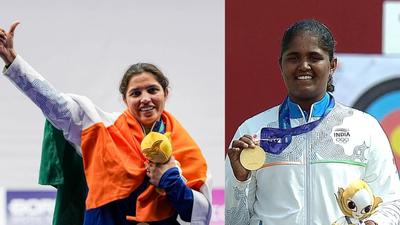
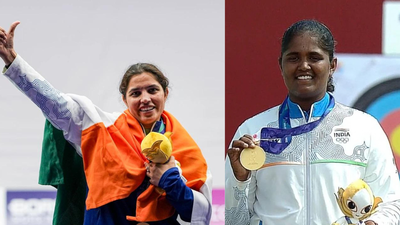
New Delhi: India’s 21-gold campaign at the Aichi-Nagoya Asian Games has thrown up an interesting set of numbers: champions who reached the continental podium despite receiving relatively modest targeted financial assistance under the govt’s elite-athlete programmes.Their stories do not diminish the broader support extended to Indian sport. Instead, they underline how performances can sometimes run ahead of the funding pipelines designed to identify and back medal prospects.The clearest example is 17-year-old archer Kumkum Mohod. A recently-inducted Target Olympic Podium Scheme (TOPS) athlete for the Aich-Nagoya preparatory cycle, Kumkum became the first Indian woman to win an individual recurve gold at the Games, defeating South Korea’s Oh Yejin 6-5 after a shoot-off. She also won gold in the women’s recurve team event and silver in mixed team, ending the campaign with three medals and securing India an LA Olympics quota.The funding support extended to her puts her targeted assistance at just Rs 50,000. That is a striking figure against the scale of her achievement, even though her preparation also benefited from the budget allocated to the respective national sports federations (NSFs) under the Annual Calendar for Training and Competition (ACTC).The same pattern is visible in compound archery. Sahil Rajesh Jadhav, who helped India win mixed team gold with Chikitha Taniparthi and also contributed to the men’s team gold, received Rs 50,000 under TOPS during the Games cycle. His top podium finish also delivered India an Olympic quota in compound archery.Kushal Dalal and Thirumuru Ganesh Maniratnam, members of India’s men’s compound team that defeated China for gold, also received only Rs 50,000 each under TOPS during the cycle. Yet the trio of Dalal, Ganesh and Jadhav produced one of India’s five archery gold medals at the Games.The contrast becomes sharper when placed alongside athletes receiving substantially larger targeted allocations. Boxer Ankush Panghal, for instance, received Rs 75,000 under TOPS, while his other gold partners in boxing Lovlina Borgohain and Parveen Hooda received Rs 22.97 lakh and Rs 8.59 lakh assistance, respectively, during the Games cycle.These figures show that support was available at markedly different levels depending on an athlete’s classification, requirements, and timing within the system.Similarly, in sailing, Harshita Tomar and Shital Verma secured the bronze medal in the women’s skiff, with both athletes not being part of the TOPS programme. Also, in the same sport, sailors Manu Francis and Prince Noble won silver in the men’s skiff, but both were not part of either TOPS Core or Development group. Boxer Kapil Pokhariya, too, wasn’t part of the TOPS.In shooting, the trio of Manisha Keer, Neeru Dhanda and Aashima Ahlawat won the silver medal in Trap women’s team event, with Manisha receiving no TOPS assistance while Neeru, a TOPS Development athlete, getting Rs one lakh. In athletics, silver-wining javelin thrower Yashvir Singh wasn’t part of the TOPS funding and largely prepared through the ACTC budget. In kurash, bronze-winner Pincky Balhara, competing in the -78 kg event, received Rs 75,000 under the TAGG scheme during the Games cycle.BOX:Low-targeted assistance medallists (under TOPS/TAGG):Archery: Kumkum Mohod (Rs 50,000), Sahil Jadhav (Rs 50,000), Kushal Dalal (Rs 50,000), Thirumuru Maniratnam (Rs 50,000), Boxing: Ankush (Rs 75,000), Kapil Pokhariya (not covered under TOPS); Shooting: Neeru Dhanda (Rs 1,00,000), Kurash: Pincky Balhara (Rs 75,000), Athletics: Seema (Rs 25,000), Baranica Elangoan and Yashvir Singh (both not covered under TOPS).