
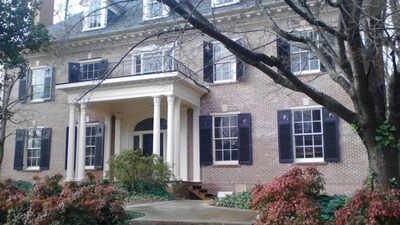
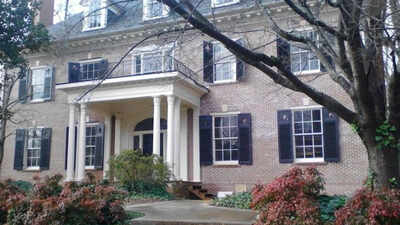
Some historic homes are preserved by restoring their walls, replacing their old roofs, and repairing the damage. But the Randolph-Lucas-Jones House in Atlanta required something else. It needed a police escort, utility crews to lift power lines out of its path, and a roof hinged down so each half could clear the route. Built in 1924, the 8,000-square-foot mansion was moved about 2 miles in 2013 after its new owners stepped in to save it from demolition, according to the Georgia Trust for Historic Preservation.
Built for a Jefferson descendant
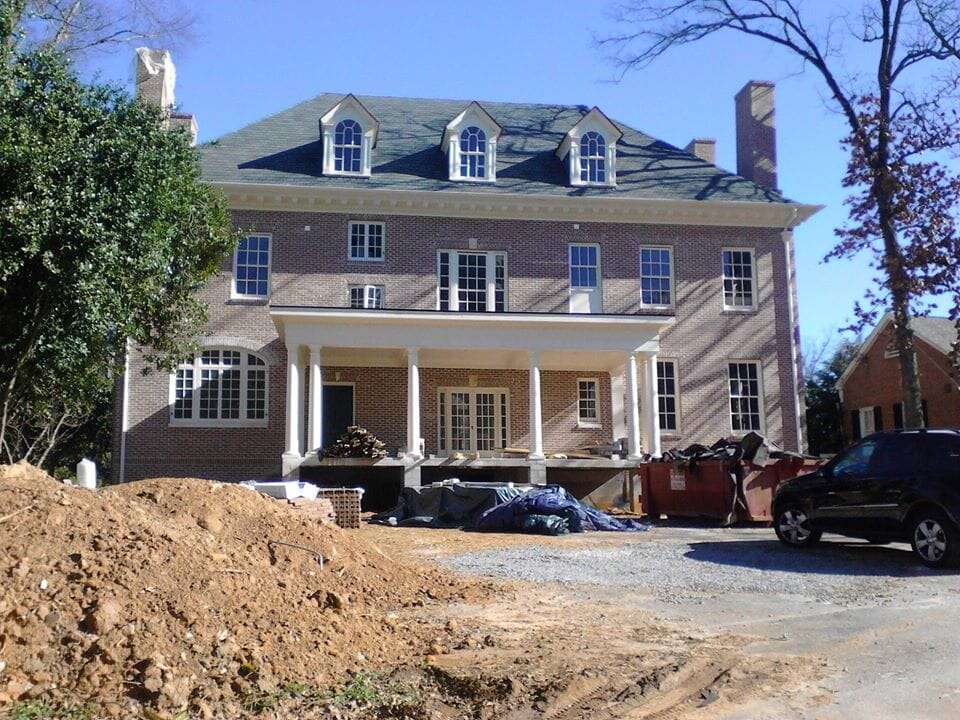
The Georgian Revival-style home was built in 1924 for Hollins Nicholas Randolph, an Atlanta attorney and businessman and the great-great-grandson of Thomas Jefferson. The house was designed by architect P. Thornton Mayre, who also helped build the Fox Theatre. The home’s design was based on the plan of Randolph’s ancestral home near Charlottesville, Virginia. The Randolphs lived there for about a decade before selling it to Margaret Lucas in 1935. Her husband, Arthur, operated several cinemas around the city, according to Rough Draft Atlanta. She stayed until her death in 1987. The house later became a fixture of fiction, too. A painting of it appeared on the cover of Anne Rivers Siddons’s 1988 bestselling novel Peachtree Road.
The sale and trouble
In 1998, the Lucas family sold the property to the 2500 Peachtree Condo Association. During this time, the house was shifted forward on its lot, with plans to use it as a clubhouse and an event space. Maintenance bills quickly ended that idea, and the house fell into disrepair. By the autumn of 2012, the association held a city demolition permit and was offering the house free to anyone who could move it.Roger Smith and his husband, the late preservation advocate Christopher M. Jones, got the news while they were at a function at the Atlanta History Center. City Council member Mary Norwood pulled Jones into a corner for a private conversation. “Mary came up to us and pulled Christopher away into a corner for a private conversation. She told him the house was going to be demolished, and I think he decided that night we had to save it,” Smith told the outlet. Their firm, NewTown Partners, focused on distressed historic properties. Smith and Jones were chosen as project partners in January 2013. They closed on the empty lot at 78 Peachtree Circle in Ansley Park on May 30, which became the house’s new location. They also agreed to donate a preservation façade easement to the Georgia Trust for Historic Preservation, so the exterior could never be torn down. The project reportedly had a $1.5 million budget.
Taking a mansion apart to keep it whole
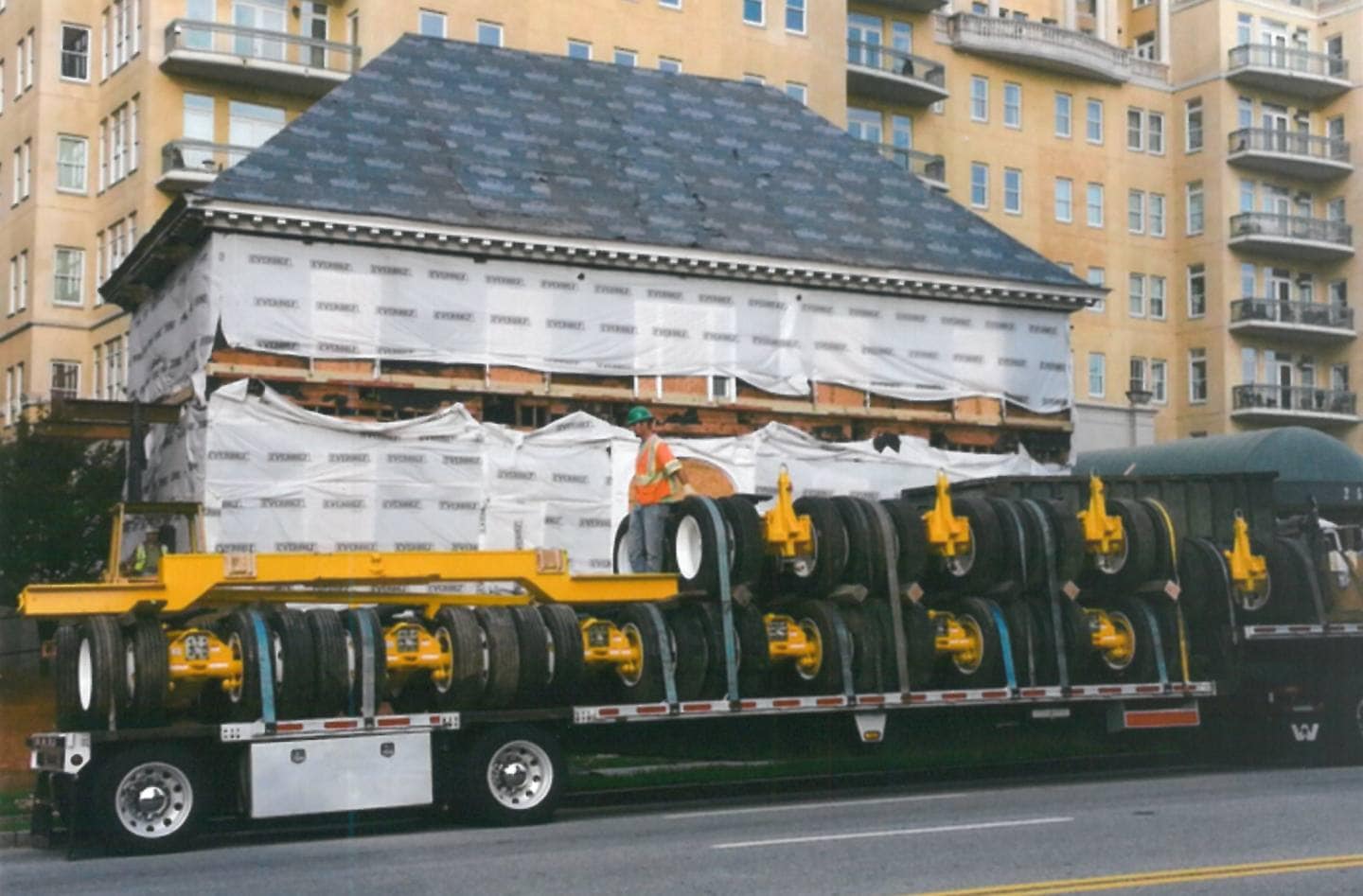
To save the mansion, it first had to be carefully dismantled. Preparations began in July, when the crew removed the brick façade and slate roof, significantly reducing the building’s weight. The bricks were carefully set aside to be cleaned and reinstalled after the move. Adjustments were to be made inside: the second-floor doors and baseboards were pulled and numbered so each could return to its original spot. The frame was split above the first floor, and each section topped out at 19 feet.The move began on November 8, 2013. A temporary road was built across a vacant lot opposite the Woodruff Arts Center, giving the trucks a direct run to the new address. The trip was 2.1 miles and took seven hours, according to the Georgia Trust. The house was slowly moved using hydraulic lifts, the trust said.Setting the house down was the easy part. The comprehensive rehabilitation began in 2014. Smith and Jones sold their own home and rented an apartment behind the lot to oversee the work. Smith has described money as a monthly puzzle of what could be paid for and finished. “There was this misnomer that we had all this money to do this project, when actually it was a shell game every month to see what we could pay for and complete. This wasn’t your usual renovation; it took care and planning and research to get it just right. Every step felt like pushing a ‘55 Buick uphill. But it was worth every cent,” Smith said. Jones died in January 2019, a few months shy of the main renovation being complete, and never lived in the house. It was renamed the Randolph-Lucas-Jones House in his honour.