
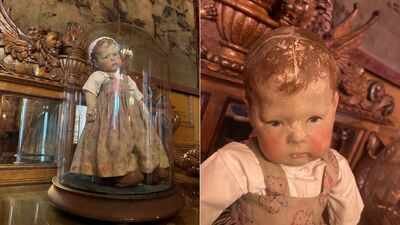
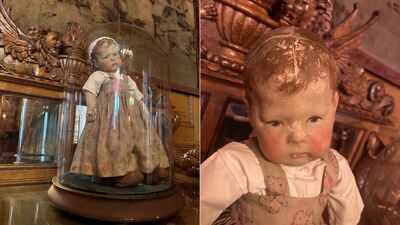
A Victorian doll named Michael occupies a unique place in Washington, DC’s history, not simply as an antique kept in a museum but as part of a family tradition shaped by superstition, grief and spiritualism. Displayed at the Heurich House Museum, Michael was reportedly seated at the dinner table when the Heurich family entertained 13 guests, helping them avoid a number considered unlucky. His story is closely connected to Amelia Heurich, whose experiences and beliefs reflected a wider fascination with communicating with the dead during the late 19th and early 20th centuries.
What connects Michael the Victorian doll, the Washington museum and spiritualism
Michael’s place in the Heurich household was more unusual than that of an ordinary decorative doll. According to an Axios report, the family reportedly brought him to the dinner table whenever 13 guests were present, making him the additional guest who helped ward off bad luck. The doll remains on display in the dining room of the Heurich House Museum, situated in Washington’s Dupont Circle neighbourhood.The museum’s own account also describes the tradition. It notes that Michael occupied the 14th chair at dinner, while the house had 12 window panes replacing an original arrangement of 13. These details reveal how concerns about unlucky numbers became part of the family’s everyday customs.
Amelia Heurich’s beliefs reflected a wider movement
Amelia Heurich, the family matriarch, was fascinated by spiritualism, a movement based on the belief that communication with the dead was possible. As explained in the Heurich House Museum’s spiritualism history article, the movement had attracted followers across the world by the turn of the 20th century, including well-known figures such as Marie Curie, Mark Twain, Frederick Douglass and Queen Victoria.Spiritualism offered people a way to explore questions about death and the possibility of an afterlife. Its appeal extended beyond those who accepted its claims without doubt, drawing interest from both believers and sceptics. In Amelia’s household, the movement became connected with personal experiences, family stories and practices intended to protect against misfortune.The museum’s 2026 Spiritualism Tour listing places the family’s beliefs within the social and historical climate of turn-of-the-century Washington. Rather than presenting Amelia simply as a superstitious figure, the description encourages visitors to consider the circumstances that shaped her outlook.
Grief and mysterious sounds shaped the family story
A significant part of Amelia’s history was the death of one of her children at a young age. The Heurich House Museum’s 2023 article suggests that grief may have contributed to her interest in spiritualism, while also noting that her diaries often conveyed feelings of nervousness and fear. The belief that contact with the dead might be possible may have offered reassurance during a painful period.According to Axios, Amelia sometimes associated unexplained knocking sounds inside the mansion with the spirit of her infant daughter. A diary entry from 1928 recorded her hearing repeated knocks in her room and hoping that they meant everything was well.The 2026 tour description also highlights diary references to mysterious rappings and family recollections of gatherings known as circles. These accounts form part of the house’s history, although they do not establish that supernatural events occurred. Instead, they show how unusual sounds and private experiences could acquire personal meaning within a family already interested in spiritual communication.
How did spiritualism become part of everyday life
The Heurich family’s customs reflected a period when spiritualism and superstitions found their way into domestic life. According to the Heurich House Museum’s 2023 article, Amelia’s experiences included mysterious knocks, while family members remembered circles being held in the home. These gatherings and traditions helped preserve the family’s connection to spiritualist beliefs across generations.The museum’s 2026 Spiritualism Tour description presents these practices alongside the family’s concerns about luck, loss and uncertainty. The emphasis is not solely on unexplained events but also on the human need to find meaning during difficult times. Michael’s presence at the dining table became one of the most recognisable expressions of that outlook, turning a small household object into a lasting part of the family’s history.
Michael remains a museum attraction instead of a confirmed haunting
Despite the eerie details surrounding his past, Michael is not officially considered haunted by the Heurich House Museum. Axios makes this distinction clear in its report, noting that the doll remains on display in the mansion’s dining room. His reputation rests on the family stories associated with him rather than any verified supernatural activity.The Heurich House Museum preserves the home of Christian Heurich, a German-American immigrant and prominent Washington brewer. The museum’s 2026 event listing explains that the mansion was built between 1892 and 1894 and remained in the Heurich family until 1956, before eventually becoming a museum. The building offers a setting in which domestic history and spiritualist traditions can be explored together.