
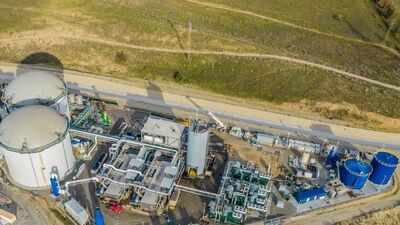
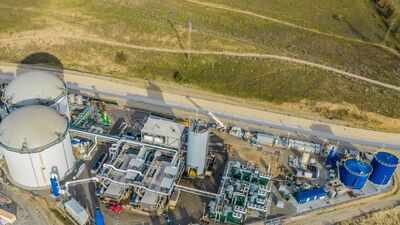
A bioenergy facility in Rialto, California, is giving food waste and sewage treatment by-products a second use by converting them into renewable natural gas and useful soil products. Designed to handle up to 1,000 tons of organic material every day, the Rialto Bioenergy Facility provides an alternative to sending large quantities of waste to landfill. The project also connects waste management with renewable energy production, offering municipalities a way to deal with organic waste while creating a fuel that can enter the existing natural gas network.
How the California facility turns organic waste into renewable gas
Located in Rialto, around 50 miles east of Los Angeles, the Rialto Bioenergy Facility was developed to process organic waste collected from municipal waste streams and sewage treatment operations.According to SoCalGas, the facility can accept up to 1,000 tons of material daily. This includes food waste separated from municipal rubbish, liquid waste and municipal biosolids, the material left behind after wastewater treatment. Bringing these different waste streams to one location allows the facility to recover resources that would otherwise require disposal.The project was originally designed, built, operated and financed by Anaergia, a company specialising in technologies that convert organic waste into energy. Its processing system uses anaerobic digestion, a method in which microorganisms break down organic material without oxygen. This process produces biogas, which can then be treated to remove impurities and increase its methane content.The resulting renewable natural gas, commonly known as RNG, can be used in much the same way as conventional natural gas.
Sewage sludge also becomes agricultural fertiliser
One of the facility’s important features is its ability to process sewage sludge separately from food waste. Municipal wastewater treatment plants produce biosolids during the cleaning of sewage, and these materials need further treatment before they can be put to beneficial use.The California Water Environment Association (CWEA), in its report explains that the Rialto project converts Class B biosolids into Class A fertiliser through a drying process. The plant was also designed to incorporate a technology called pyrolysis, which uses heat to transform dried material into a carbon-rich product known as biochar.According to the facility’s project information published by Anaergia, it can process up to 300 tons of dewatered biosolids daily. Its systems are designed to produce up to 30 tons of high-carbon fertiliser and 85 tons of digestate fertiliser per day.The combination of food waste digestion and biosolids processing is what makes the Rialto project different from facilities that concentrate on only one type of organic material.
The facility produces energy beyond renewable gas
The plant’s operations are not limited to producing fuel for the gas network. It also has a combined heat and power system that generates electricity while recovering heat for use within the facility.The US Department of Energy’s CHP Technical Assistance Partnerships at Oak Ridge National Laboratory describes the installation as a 4.6-megawatt combined heat and power project. It uses 4 reciprocating engine units, comprising two 800-kilowatt engines and two 1,500-kilowatt engines.The recovered heat has practical applications in the plant’s operations, particularly for heating the digesters and drying biosolids. This helps the facility make use of energy generated during its own waste-processing activities rather than relying entirely on external supplies.The ORNL project profile indicates the total cost of the project is about $185 million. Anaergia’s project information shows the combined heat and power system was commissioned in 2019, with the bioenergy facility itself coming online in 2020.The facility is designed to produce up to 985,000 MMBtu of renewable natural gas annually. The gas is treated to remove unwanted substances before being upgraded to pipeline quality. SoCalGas worked with the developer to establish a dedicated pipeline injection facility, allowing the renewable gas to enter its existing distribution network.This connection means the fuel can be supplied through infrastructure already used to transport conventional natural gas.
Why was the Rialto project developed
The facility was developed partly in response to California’s efforts to reduce the amount of organic waste sent to landfills. The state’s Senate Bill 1383, signed into law in September 2016, established a target of diverting 75% of organic waste from landfills by 2025.Food scraps and other organic materials can produce methane when they break down in landfills. Capturing these materials and processing them through controlled digestion offers an alternative that also creates a usable energy source.SoCalGas identifies the Rialto facility as one of the large-scale projects supporting the state’s waste diversion and carbon neutrality goals. It also notes that the renewable gas can be used for transportation fuel, electricity generation and other clean energy applications.The CWEA report highlighted the project’s environmental contribution, estimating that its reduction in net carbon dioxide emissions could reach approximately 220,000 metric tons annually. The association compared this reduction with taking around 47,500 cars off the road.The benefit comes from two main activities. The facility produces renewable fuel that can replace fossil-based natural gas, while also diverting organic waste that might otherwise generate methane in landfills.
The project receives international recognition and changes ownership
The scale of the facility’s waste-processing and energy recovery operations brought it international attention in 2022. According to the CWEA, the Rialto Bioenergy Facility received the Distinction Award for Wastewater Project of the Year at the Global Water Awards held in Madrid, Spain.The CWEA report described the $185 million development as one of North America’s largest organic waste processing projects. At the time, its reported capacity was to convert up to 1,000 tons of wastewater biosolids and landfill-diverted organic waste daily into approximately 985,000 MMBtu of renewable natural gas and agricultural fertiliser.Bioenergy International reported that Sevana Bioenergy acquired the Rialto facility in 2024. The company, which is based in Boise, Idaho, develops and operates large-scale renewable natural gas projects.SoCalGas confirms that the facility is now owned by Sevana Bioenergy and continues to serve the Southern California region.