
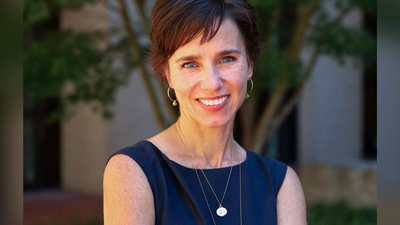
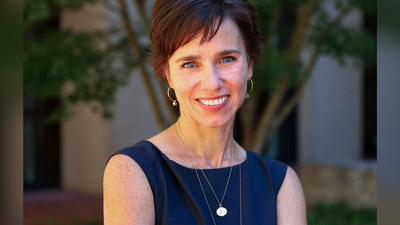
Less than a week after announcing a new dean for its law school, the University of Arkansas reversed course. The offer made to Emily Suski, a legal scholar with a focus on health, poverty and education law, was withdrawn after objections from state politicians over her views on transgender student athletes.The decision has become a fresh example of how political pressure is shaping faculty hiring and leadership choices at public universities.
A dean appointment that unravelled quickly
On January 9, the University of Arkansas announced that Emily Suski, an associate dean and professor at the University of South Carolina, had been selected as the next dean of its law school after a public and extended search.The university’s provost, Indrajeet Chaubey, praised her scholarship and highlighted her work on medical and legal partnerships that support low-income children. The position came with a five-year contract and annual compensation of $350,000, according to documents reviewed by The New York Times.Within days, however, the appointment collapsed. On Wednesday, the university said it was withdrawing the offer, citing “feedback from key external stakeholders.” By Thursday, it added that it had no further statement.
The amicus brief at the centre of the backlash
State legislators soon made clear what the concerns were about. According to The New York Times, Suski had signed an amicus brief filed with the Supreme Court last year in support of transgender student athletes.The brief, signed by Suski and 16 other legal scholars, addressed a narrow legal question: whether sex assigned at birth should be the sole factor in determining which sports teams students may join. It argued that the case before the Supreme Court should be sent back to lower courts for further review.Arkansas State Senator Dan Sullivan said the views expressed in the brief conflicted with state law. “If you look at some of her opinions to the Supreme Court and amicus briefs, I think she has not reflected the laws of the state of Arkansas,” Sullivan, a Republican from Jonesboro, told The New York Times.Arkansas was the first state to ban gender-affirming medical care for minors, a policy backdrop that has intensified scrutiny of issues related to gender identity.
Political pressure and funding concerns
The withdrawal of the offer did not happen in isolation. Nicole Clowney, a Democratic state representative who teaches at the law school, told The New York Times that a small number of legislators and one executive branch official threatened the university’s funding after learning about Suski’s involvement in the brief.Clowney said she viewed the episode as a free speech issue and described Suski as highly qualified for the role.The Speaker of the Arkansas House of Representatives, Brian Evans, a Republican, said in a statement that his office was not involved in the decision.
Governor’s support for the reversal
Arkansas Governor Sarah Huckabee Sanders publicly supported the university’s move. Her spokesperson, Sam Dubke, said in a statement quoted by The New York Times, “Governor Sanders appreciates the University of Arkansas, Fayetteville, for reaching the common sense decision on this matter in the best interest of students.”The case before the Supreme Court that prompted the amicus brief was argued this week, keeping the issue in national focus even as the university moved on from its decision.
Suski’s response
Suski issued a written statement on Thursday expressing disappointment at the reversal. “I have been informed that the decision was not in any way a reflection of my qualifications to serve as dean,” she wrote, according to The New York Times, “but rather the result of influence from external individuals.”Her academic work has centred on health, poverty and education law, including Title IX, the federal civil rights law that prohibits sex-based discrimination in education programmes. Before entering academia, she worked as a staff attorney at the Legal Aid Justice Center in Charlottesville, Virginia.
A trend in higher education?
The episode fits into a wider pattern. In recent months, conservative leaders have accused universities of drifting leftward, and institutions have disciplined or dismissed faculty members over speech related to gender and race. Political influence has also affected leadership choices elsewhere, including at the University of Florida, where the selection of a president was overturned by a statewide board of political appointees.At Arkansas, the law school search had been conducted publicly, with four finalists giving open presentations. The abrupt end to Suski’s appointment has prompted questions about whether universities will increasingly shield hiring processes from public view to avoid similar outcomes.For now, the University of Arkansas has said it has “decided to go in a different direction,” while the controversy around Emily Suski’s brief tenure as a dean-designate continues to ripple through debates on academic freedom, political oversight and the boundaries of university autonomy.