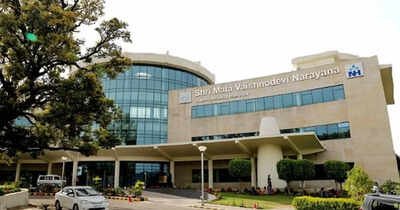
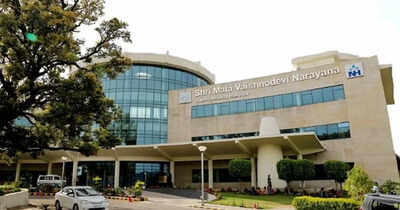
The Jammu and Kashmir Board of Professional Entrance Examinations (BOPEE) has made it clear that it cannot conduct fresh counselling for MBBS admissions and that the allocation of supernumerary seats for students of the Shri Mata Vaishno Devi Institute of Medical Excellence (SMVDIME) must be handled at the government level. In a letter to the Union Territory’s Health and Medical Education Department, BOPEE stated, “I am directed to submit that the matter was placed before the Board for detailed deliberations, and the Board has observed that it is constrained to conduct any new counselling for the year 2025-26, as it is not mandated to go beyond the counselling schedule issued by the Medical Counselling Committee (MCC), MoHFW, New Delhi, for the current academic session,” PTI reports.The clarification comes after the National Medical Commission (NMC) withdrew SMVDIME’s Letter of Permission due to non-compliance with minimum standards. The first batch of 50 students included 42 Muslims, seven Hindus, and one Sikh, a composition that sparked protests led by the BJP-supported Sangharsh Samiti, which demanded either cancellation of the admissions or reservation of seats exclusively for Hindu students.
Regulatory lapses or institutional failure ?
SMVDIME had applied to start a new MBBS course for the 2025-26 academic year and received conditional approval from the NMC in September 2025. The approval came with strict requirements: maintain adequate infrastructure, faculty, and clinical material, allow inspections; and rectify deficiencies before renewal.Yet, within months, complaints and a surprise inspection revealed glaring gaps. According to PTI reports, the MARB assessment reported faculty shortages of 39% among teaching staff and 65% among tutors and senior residents. Outpatient numbers were nearly half the required standard, bed occupancy at 45% instead of 80%, and several operation theatres, laboratories, and critical clinical facilities were missing or inadequate.These findings raise a critical question: How did a college so unprepared secure approval to admit students in the first place? The regulatory framework exists, but its enforcement appears inconsistent, leaving students exposed to the consequences of institutional and administrative lapses.
Politics clouds merit
The controversy took a political turn almost immediately. Chief Minister Omar Abdullah told PTI, “It is our legal responsibility to accommodate them. We will adjust them by creating supernumerary seats in colleges close to their homes so that their education does not suffer.” While the government seeks to protect the students, political agitation over the religious composition of the batch shows how identity politics can threaten merit-based admissions. If admissions can be questioned based on religion, the larger credibility of the education system is at stake.
Students in limbo
While students expect BOPEE to intervene beyond its mandate, it has refused to do so, leaving students at the mercy of government action. They may be protected for the time being by supernumerary seats, but there is always a question mark over receiving quality education in institutions that meet required standards.
A wider lesson
The SMVDIME scandal uncovers the devastating effects of a nexus of regulatory breakdowns, administrative paralysis, and political meddling. It reveals how merit may take a backstage role in favor of loopholes and democratic dictates ,and how students are caught up in the midst of a crisis-ridden system that is failing to secure their future. The beginning of wisdom is that there will be a positive takeaway from the episode, or will the students continue paying the price for the failings of the system?It also brings to light the dismal level of accountability: SMVDIME admitted students despite evident deficiencies, NMC accredited the college despite such red flags, and BOPEE now does not intervene, citing procedural limitations. Meanwhile, political groups reduce merit to a tool for agitational politics, and students remain caught in the crossfire. This brings out a bitter truth: in Jammu and Kashmir, and perhaps elsewhere in India, too, systems that should protect students’ education often break down where oversight, governance, and politics meet. Who is to be held accountable for lost young careers, and why must the sins of failure be visited entirely on the students?(With inputs from PTI)