
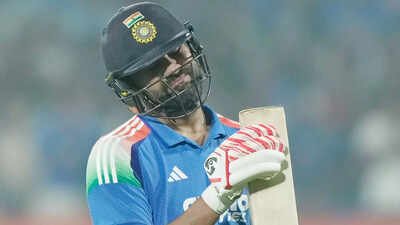
Soon after India were beaten by England in the semifinal of the T20 World Cup in 2022, Rohit Sharma acknowledged India’s white-ball batting template was close to being outdated. Soon, there was a marked shift in the way India went about constructing innings in both T20Is and ODIs. The results followed, with Rohit himself setting the tone by taking risks and going after the bowling from the word go. In numerous instances over the last 18 months, Rohit has spoken about taking the onus on himself to lead the way for the rest of the team.This altered approach ushered in an ultra-aggressive brand of batting that bolstered India’s performances across the ODI World Cup in 2023, the T20 World Cup in 2024 and the Champions Trophy last year. However, after Shubman Gill replacing him as ODI captain, a distinctively different Rohit has been on view. The fearlessness in his batting has given way to more conservative starts. The dot-ball percentage in his first 20-30 balls hovers around 80. The team has been getting off to more sedate starts, a clear departure from what happened till the Champions Trophy.
Over the last six months, Rohit has been fending off apprehensions about his ability to last till the 2027 ODI World Cup. At 39, he realised he had to shed over 10 kg to keep himself up to speed with fitness standards. But he seems to have traded that for a more reserved approach to his batting. He doesn’t mind even if he doesn’t get off the mark for 10 balls, like he did in the second ODI against New Zealand recently in Rajkot. He tests the bowlers’ patience and w a i t s f o r them to come to him, rather than going after them and putting them under pressure up front.“I don’t think it’s a conscious approach. He has not been as fluent as usual (Rohit only plays in the ODI format now). That’s going to be a challenge for him, not playing cricket between series,” India’s assistant coach Ryan ten Doeschate said, underlining the primary concern of the selectors and team management around both Rohit and the other veteran batter in the team, Virat Kohli.
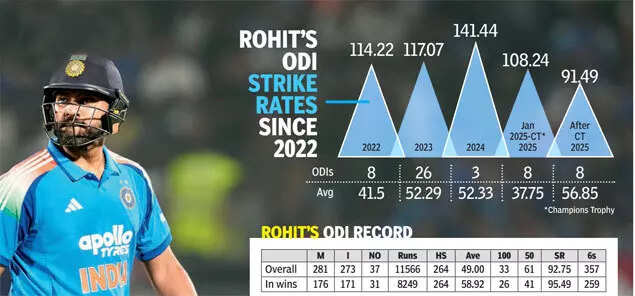
Unlike Kohli, Rohit has taken more time to hit his stride and his big performances have usually come in the later half of a series. Rohit’s numbers in the last three series are not too different from the period between 2023-2025. He is still averaging over 50, even as the strike-rate may have dropped a bit, but not to alarming levels. He draws on every bit of his experience of having played close to 300 ODIs.Doeschate went on to explain what may be dictating Rohit’s new approach. “I thought both innings (in the first two ODIs against New Zealand) were pitches where it didn’t look easy to bat on. He’s such a brutal player but he’s actually a touch player, at the end of the day. So, as soon as the pitches aren’t very good, it’s going to be difficult for him to look in fluent mode like he normally does. He’s definitely not the sort of guy to play for himself. It’s just a combination of the pitches being slightly difficult and maybe just being a little bit short on cricket leading into the series,” he said.The new regulation of playing with one softer ball after 34 overs has prompted discussions on whether teams need to go harder against the two hard balls earlier on in the innings. The team is also trying to create opportunities for Yashasvi Jaiswal. Gill isn’t known for fast starts either. It remains to be seen if the management will have a discussion with Rohit or decide to readjust game plans around how he bats.