
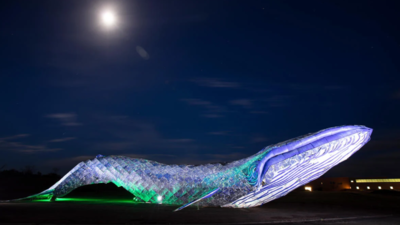
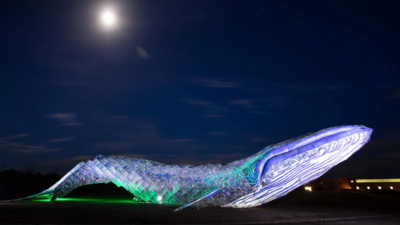
Standing 82 feet long on the high-desert campus of Santa Fe Community College in New Mexico, a life-sized blue whale made entirely from discarded trash continues to attract attention from around the world. Its huge size and message about protecting the environment have made it a notable attraction. Created in 2018 by California-based artists Joel Dean Stockdill and Yustina Salnikova, the sculpture is named “Ethyl the Whale”. It was built using about 5,000 pounds of single-use plastic waste. After being moved from California to its permanent home in New Mexico, the record-setting artwork was named a Roadside America Sight of the Week in 2026, bringing further attention to its importance as a cultural attraction. The giant artwork highlights the growing problem of ocean pollution. It also shows how everyday waste can be turned into public art.
Turning plastic waste into life-sized art
The project began when the Monterey Bay Aquarium asked Stockdill and Salnikova to create a striking artwork showing the problem of marine pollution. To show the amount of plastic waste entering natural environments, the artists designed the sculpture to match the exact size of a fully grown blue whale. According to Guinness World Records, the completed artwork set the official record for the largest recycled plastic sculpture. Building the sculpture required a huge recycling effort. The artists collected thousands of pounds of used plastic waste, including trash bags, milk jugs and plastic containers. Working in San Francisco, they melted the discarded plastic and reshaped it into strong panels. These panels formed the outer body of the giant sea creature. “We really wanted to embrace that issue, while showing that there is a way, that it’s not just despair,” Stockdill said in an interview with New Mexico Magazine, explaining the purpose of the project. “There are solutions within this problem.” Choosing a blue whale was an important part of the message. According to information published by the Monterey Bay Aquarium when the sculpture was first unveiled, the weight of the plastic used to make Ethyl represented the amount of plastic waste entering the world’s oceans every nine minutes at the time.
Relocation to New Mexico
After its first display in the San Francisco Bay Area, the sculpture needed a permanent home with enough space for an 82-foot installation. The arts collective Meow Wolf bought Ethyl and donated the giant sculpture to Santa Fe Community College in 2019. Moving the sculpture across state lines required careful planning and presented several challenges. The artwork was taken apart, transported across the American Southwest and then carefully put back together on the college grounds. According to Santa Fe Community College, Ethyl was placed in a prominent spot on campus. It serves as both an outdoor learning exhibit and a local landmark. The college included the sculpture in its sustainability education programme, encouraging students and visitors to think about the long-term effects of single-use packaging.
National recognition as a roadside landmark
Since arriving in New Mexico, the recycled whale has become a popular stop for travelers, school groups and art lovers passing through the Southwest. The landmark gained further recognition when Roadside America, a publication that features unusual travel destinations across the United States, named Ethyl the Whale a Sight of the Week. The recognition brought renewed national attention to the sculpture’s design and its message about protecting the environment. The sculpture’s outer surface, made from recycled polyethylene, has held up against the high elevation and changing seasonal weather in the Santa Fe area. College officials note that its location in the high desert creates a striking contrast. A creature from the deep ocean stands in a dry landscape, reminding visitors that plastic pollution affects ecosystems around the world, no matter where they are.
Ongoing impact of the installation
Schools and environmental groups continue to point to Ethyl as an example of how art can support sustainability. The sculpture remains open to the public on the Santa Fe Community College campus, where visitors can walk alongside the entire 82-foot structure. By turning discarded plastic into a public monument that teaches people about pollution, Stockdill and Salnikova created a lasting landmark. Their work combines artistic skill with a clear message about protecting the environment.