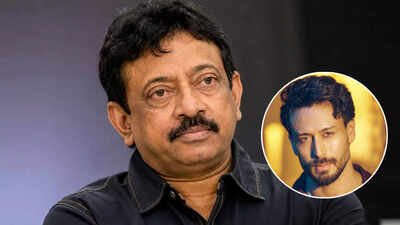
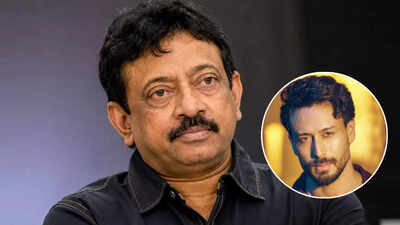
Filmmaker Ram Gopal Varma has said that catching shooters may not do much damage to criminal organisations. In a post on X, he argued that the people who carry out violent acts are usually the easiest to replace, while those who plan and control the operations hold the real power. His comments come after the arrests linked to the firing incident near Tiger Shroff’s car.
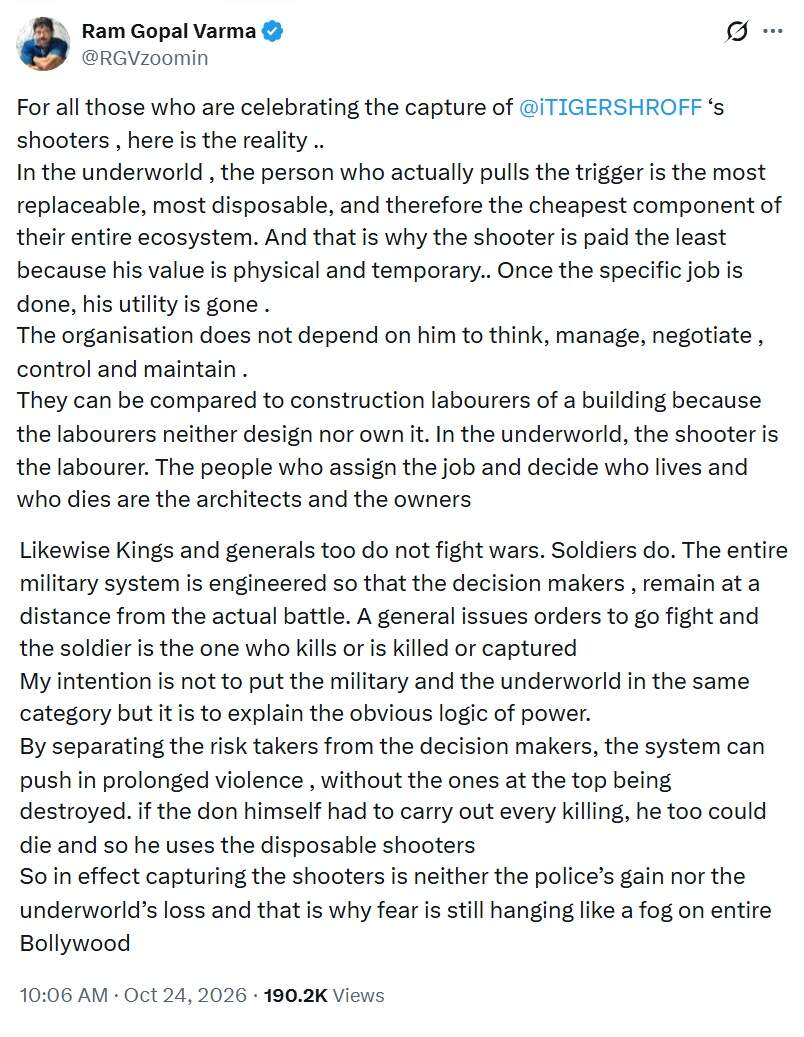
Ram Gopal Varma ’s post on X
Ram Gopal Varma began his post by addressing those who were happy about the arrests. “For all those who are celebrating the capture of @TIGERSHROFF’s shooters, here is the reality,” he wrote, before sharing how he thinks criminal networks function.He explained that shooters sit at the bottom of the chain because their job is physical and short-term. Once an assignment is over, they are of little use to the organisation. This, according to him, makes them far more expendable than the people who coordinate operations, take decisions and keep the network under control.He wrote, “In the underworld, the person who actually pulls the trigger is the most replaceable, most disposable, and therefore the cheapest component of their entire ecosystem. And that is why the shooter is paid the least because his value is physical and temporary… Once the specific job is done, his utility is gone.”He added, “The organisation does not depend on him to think, manage, negotiate, control and maintain. They can be compared to construction labourers of a building because the labourers neither design nor own it. In the underworld, the shooter is the labourer. The people who assign the job and decide who lives and who dies are the architects and the owners.”
Construction workers and soldiers
To explain his point, Ram Gopal Varma compared the underworld to a building project. Labourers do the actual work, but they do not decide what gets built or who benefits from it. In the same way, shooters follow instructions without having much say in the larger criminal business.He also brought in the example of the army. Soldiers fight on the battlefield, while generals and political leaders usually stay away from direct combat.“Kings and generals too do not fight wars. Soldiers do,” he wrote, pointing out that the power to decide and the task of carrying out orders are often kept apart.Ram Gopal Varma made it clear that he was not equating the military with the underworld. He said he was only trying to explain the wider logic of power.
Why arrests of shooters may not end the network
As per Ram Gopal Varma, keeping risk-takers and decision-makers separate lets an organisation survive even when people involved in violence are arrested or killed.He argued that if those giving the orders had to commit every violent act themselves, they would face the same dangers as the shooters. That could make the organisation weaker.Varma ended by saying that the arrest of shooters should not automatically be seen as a big victory against an entire criminal network.