
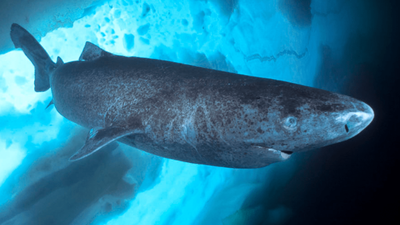
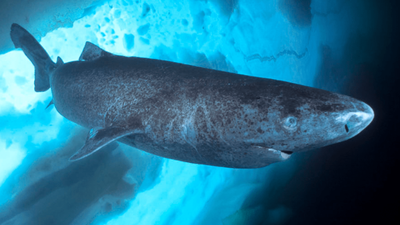
Greenland became the centre of an unusual dispute over one of the world’s longest-lived vertebrates after the municipal council of Avannaata approved a proposal to cull 1,000 Greenland sharks. Under the scheme, fishermen would have received 300 Danish kroner, about $45, for each shark heart they brought in. The proposal was intended to address complaints that Greenland sharks damage fishing gear and take fish from fishing lines, with some fishermen reporting substantial losses from damaged equipment. But the plan raised concerns because Greenland sharks can live for centuries, grow extremely slowly and may not reach sexual maturity until around 150 years of age. The proposed bounty was subsequently abandoned after Greenland’s government questioned whether the municipality had the legal authority to introduce it.
Why Greenland fishers want the sharks removed
Greenland sharks are regularly encountered by fishermen targeting species including Greenland halibut and cod. They can become caught in longlines, gillnets and trawling equipment, while also taking fish caught on hooks. For fishermen operating in remote Arctic waters, damaged or lost equipment can be expensive to replace. Ilulissat-area fisherman Henrik Jensen told The Guardian that he had lost about 6,000 hooks and that his losses could reach around 30,000 Danish kroner, roughly $4,500, in a single day.Other fishermen have also described the cost of replacing lines. Timotheus Petersen, chairman of the fishing association in Kullorsuaq, said a longline can cost about 1,599 Danish kroner and that losing one can force fishermen to stop fishing until they obtain replacement equipment. The issue is therefore not simply about the presence of sharks. For some fishing communities, encounters with the animals can translate into lost gear, lost fishing time and lower catches.
Avannaata approved a 1,000-shark bounty
The proposal was approved earlier in 2026 by the municipal council of Avannaata Kommunia, which covers much of north-west Greenland and includes Ilulissat. The scheme offered fishermen 300 Danish kroner for each Greenland shark heart, with a target of 1,000 sharks. The proposed 300,000-kroner programme was to be financed through the municipality’s pest-control budget. Avannaata Mayor Lars Erik Gabrielsen said the intention was to protect fishermen’s incomes and catches. The municipality also pointed to historical bounty schemes in Greenland as precedent for attempts to reduce local shark numbers. However, the proposed scheme did not proceed.
The government questioned the legality of the plan
The bounty was abandoned after Greenland’s government questioned whether Avannaata had the legal authority to introduce the scheme. Oceans North Kalaallit Nunaat reported in April 2026 that Avannaata would not introduce the bounty because the scheme had no legal basis. The conservation organisation had criticised the proposal, arguing that a cull could harm the species and undermine Greenland’s efforts to present its fisheries as sustainable.The distinction is important as the municipality approved the proposal, but the planned cull was subsequently dropped before the 1,000-shark target could be carried out. The broader debate over Greenland sharks and fishing remains unresolved, and a future cull has not been ruled out.
Greenland sharks can live for more than 400 years
The animal at the centre of the dispute is the Greenland shark, Somniosus microcephalus. A landmark 2016 study published in Science used radiocarbon dating of eye-lens tissue from 28 Greenland sharks to estimate their ages. The researchers estimated that the largest shark in the study was 392 years old, with an uncertainty of 120 years, and concluded that Greenland sharks are the longest-lived vertebrates known to science. The research also estimated that the sharks reach sexual maturity at approximately 156 years, with an uncertainty of 22 years. For general descriptions of the species, scientific and government sources therefore commonly describe Greenland sharks as capable of living for around or more than 400 years.
Their extremely slow life cycle makes them vulnerable
The sharks’ extraordinary lifespan is accompanied by an exceptionally slow life history. The 2025 Canadian government assessment of the species says Greenland sharks have remarkably slow growth and late maturity, with a generation time likely to be between 150 and 200 years. It describes these characteristics as making the species particularly vulnerable to overfishing.The species is globally classified as Vulnerable. Its population size and trends are still poorly understood, but scientists consider human activities, particularly fishing-related mortality, to be significant threats. That biology is what makes the proposed removal of 1,000 sharks particularly controversial. A species that takes well over a century to reach reproductive age cannot replace lost adults quickly.
The sharks are already caught as bycatch
Greenland sharks are affected by fishing even when they are not deliberately targeted. The Canadian government assessment says the species is caught incidentally in trawl, longline and gillnet fisheries throughout its range. Available estimates suggest that at least 3,500 Greenland sharks are caught as bycatch globally each year, although the true figure is probably higher because monitoring and reporting remain incomplete.The species has also been subject to deliberate fishing historically. Greenland sharks were hunted for centuries for their liver oil, particularly in Greenland, Iceland, Norway and Russia. The Canadian assessment notes that the animals remain the target of some small-scale fisheries in Greenland and Iceland. In 2022, the North Atlantic Fisheries Organization agreed to prohibit retention of Greenland sharks by vessels fishing within its regulatory areas and requires vessels to minimise incidental catch and mortality.
Conservationists question whether a cull would work
Oceans North Kalaallit Nunaat has argued that killing sharks may not solve the fishermen’s underlying problems because Greenland sharks are highly mobile. The organisation says tagged sharks have demonstrated long-distance movements and can travel more than 2,000 kilometres. As a result, sharks removed from fishing grounds in north-west Greenland could potentially be replaced by animals arriving from other areas.Conservationists have also warned that a bounty could create unintended consequences. Oceans North has argued that discarded shark remains could attract other sharks to fishing areas, potentially undermining the intended purpose of the scheme. This is a conservation group’s warning rather than an established outcome of the proposed bounty. Marine conservationist Professor Nick Dulvy has also criticised the prospect of a large-scale cull, pointing to the species’ exceptionally slow reproduction.
Alternatives have been proposed
The debate has prompted calls for measures that address the economic damage to fishermen without deliberately removing large numbers of Greenland sharks. Oceans North has proposed options including compensation for fishermen who lose equipment, cleaning up abandoned or lost fishing gear, improving fishing equipment and testing acoustic deterrents designed to discourage sharks from entering fishing areas.The Canadian assessment also highlights the need for better information about Greenland shark bycatch and survival after release, since post-release mortality remains poorly understood. The challenge is complicated by the fact that Greenland sharks are not the only pressure facing the fishing industry. Conservation groups have pointed to wider issues including fishing capacity, operating costs, gear losses and pressure on fish stocks.
The proposed bounty has been dropped, but the dispute remains
The 1,000-shark bounty ultimately did not go ahead after Greenland’s government questioned its legal basis. But the disagreement that produced the proposal has not disappeared. For some Greenland fishermen, the sharks remain a costly nuisance that can damage lines, take fish and interrupt fishing operations. For scientists and conservationists, the animals’ extraordinary longevity and extremely late maturity make large-scale killing particularly risky. The abandoned bounty has therefore become part of a wider debate over how Greenland can protect its fishing communities while managing a species that may live for four centuries and can take more than 150 years to reach reproductive maturity.