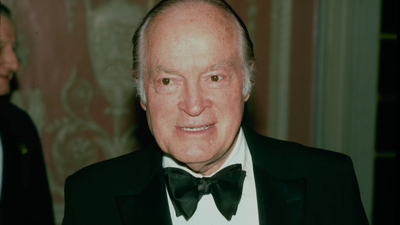
Over the years, beloved comedian Bob Hope has gone above and beyond for the community beyond his comic prowess. One of his biggest accomplishments comes from selling off his 2,308-acre Jordan Ranch. This sale helped expand the Santa Monica Mountains National Recreation Area in Southern California. The area, which is located in the Simi Hills east of Thousand Oaks, ended up becoming part of protected land that now spans 20,400 acres.Here’s all you need to know about how Bob Hope’s 2,308-acre Jordan Ranch property ended up becoming a part of a protected federal parkland area.
In 1993, Bob Hope sold his Jordan Ranch to the National Park Service
The Los Angeles Times reported that in 1993, Bob Hope sold off his Jordan Ranch to the National Park Service. The deal initially started with a legal battle, since originally developers had planned on creating a major tournament-level golf course and more than 1,800 luxury homes on the property. The plans originally included a senior tour tournament site and a Bob Hope golf museum.However, there was a lot of opposition from environmental groups at the time. The project faced heavy opposition due to its location in the Santa Monica Mountains. A highly contested land swap that Hope and the contractors proposed with the federal government, which they needed to build an access road through Cheeseboro Canyon Park, stalled the development. Later on, after a lot of legal issues, the entire project was dropped, and the golf course was instead shifted to the nearby Ahmanson Ranch development area. Hope then also agreed to sell the entire 2,308-acre Jordan Ranch parcel below market value so it could be permanently preserved. The National Park Service bought the ranch for USD 16.7 million.
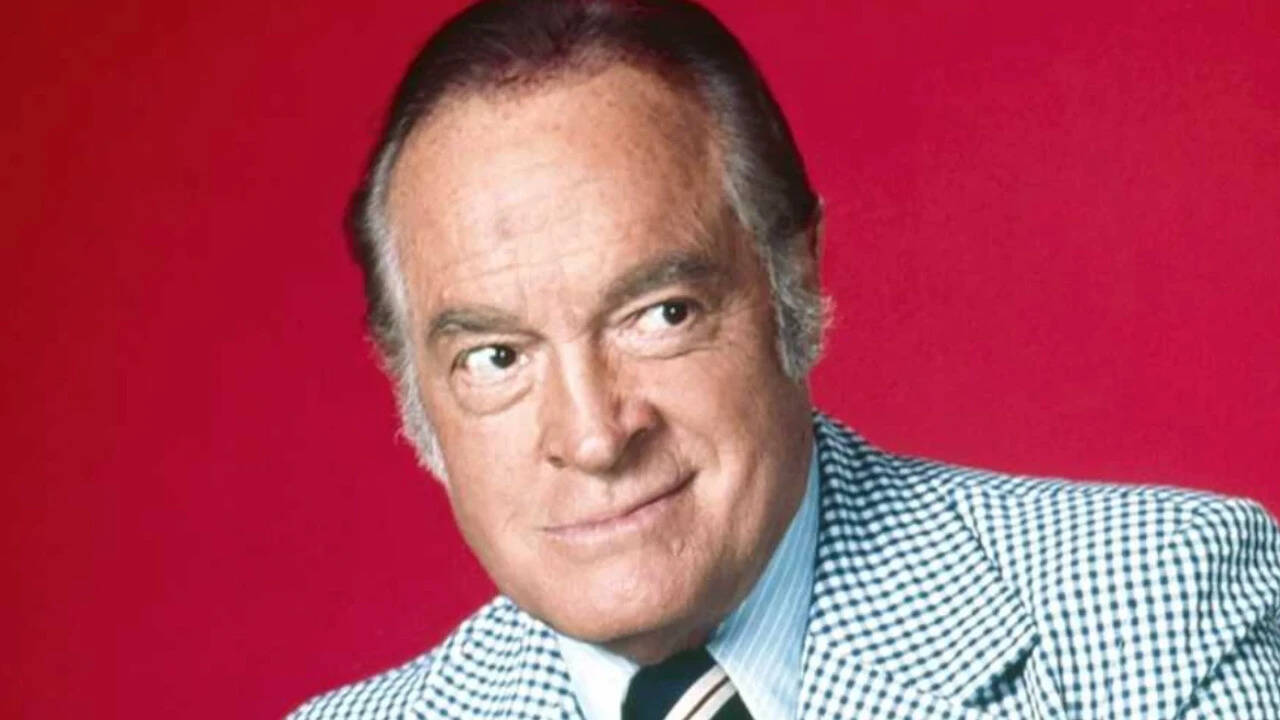
Bob Hope sold off his Jordan Ranch in 1993 to the National Park Service, which resulted in a parkland that spans more than 20,000 acres of land now and protects all flora and fauna there. (Instagram)
The sold-off land became part of a federal parkland spanning 20,400 acres
The surrounding area already belonged to the National Park Service; however, it was Hope’s sale that pushed the land to 20,400 acres. One of the main aspects of the Jordan Ranch acquisition was protecting the flora and fauna in the Santa Monica Mountains. This included mountain lions, bobcats, and deer, all connecting the mountains across Highway 101 to the Simi Hills and Santa Susana Mountains.The purchase did not include the 200 cattle that had been on the ranch and were managed by caretaker Terry Boardman. According to the deal that was struck with the National Park Service, they had to spend money and resources in helping all of the cattle there get relocated. At the time, David Gackenbach, superintendent of the Santa Monica Mountains National Recreation Area, talked to the outlet about the same, sharing, “You would think that is something the landowner would be responsible for. But apparently not.” This was caused due to the fact that Hope had also never terminated his agreement with Boardman. “But I guess at that time Bob Hope did not know if he was going to sell the land and didn’t want to leave the property unattended,” he added.Other philanthropic efforts he has made over the years include donating 360 acres of his Conejo Valley land to the Conejo Recreation and Park District to create the Hope Nature Preserve, which is now a protected open-space area named in his honour.
About Bob Hope’s early life
Bob Hope was a British-born American comedian, actor, singer, and dancer who was born in Leslie Townes Hope on May 29, 1903, in London, England. He was the fifth of seven sons. His father used to work as a stonemason, and his mother was an opera singer. When he turned four, his family relocated to the US, and they settled down in Cleveland.He was interested in the arts, and specifically comedy, from a very young age, and would often earn money as a kid by singing, dancing, and performing comedy in public. Before he started his career in the entertainment industry, the actor and comedian started working as a butcher’s assistant and a lineman, along with working at the Chandler Motor Car Company. He also had a brief boxing stint in 1919.
Bob Hope’s work legacy
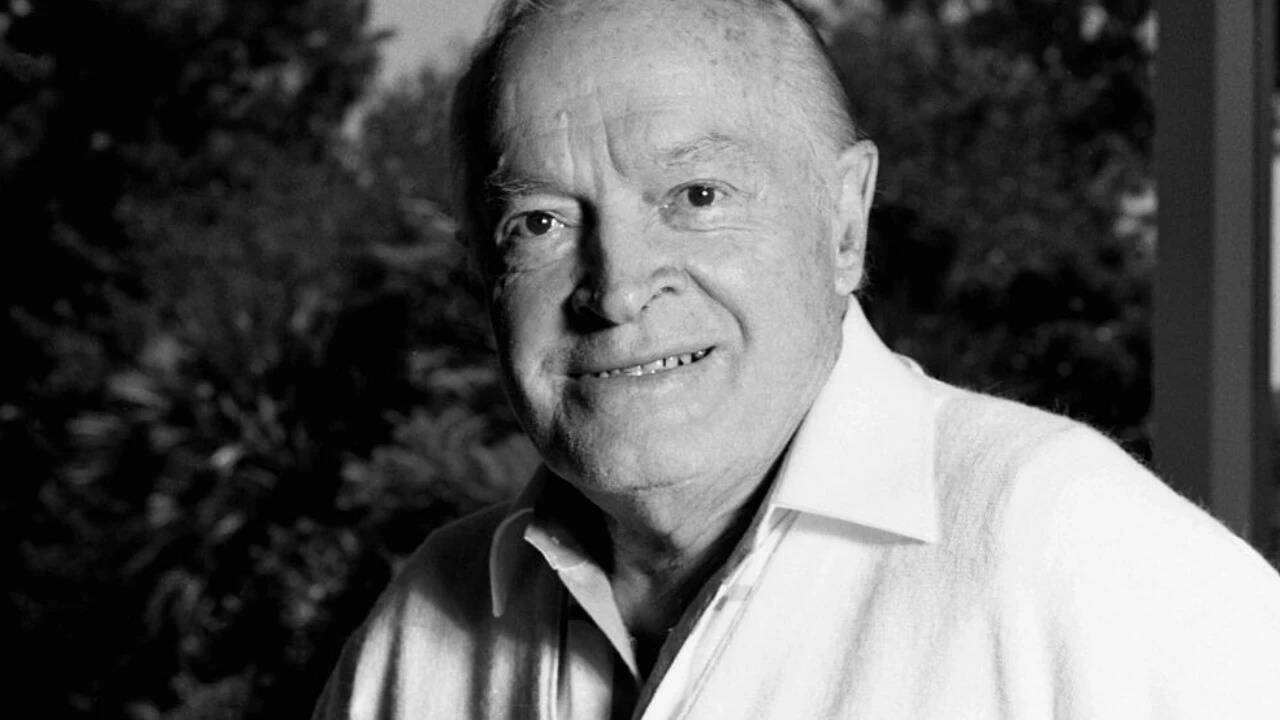
Bob Hope had a long career and came from humble beginnings. He was interested in the arts from an early age and broke into comedy, along with the acting industry. Image Credit: Von Allan warren/Wikipedia
Hope later joined dancing classes with his girlfriend, and while he was performing in 1925, he ended up getting noticed by silent film comedian Fatty Arbuckle, and the rest is history. He worked with a touring troupe at the time and over the years accumulated enough funds to help him out. His acting and comedy skills were praised heavily in public, which is why he transitioned to it full time. He also later appeared on the radio show ‘Woodbury Soap Hour.‘His first film was supposed to be ‘Going Spanish’; however, he was not happy with his work, and the project was initially rejected. He later changed production studios and reconnected with acting, starring in the ‘radio TV shows’ called ‘The Big Broadcast of 1938.’Some of his most famous works over the years include ‘Road to Singapore,’ ‘Road to Zanzibar,’ ‘Road to Morocco,’ ‘Road to Utopia,’ ‘Road to Rio,’ ‘Road to Bali,’ and ‘The Road to Hong Kong,’ which was released after an 11-year hiatus. He also worked in ‘Critic’s Choice’ with Lucille Ball and Rip Torn, ‘Call Me Bwana’ with Anita Ekberg, ‘Eight on the Lam’ with Phyllis Diller and Jonathan Winters, ‘Cancel My Reservation’ with Eva Marie Saint and Ralph Bellamy, and ‘A Masterpiece of Murder.‘Bob Hope performed his final live Christmas USO show in Saigon, Vietnam, on December 24, 1972.