
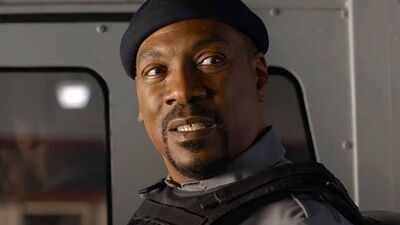
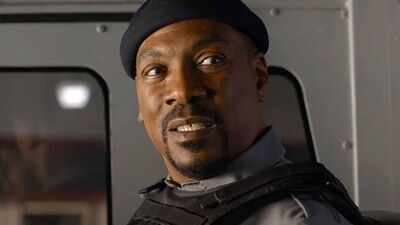
Failure can stay in your head for much longer than it actually lasts. A bad decision, a project that did not work, or something you were really proud of that simply did not connect with people can make you question what you should have done differently. For Eddie Murphy, though, failure is something you have to learn to leave behind.The actor and comedian has had an unusually long career in Hollywood. He has made huge hits, had films that did not work and experienced different phases of success. After roughly 40 years in show business, Eddie Murphy had a pretty clear idea of what helped him keep going: not allowing one bad experience to become the story of his entire career.Today’s quote of the day by Eddie Murphy reads: “I’ve mastered the art of walking away from the crashed plane. The plane crashes and burns. I’ve mastered surviving it and walking from the wreckage and never looking back. You never look back at the wreckage.”Eddie Murphy said this during his conversation with Jane Pauley for ‘CBS Sunday Morning’, when Pauley asked him what he had learned after decades in show business. He was specifically talking about films that do not work and the importance of moving on instead of spending too much time thinking about the failure.The picture may look dramatic, but the message behind it is pretty straightforward: when things go wrong, pick yourself up, take the lesson from it and keep going.
What does the quote by Eddie Murphy Mean?
Eddie Murphy’s “crashed plane” is basically a metaphor for a project that has failed. A movie comes out, audiences do not respond the way you hoped, critics are not impressed, and suddenly everyone is talking about what went wrong. If you are the person who made that movie, it can be tempting to keep replaying the whole thing in your head.Murphy says he learned not to do that. He does not mean that you should pretend failure never happened. You still learn from it. You just do not stay surrounded by the wreckage. That distinction is important.A failed project can teach you something about what worked, what did not and what you might do differently next time. But there comes a point when analysing the same mistake over and over stops being useful.Eddie Murphy’s career has had enough ups and downs for him to know that one failure does not necessarily tell you what comes next.
Why is the quote by Eddie Murphy relevant today?
This idea applies to much more than Hollywood. A job application gets rejected. A college project does not turn out the way you wanted. A business idea fails. You make a mistake at work and spend the next week thinking about it.It is natural to feel bad about those things. The problem starts when one bad experience becomes the way you see yourself. Eddie Murphy’s advice is basically to separate the event from your identity. Something can fail without making you a failure. That does not mean ignoring what happened. You can take the lesson and leave the rest behind.It is also a useful reminder that careers are rarely a straight line. People can have a huge success one year and a disappointment the next. What matters is that the disappointment does not stop them from trying again.Murphy’s “never look back at the wreckage” line is really about that mindset. The crash happened. Now you have to decide what you are doing next.
Early life of Eddie Murphy
Eddie Murphy was born on April 3, 1961, in Brooklyn, New York. He was raised in Roosevelt, Long Island, where his interest in comedy started early. As a child, he quickly found himself drawn to making people laugh. As a teenager, Murphy started performing stand-up and quickly developed a reputation for his impressions and observational humour. He was still very young when he began appearing in comedy clubs around New York.His big break came when he joined ‘Saturday Night Live’ in 1980 at just 19 years old. Murphy quickly stood out on the show. His impressions and characters made him a favourite with audiences, and the success opened the door to Hollywood.
How did Eddie Murphy rise to fame?
Murphy’s movie career picked up speed after his time on Saturday Night Live. He made his big-screen debut in 48 Hrs. in 1982 with Nick Nolte, then followed it with hits such as Trading Places and Beverly Hills Cop.‘Beverly Hills Cop’ became a big moment in Murphy’s career. The film brought him a new level of fame and helped cement his place as one of Hollywood’s biggest comedy names. He later starred in films including ‘Coming to America’, ‘The Nutty Professor’, ‘Mulan’ and the ‘Shrek’ franchise.But his career was not made up only of hits. There were also films that audiences and critics did not respond to, which makes his CBS Sunday Morning comment particularly interesting.After four decades in the business, Murphy was not pretending every project had worked. He had simply learned how to survive the ones that did not. And maybe that is the part of his quote worth remembering. You can acknowledge the crash. You can learn from it. But eventually, you have to walk away from the wreckage and keep going.