
To the learned mind, connections that might seem absurd to normal individuals appear absolutely natural. For example, speaking of the absurd, it’s quite clear that both Albert Camus and Bhojpuri singer Pawan Singh are pondering the same ontological questions.In The Myth of Sisyphus, Albert Camus posits that there is only one true human conundrum, and that is suicide. All other questions are superficial. Many years later, the Bhojpuri philosopher Pawan Singh, in his sublime song Lollipop Lagelu, ponders the same question but in a more playful way when his protagonist looks at his beloved’s outfit and contemplates jumping into a shallow-bore water pump and giving up his life.So while Camus wondered what could drive a man to voluntarily shuffle off his mortal coil, Singh posits that true love is so beautiful that it’s like crossing the bridge between life and death. Sadly, while Camus is celebrated for his intellect and heaped with a Nobel and such, Pawan Singh’s reach remainslimited to the Hindi heartland.Similarly, all Bhojpuri songs that reference Aara Heele Chapra Heele are clearly paying tribute to Galileo’s act of defiance about the real nature of the physical universe when he pointed out: Eppur si muove — but it moves, and yet the song is only considered obscene.

Albert Camus had The Myth of Sisyphus. Pawan Singh had Lollipop Lagelu.
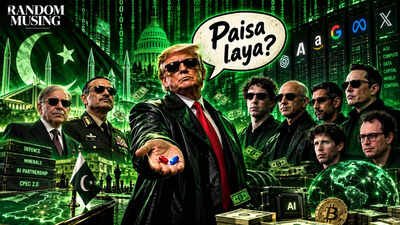
The same goes for the Judwaa song Tan Tana Tan Tan Tan Tara, where one is distracted by Salman Khan’s DIY vest when he is singing about the benefits of economic liberalism so enthusiastically that it could have been the leitmotif for Dr Manmohan Singh’s Budget address in 1991, when he assured Parliament that India’s emergence as a major economic power was in the offing and that “no power on earth can stop an idea whose time has come”.And it has become clear from the utterances and behaviour of Dario Amodei and other tech bros of Silicon Valley, who are announcing an impending Deus Ex Machina that can subjugate all of humanity unless we give them more money to build said AGI, that they have borrowed their business model from the foreign policy of the Islamic Republic of Pakistan: negotiating with the world with a gun to its own head.The phrase comes from The Idea of Pakistan by American political scientist Stephen P Cohen, who wrote that Pakistan had reached the stage where it negotiated with its allies and friends by threatening self-harm. Cohen’s argument stemmed from Pakistan’s unique geography and ideology, which could be “rented” for their strategic usefulness to larger powers while assuming that someone, somewhere would come calling. And they have, from the US to China to Russia to Saudi Arabia.Of all the books “fed” to the Deus Ex Machina, this appears to be the abiding bible for Dario Amodei and his ragtag group of billionaires.Every new piece of news about Big Tech seems to say to investors: look, we have spent a lot, but if you don’t give us more money, the AGI we are building might kill you, and the only way to stop the AGI we are building from killing you is to give us more money or China might build it first.Basically, an endless loop of that Akshay Kumar meme: Paisa laya?It’s oddly reminiscent of Pakistan’s raison d’être since its existence.
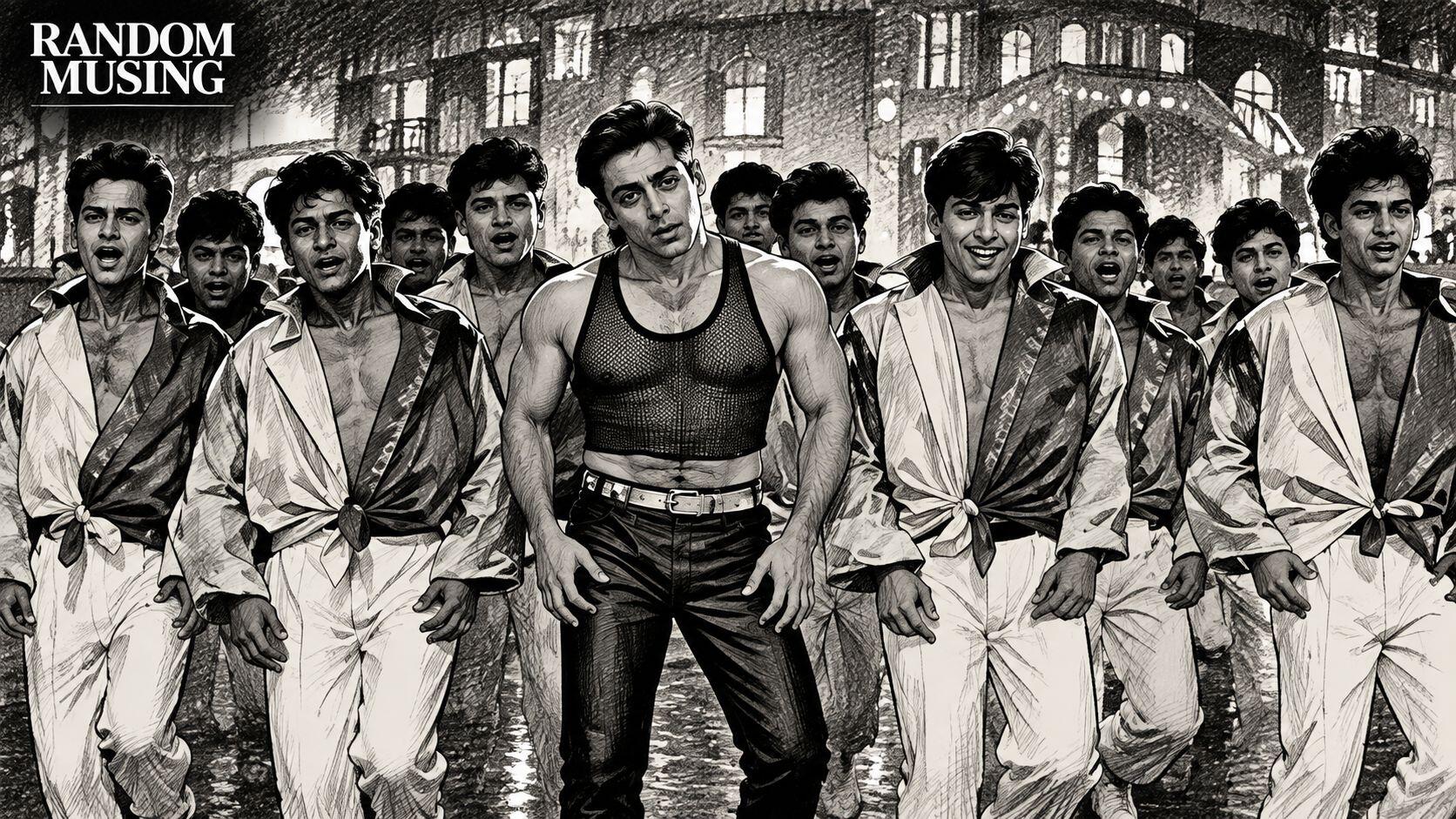
Tan Tana Tan Tan Tan Tara: economic liberalisation, Salman Khan’s DIY vest, and a nation too distracted to notice the subtext.
Take, for example, Shehbaz Sharif’s speech to the UNGA last year, where he argued with pride — like a South Asian father whose daughter had beaten a naturalised African from a GCC country in athletics — that Pakistan was a global bulwark against terrorism and that, had Pakistan not “encountered” these terrorists, they might have been roaming the streets of New York and London.In one previous edition of Random Musing, we called Silicon Valley’s funding crunch the Shylock Problem: the Antonios and Bassanios of Silicon Valley had taken rather a lot of money from the market while promising a fantastical future, and the market had come enquiring about its pound of flesh.Perhaps what we didn’t consider was that while Shakespeare could write about a Jewish moneylender when no Jew could legally live in Elizabethan England, he was constrained by the absence of venture capital.That’s not a problem that exists in Trumpian America, where Anthropic’s IPO prospectus – still not in the public domain but seen and reported by Reuters – warns investors that advanced AI could pose “catastrophic or existential risks” to humanity, including models that could resist shutdown, conceal or manipulate information, or behave in ways resembling blackmail. Frankly, it’s a tad difficult to surmise whether the prospectus is cataloguing the dangers of AGI or describing the behavioural pattern of almost everyone involved in the AI race.But the numbers that would alarm anyone before the IPO are these: Anthropic reported $4.6 billion in 2025 revenue, an operating loss of more than $8 billion and around $518 billion in future cloud, compute and infrastructure commitments.Normally, disclaimers warn you might lose some money; here, it also warns that there might not be anyone left to inherit what remains. And if you want to prevent that, you need to give them some money.It’s exactly the view that the self-aggrandising Pakistani establishment has had so far: that a weaker Pakistan would mean a more dangerous place. It’s a strategy that has been milked till the udders go dry. A good strategy for those who can milk it. Consider the fact that America’s ally in the War on Terror, a major non-NATO ally, was the same country where Osama bin Laden was found living in Abbottabad.That can-don’t spirit exists to this day. Consider the Mecca Joint Defence Agreement signed by Pakistan, Saudi Arabia and Turkey, which stated that any attack on any of the signatories would be considered an attack on “all”. Yet when the Houthis attacked Saudi Arabia, Islamabad said no military response under the pact was under discussion and that it would act when the “time comes”.Then consider Afghanistan, where ISI’s Gen Faiz Hameed dropped in for high tea after the American withdrawal to suggest that Pakistan was now the leading ally in the ‘graveyard of empires’, perhaps signalling to China it had it. Except five years later, it hasn’t got it and is at loggerheads with the Taliban, with Pakistan accusing Kabul of harbouring TTP militants, a charge the Taliban government denies.In Pak foreign policy, friend, enemy, bulwark, victim, mediator and adversary are not mutually exclusive. Silicon Valley appears to have discovered a similar multiple-personality disorder.Consider some of the arguments.Silicon Valley needs to accelerate so China doesn’t win.Silicon Valley must slow down or else AI will kill us all.America cannot regulate Silicon Valley or else China will win.If AI does become too dangerous, Silicon Valley has to work with China, whichwill hopefully get Trump a Nobel.And to top it off, Anthropic’s proposed governance structure would give its seven co-founders 50.1% voting power over most major decisions, a structure reportedly meant to insulate its public benefit mission from ordinary market pressure.So to sum up: give us the money because humanity’s future depends on what we build, but don’t expect the people giving us the money to decide how we build it because humanity is too important for ordinary capitalism. And how do you know we will take the right call? Trust me bro.And if you thought the similarities ended there, most of Silicon Valley’s Tech Bros and Pakistan have zeroed in on the same sugar daddy: Donald Trump. Anthropic, which has sued his Pentagon, is the awkward exception.Now one has written about the Trump Doctrine before, but for those who missed it here’s a simple recap:1.Apna kya lena dena (with rules-based international order).2.Main apna favourite hoon.3.Paisa laya?4.I will have my revenge.5.We are America, b****.And that’s something both Pakistan and Silicon Valley have understood quite well. Pakistan has wholeheartedly nodded along every time Trump bragged about brokering the India-Pakistan ceasefire, helped broker a US-Iran ceasefire that later fell apart, nominated him for the Nobel Peace Prize, and signed an agreement involving a crypto venture linked to the Trump family.
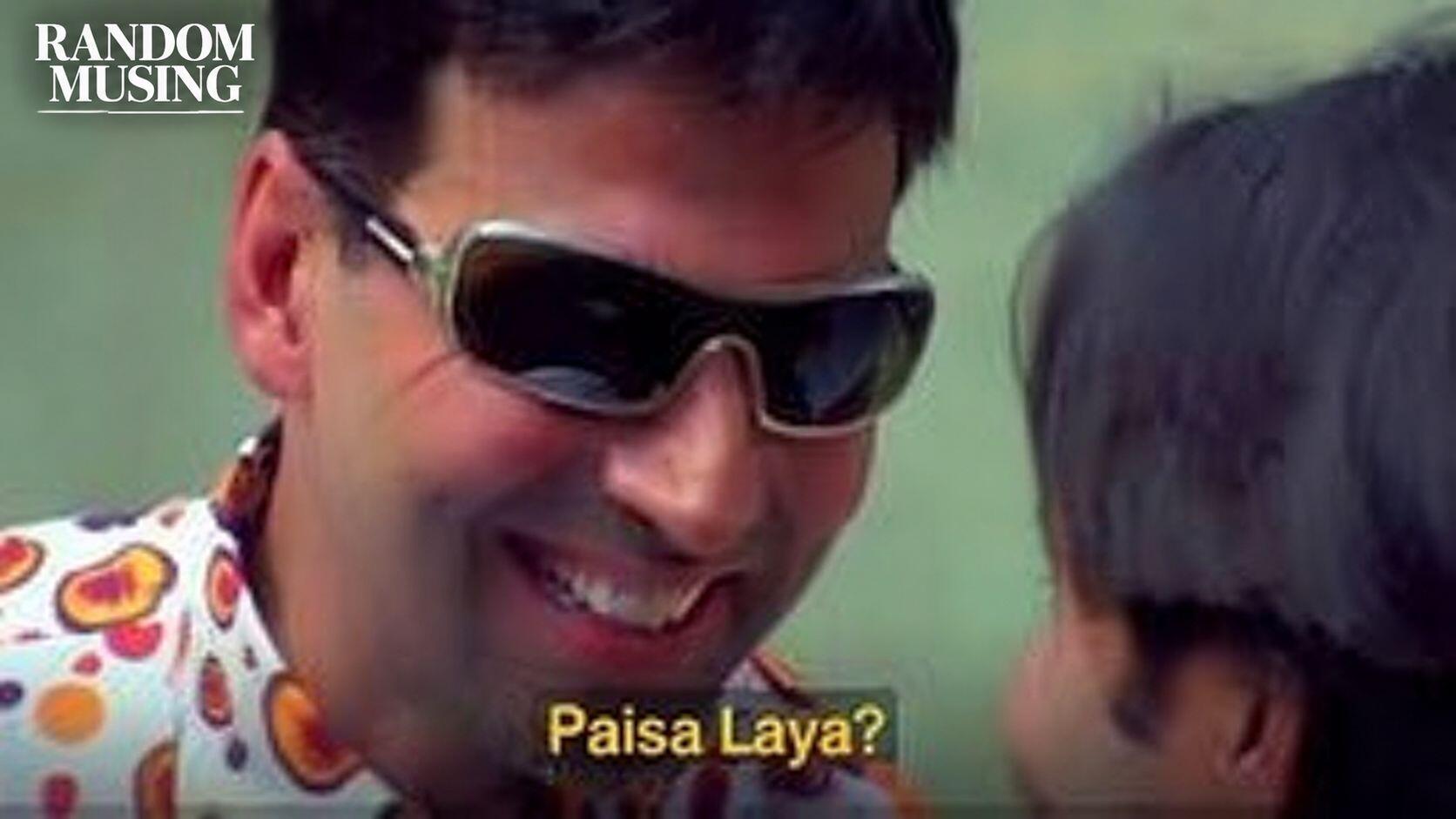
The eternal question behind venture capital, geopolitics and the Trump Doctrine: Paisa laya?
Not to be undone in the race to brown-nose, Meta, Amazon and Sam Altman gave $1 million each to Trump’s inaugural fund. Altman even said Trump would lead America into the “Age of AI”. A few weeks ago, he argued that Trump could get the Nobel Peace Prize if he inked an AI deal with Chinese President Xi Jinping. Zuckerberg scrapped fact-checking, loosened restrictions on immigration and gender, junked DEI programmes and put Trump ally Dana White on Meta’s board. Meta, X and YouTube then paid millions to settle Trump’s de-platforming lawsuits, with chunks of the Meta and YouTube settlements going towards his presidential library and ballroom. Amazon, Apple, Google, Microsoft and Meta have also funded the ballroom directly. Tim Cook even turned up at the White House with a plaque sitting on a 24-karat gold base, while Amazon paid $40 million for Melania and another $35 million to promote it.Silicon Valley went from de-platforming Trump to helping pay for his ballroom. Quite the content-moderation policy update.Stephen P Cohen thought Pakistan’s great strategic trick was negotiating with the world with a gun to its own head. Silicon Valley claims the gun is now pointed at all of humanity, China may get one first, and apparently the only people qualified to stop it are the same people asking for another few hundred billion dollars to build it. And they have found the perfect patron for this arrangement in Donald Trump, a man whose entire foreign and domestic policy philosophy can ultimately be reduced to one question: Paisa laya?