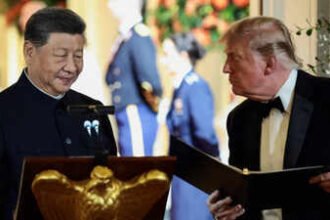
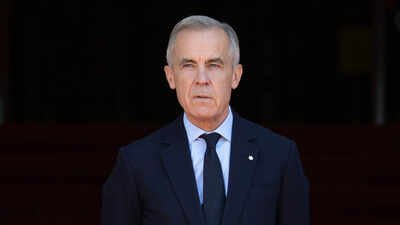

Canadian Prime Minister Mark Carney has said his government has considered the remote possibility of US military action against Canada, describing it as an “extreme tail risk” scenario that Ottawa had a responsibility to prepare for.In an interview with The New York Times, Carney said his administration had examined the possibility of a military confrontation with the United States, while stressing that such an outcome was not considered a likely scenario.“I think you have a responsibility in these roles to look at extreme tail risk,” Carney told the Times. “That’s just risk management. That’s not a base case, but it would be irresponsible not to” prepare.Carney did not provide further details about what preparations had been considered.His remarks come as relations between Canada and the US have come under considerable strain since US President Donald Trump returned to office, with disputes over trade, tariffs and Washington’s approach to its northern neighbour.Speaking at the Canada Investment Summit in Toronto earlier this week, Carney sought to emphasise that Canada remained committed to its relationship with the US, while arguing that the partnership must be based on respect for sovereignty.“We will always be neighbours,” Carney told investors. “But we are at our best when we are true partners that respect each other’s traditions and sovereignty.”Carney has also recalled an exchange with Trump in which the US president joked about the risks surrounding Canada’s relationship with Washington. “Maybe they’ll shoot you,” Carney recalled Trump saying, adding that the episode “sort of sums up the relationship that we have.”Despite the tensions, Carney said Canada remained open to reaching a mutually beneficial agreement with Washington. Around 80% of Canada-US trade remains tariff-free, he said.At the same time, Ottawa has moved to strengthen Canada’s economic and military resilience. Carney’s government has announced plans for the country’s biggest increase in defence spending since the Second World War, with a path towards total defence spending of 4% of GDP by 2030.The possibility of conflict would involve a stark military imbalance. The US has more than 2 million active-duty and reserve personnel, compared with fewer than 200,000 in Canada’s military, according to government figures. As of 2024, the US also had 65 military submarines, compared with four operated by Canada.Canada’s vast Arctic territory and the world’s longest coastline have nevertheless made defence and sovereignty increasingly important elements of Carney’s strategy as Ottawa navigates its relationship with Washington.