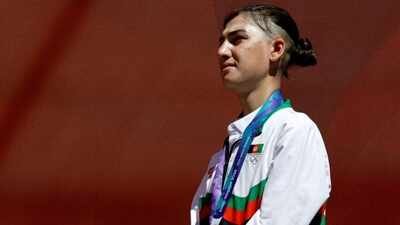
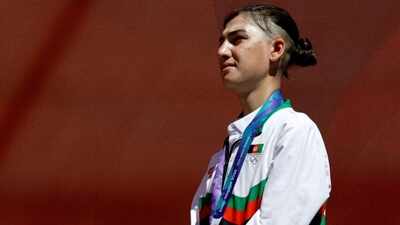
For Fariba Hashimi, becoming a top cyclist didn’t start with dreams of gold medals or crossing epic finish lines; it started with figuring out how to ride a bike at all. Growing up in northern Afghanistan, just riding meant risking her safety. She and her sister, Yulduz, wanted to train, but for girls that meant disguises: baggy clothes, faces hidden behind layers of masks. Even then, just one trip down the road could easily end with people hurling insults, or worse: actual stones.The threats were constant. But Fariba wasn’t easily discouraged. The sisters kept showing up, dodging harassment and occasional violent attacks. Once, a rickshaw driver drove straight at them. Sometimes, they used fake names just to enter small competitions because even their family didn’t approve at first. Still, winning those secret races caught the attention of the Afghanistan Cycling Federation. Eventually, their father drove them to Kabul so they could try out for the national team.Then, everything changed. When the Taliban returned in 2021, life for ambitious women shrank overnight. Afghan girls and women lost school, lost work, lost access to public life itself. Eventually, Fariba and Yulduz had to flee their home, with help from Alessandra Cappellotto, an Italian world champion cyclist. Settling in Italy gave them safety, but their roots and dreams always pointed back toward Afghanistan.On September 22, 2026, standing on the podium in Aichi-Nagoya, Japan, Fariba wasn’t just another cyclist with a medal. After years of hiding, she’d earned silver in the Asian Games women’s road race: the first Afghan woman to claim any Asian Games medal since 2002. It meant something far beyond winning a race. Fariba beat out dozens of competitors, coming in just behind China’s Guo Li, with Hong Kong’s Leung Wing Yee in third. But for her, the result was personal, as well as political.She explained why so simply after the race: “This silver medal can show a lot of resilience from Afghan women,” she said, as quoted by The Guardian. “I hope the next generation will come here and represent their country without any fear.” Her words echoed the journey of so many women who have had to hide their passions and identities in plain sight, hoping someday things might be different.Who is Fariba Hashimi?Fariba started cycling as a teenager in Faryab province, inspired by her older sister. Training meant long rides with the fear of being caught, but the sisters stuck together. They shared every harsh lesson the streets had to offer. Fariba once described to journalists how she’d stack on two or three masks to keep people from recognizing her, just for a morning ride. In their earliest races, the girls used fake names because their family feared for their safety and reputation.But as their talent grew harder to ignore, things shifted. It wasn’t just about their own determination. The feats they managed, like winning first and second in local races, caught the eye of sports officials. Eventually, their family got behind them, and that tiny bit of support made a huge difference.Today Fariba lives and trains in Italy, turning her early defiance into a professional cycling career. At the Asian Games, she powered through to second place, unaccompanied by any mechanic or professional support team. She had to fix and clean her bike herself, and even leaned on the kindness of Japanese competitors for a hand with maintenance. “I was the mechanic for myself. I was washing the bike myself. Thank you to the Japanese team. They were really, really nice to me, fixed my bike,” she said.Her gratitude was obvious. Anyone who’s been forced to go it alone understands what it means to finally have someone in your corner, even if just for a day.From hiding her identity to the OlympicsCycling took Fariba beyond any limits set for Afghan women. Not only did she escape the immediate dangers back home, but she also made the leap to international competition, representing Afghanistan all the way to the Paris 2024 Olympics. There, the Hashimi sisters joined a handful of athletes embodying two realities at once: The risk of simply being a woman with dreams in Afghanistan, and the pride of carrying that flag before the world.Even at the Asian Games, Fariba’s victory didn’t come easy. She lacked a proper support team and had to rely on herself for every practical detail and setback, making her silver medal as much an achievement in grit as athletic talent. She finished seventh in the women’s individual time trial two days before her silver: an exhausting turnaround for any athlete, but she thrived on it.Why does her medal matter?Right now, Afghanistan is the only country on Earth where girls and women aren’t allowed to attend secondary school or university. They can’t work in most jobs, and sport is out of the question. Since 2021, opportunities for women have collapsed; UN Women and UNESCO both say the rollbacks are unmatched worldwide. All the while, Hashimi’s success stands as something stubborn and luminous: undeniable proof that Afghan women are made for more than what the Taliban decrees.The same government that forbids women from entering a gym now watches one carry the Afghan flag across an international finish line, visible and proud. “Millions of women, from many countries, have the same dream and they are standing with me,” Fariba said. That sense of shared hope, woven through her quiet determination, speaks louder than the medal around her neck.What’s next for Fariba Hashimi?Anyone thinking Fariba will stop at silver is missing the point. She and Yulduz are already eyeing the 2028 Los Angeles Olympics. Their journey’s never been about just one finish line; it’s about showing Afghan women everywhere that the world is bigger than their cages.She hasn’t forgotten the help she’s had, or those she leaves behind. “The next generation will come here and represent their country without any fear,” she says, back turned to the old world, eyes locked on the future.On that podium in Japan, Fariba held more than a medal; she held a message. For every girl who’s forced to train in secret, who’s told she isn’t allowed to be strong, her ride is a signal: Keep going. The bicycle that once was hidden now carries the dreams of an entire nation, one that refuses to be invisible.