
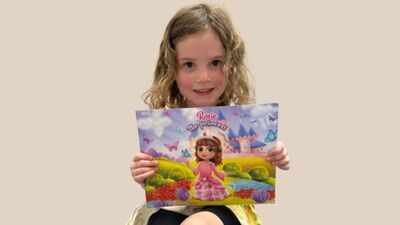
In January, a 3-year-old girl in Iowa signed up for a local library challenge with a simple goal: read as many books as possible before starting kindergarten. By early September, just eight months later, she had reached a milestone that many adults would find daunting: 1,000 books. Her name is Rosie Bentley, and her accomplishment has drawn attention from neighbours, librarians and local media as an inspiring example of early literacy and family support. As reported by the Sun Courier, Rosie’s journey from a toddler with a stack of picture books to a 1,000-book reader shows how small, daily habits can add up to something extraordinary before a child even steps into a school classroom. Read on to know more:A challenge built for little readersThe program Rosie joined is part of a nationwide effort known as 1,000 Books Before Kindergarten. Libraries across the United States offer the challenge to encourage families to read regularly with young children. The idea is straightforward. If a child reads one book a day, they will reach 1,000 books in about three years. Many children start the challenge as infants or toddlers and work toward the goal over several years.Rosie began the challenge at age 3, giving her less time than most participants. She started in January with the expectation that she would work toward the milestone over a longer period. Instead, she moved through books at a pace that surprised even her librarians. By the time she was ready to start kindergarten in the fall, she had already logged her 1,000th book.How a toddler reads 1,000 booksReading 1,000 books does not mean sitting down for 1,000 long story sessions. For a 3-year-old, most of those books are short picture books, board books and early readers that can be finished in a few minutes. Many children hear the same books multiple times, and each reading counts toward the challenge. Repetition is a key part of early literacy. It helps children recognise words, understand story structure and build confidence.Rosie’s routine likely included multiple books per day. A few books at breakfast, several more before nap time and a handful as part of the bedtime routine can quickly add up. On some days, she may have heard 10, 15 or more books. On lighter days, she may have read just a few. Over eight months, those daily sessions accumulated into a four-digit total.The role of family and routineBehind every young reader who reaches a big milestone is a family that makes reading a priority. Rosie’s parents and caregivers helped by having books at home and taking them along when they went out. They also made time to read every day, even when their days were jam-packed. Going to the library regularly, checking out new titles, and attending story times also helped. And to keep her motivated, they monitored her progress and may have given her small rewards on completing little milestones of the challenge.“The library is the best!”, Rosie told RPL Director Michelle Sieh after completing her reading challenge, according to the Sun Courier.Importance of early readingResearch consistently shows that children who read early on have better language skills, larger vocabularies and are better prepared to learn to read independently.Stories teach children how books work, such as turning pages and following a story from beginning to end. It also creates a positive association with reading, making it feel like a comforting ritual rather than a chore.For Rosie, hitting the 1,000-book mark before she’s even started kindergarten means she’s already spent hundreds of hours listening to stories, looking at pictures and talking about characters and plots with her family. She will build on those experiences in the years ahead at school. Teachers often report that children who have had many rich read‑aloud experiences are better able to adjust to classroom routines and are more likely to show interest in books and literacy activities.With a thousand books under her belt, Rosie is stepping into kindergarten with a massive head start. Those eight months of non-stop reading built habits that will pay off for years, whether she’s tackling summer library challenges or picking up her first chapter books. Her family might set a new goal or simply let her follow her curiosity, but the main thing is keeping story time a relaxed, daily habit.How to raise a readerFor other parents hoping to build that same passion, you don’t need a rigid strategy or a massive budget:Start early: Babies absorb language long before they can follow a plot.Anchor it to daily routines: Bedtime, breakfast, or quiet time right after school work best.Lean on your local library: It gives you endless variety without filling your house with clutter.Let kids lead: If they want to read the exact same book ten nights in a row, roll with it.In the end, it was never about hitting a magical number. The real goal is creating a comfortable routine, sharing quiet moments together, and helping a child fall in love with a good story.A community celebration of the readingThe local library celebrates Rosie’s 1000th book completion with a party. The librarians congratulated her and gave her a certificate or some sort of special recognition that was tied to the program, as per report. Local news features and library social media posts might show photos of Rose with her favourite books or standing in front of library shelves.These moments count. They send a message to other families that reading matters and that even very young children can accomplish big things. Seeing a fellow student get accolades for reading is a huge motivation for Rosie’s classmates. It makes the idea of 1,000 books feel real instead of abstract.A small girl with a big head startAt 3 years old, Rosie has already accomplished something that many adults admire. With the support of a child, access to books and a regular routine, she has demonstrated that age is no barrier to setting and achieving ambitious goals. Her 1,000-book trip reminds us that early literacy is built one story at a time, often in the quiet moments on a couch or at the kitchen table.Rosie leaves the library with more than a certificate as kindergarten approaches. She carries a lifetime of positive associations with books, a family that values reading and a head start that will serve her well in school and beyond. In her community, she has become a small but powerful example of what is possible when a young child, a caring family and a local library work together.