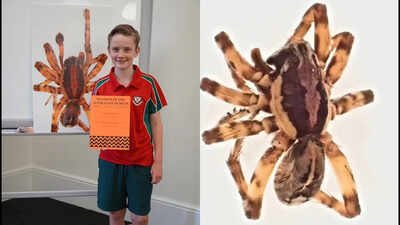
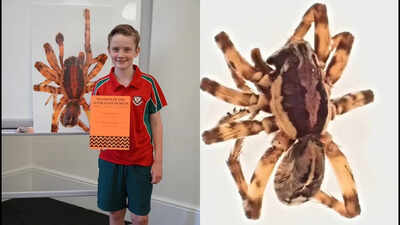
For most kids, finding a spider would be a scream, and then a quick retreat. But for Murphy Widdowson, it was a scientific discovery. What began as a routine encounter with a tiny spider on a remote Australian island eventually led experts to identify a previously unknown species, and give it a name that would forever be linked to the curious schoolboy who found it. According to a Daily Mail report from 2021, Murphy was 10 years old in 2020 and was staying on Deal Island off the northeast coast of Tasmania while his parents worked there. While on the remote island Murphy picked up a small spider that intrigued him, and he decided not to wonder what sort of spider he’d found, but to seek the opinion of an expert. Seeking help identifying his strange find, he contacted the Queen Victoria Museum and Art Gallery in Launceston. And Museum arachnologist John Douglas was unable to identify the specimen with certainty, suggesting Murphy’s find may be more than meets the eye. Scroll down to know what happened next.
Mystery spider investigated by experts
According to Daily Mail, The specimen was then sent for further examination to spider taxonomist Dr Volker Framenau in Western Australia. The researchers, after examining the spider, determined it was a new species of wolf spider, unknown to science before. The find was significant because the spider looked very much like other members of its genus, making it hard to identify with the naked eye. Douglas said that the key differences could only be seen under a microscope. The researchers were able to establish that it was a separate species, in particular because of the spider’s unusual sexual organs. The newly discovered spider was named Artoriopsis murphyi, in honor of Murphy and his curiosity that led the specimen to scientists in the first place.
A tiny spider with a huge story
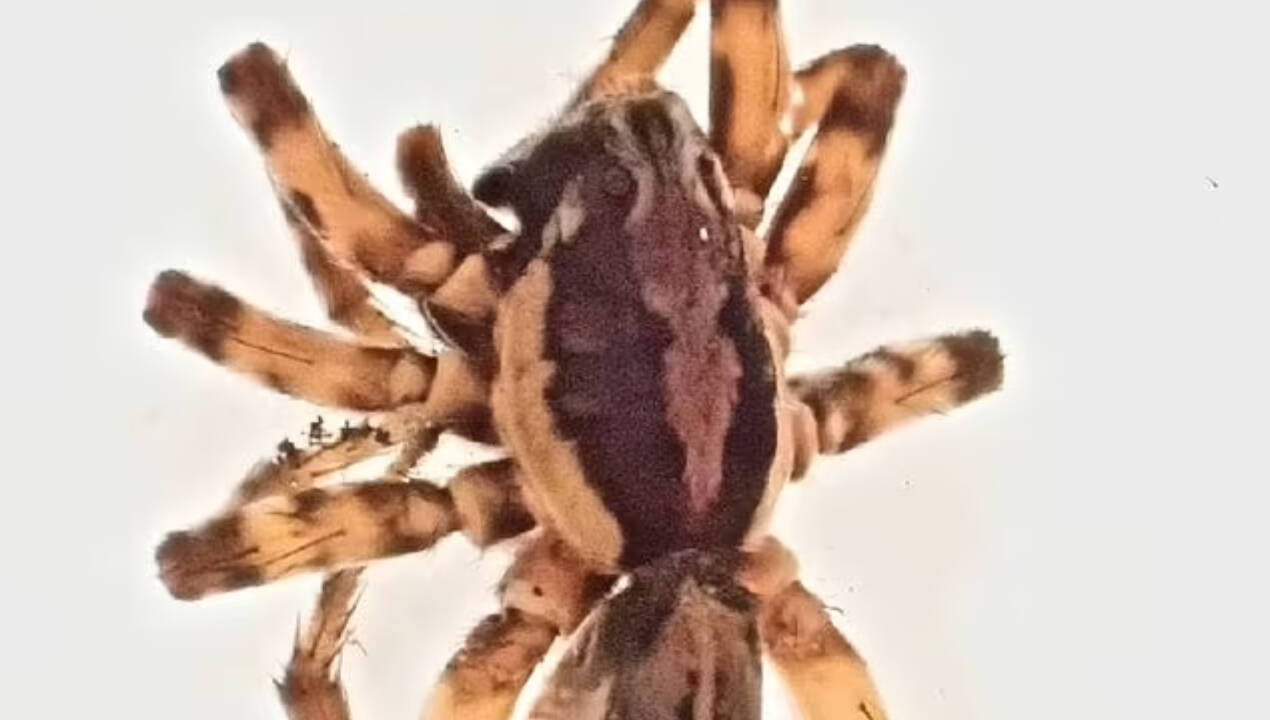
The find was significant because the spider looked very much like other members of its genus, making it hard to identify with the naked eye.
The find is also a reminder of how much of Australia’s diverse ecosystem remains to be documented. Douglas said although new species are discovered regularly, relatively few Australian arachnologists have the time or resources to formally describe spiders. That makes Murphy’s discovery even more remarkable. A child on a remote island saw something strange, asked questions, reached out to experts—and contributed to the scientific record. His story demonstrates that scientific discoveries don’t always begin in fancy labs. Sometimes it begins with curiosity, with the readiness to ask, “What is this?”
A celebration worthy of a new species
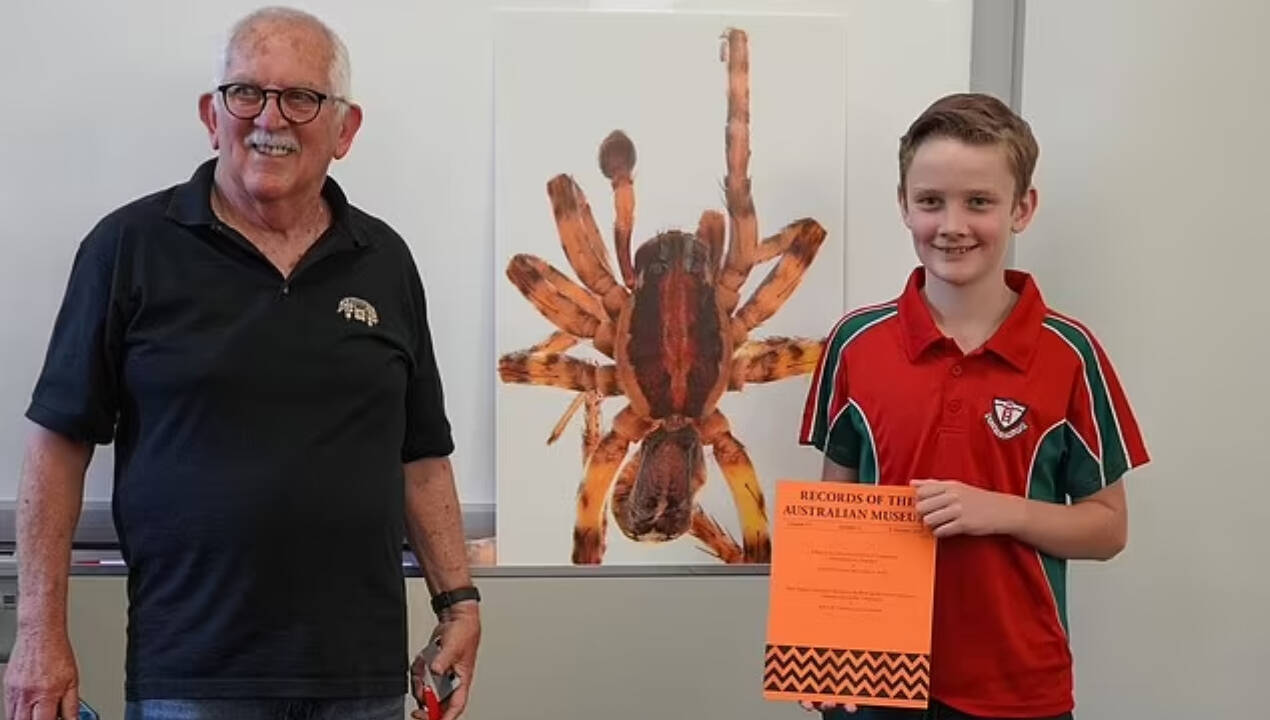
Murphy’s achievement was later celebrated with a special presentation attended by his family and teacher, museum staff and volunteers.
Murphy’s achievement was later celebrated with a special presentation attended by his family and teacher, museum staff and volunteers. The celebration even had a cake decorated with the spider’s new scientific name, Artoriopsis murphyi. For Murphy, the discovery turned a small spider he encountered as a child into a lasting scientific legacy. His name will now go alongside the species that he drew to the attention of researchers.
Should arachnophobes be afraid?
Fortunately for anyone wary of spiders, Artoriopsis murphyi is not believed to be dangerous to humans. The spider is only about five millimeters in size and Douglas said that even if it did bite a person it would be unlikely to cause any noticeable sensation if it managed to pierce the skin. So Murphy’s discovery may sound like an arachnophobe’s nightmare, but the tiny wolf spider is much more significant scientifically than it is dangerous. Ultimately Artoriopsis murphyi is a story about curiosity, exploration and the surprises that can occur when a young person takes the time to look closely at the world around them.Images Courtesy: Daily Mail