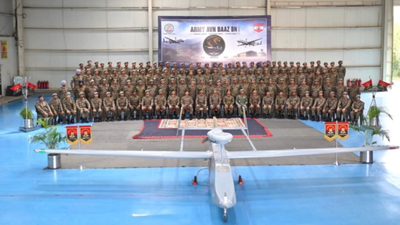
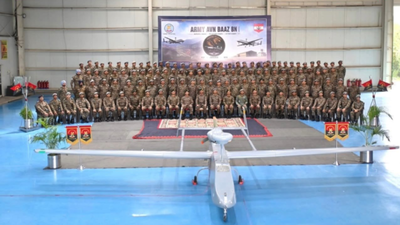
The Army has raised its first dedicated drone battalion along the western front with Pakistan, marking a significant step in the force’s ongoing post-Operation Sindoor transformation. The newly formed unit, christened the Baaz Battalion, will function under the Jalandhar-based 11 Corps, also known as the Vajra Corps, which oversees some of the most sensitive stretches of the India-Pakistan border in northern Punjab.The name Baaz, meaning hawk in Hindi, was chosen deliberately, reflecting the bird of prey’s sharp vision, long-range tracking ability and precision in identifying targets. The unmanned aerial systems unit, raised in Jalandhar, will keep an eye on the vast stretches of the border in the northern portion of the Punjab frontier, which saw major fighting in both full-blown wars against Pakistan in 1965 and 1971.The Army is moving to induct and integrate a greater number of drones throughout the force at different levels to perform both combat and combat-support roles. The Army has started inducting Ashni platoons in infantry battalions. These sub-units will perform roles such as reconnaissance and offensive operations, utilising quadcopter-style drones.At the same time, the artillery is slated to start inducting Divyastra batteries in existing artillery regiments and will also start raising Shaktiban regiments. The artillery regiments will be equipped with longer-range drones that will be able to detect targets deep inside hostile territory. These units will also get loitering munitions of different varieties and ranges that can create havoc deep behind enemy lines.The Armoured Corps, too, is experimenting with Shaurya squadrons, which will improve the ability of armoured units to reconnoitre an area more effectively with aerial assets and thereby execute both defensive and offensive operations more effectively.Unlike the small drone platoons already embedded within infantry units, the Baaz Battalion is designed to operate on a considerably larger scale and will employ larger drones such as the Searcher drone. These Baaz battalions will function as a centralised nerve centre for the Army’s growing and increasingly complex drone ecosystem, managing everything from flight operations and data exploitation to maintenance, software updates and coordination with troops on the ground.The battalion will be equipped to fly a wide spectrum of other platforms as well, ranging from long-endurance UAVs such as the American MQ-9B and the Israeli Heron and Hermes.Together, these platforms will give frontline commanders persistent surveillance, deep-penetration reconnaissance and real-time situational awareness over both border areas and territory much deeper inside enemy lines. This will help them draw a clear picture of the adversary’s order of battle and its displacement in time and space, especially in dynamic and evolving battle situations.The Baaz Battalion is expected to work in tandem with existing capabilities by binding them into a single, standardised command structure. The Army also aims to sustain a higher operational tempo while ensuring that the flood of data generated by an increasingly mixed drone fleet is processed swiftly enough to be tactically useful, a capability that has become central to how militaries fight modern conflicts.A lot of this processing will be carried out by AI-based battlefield decision-support systems, which will help prioritise information to support and shape operations.The Army’s rationale for the move stems directly from lessons drawn from recent operational experience, both the prolonged border standoff with China along the Line of Actual Control and the tactical outcomes of Operation Sindoor against Pakistan in May last year, where drones and surveillance systems played an outsized role in forming a clearer picture and thus helped shape battlefield decisions.Officials say no final figure has yet been decided on how many such battalions will eventually be raised, though the model is expected to be replicated at other field formations over time.Jalandhar also hosts an Army Aviation Squadron that currently operates the Cheetah and Chetak helicopters. This helicopter squadron, besides its operational role, has been taking part in Humanitarian Assistance and Disaster Relief operations across Punjab.