
A new Penn State study suggests that honey bees may be better able to withstand pesticide exposure when their diet contains more polyunsaturated fatty acids, a type of fat commonly associated with healthy cell function, brain support and heart health in humans. In the experiment, bees fed a polyunsaturated-fat-rich diet had a 90% survival rate after pesticide exposure, compared with less than 50% for bees fed diets high in saturated or monounsaturated fats.The findings add a fresh layer to what scientists already know about bee nutrition. It is not only how much bees eat that matters, but also the quality of the fats in their food. That could have implications for managed honey bee colonies, pollinator-friendly habitats and the way farmers think about supporting bees in agricultural landscapes.
What the researchers studied
The work, published in the Journal of Insect Physiology, looked at how different dietary fats affect bee survival after exposure to chlorpyrifos, a pesticide widely used in agriculture. The researchers compared three fat types: saturated, monounsaturated and polyunsaturated fatty acids.Each group of bees was fed a protein-based diet enriched with one of those fat types for five days. The bees were also given sucrose-only or protein-only diets without added fats alongside the enriched diets so they could absorb the nutrients before the pesticide challenge. After that, the cages were split into control and pesticide-exposed groups, and the scientists tracked food intake, survival and physiological changes for another five days.That design helped the team isolate the role of dietary fat quality before and after exposure. It also gave them a close look at how the bees’ bodies responded under stress.
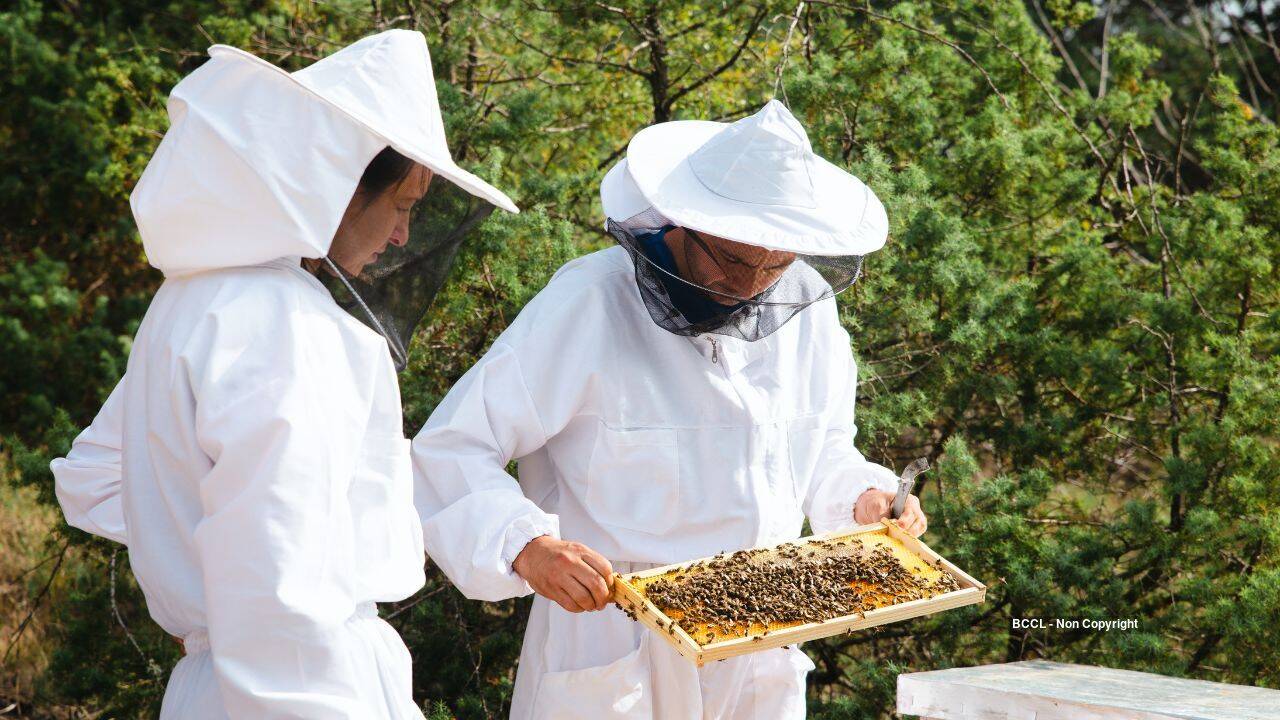
Representative image
A clear survival difference
The survival gap was striking. Bees fed polyunsaturated fats did much better than the others, with 90% surviving pesticide exposure. By contrast, fewer than half of the bees fed saturated-fat or monounsaturated-fat diets survived, as per the study.The bees also preferred the unsaturated-fat diets, eating more of the monounsaturated and polyunsaturated versions than the saturated one. That suggests the healthier fats may not just be more protective; they may also be more appealing to bees.For the researchers, this matters because nutrition could become one more tool to help bees cope with unavoidable stress in modern farming systems. It will not replace pesticide reduction, but it may help strengthen bees’ resilience.
Why polyunsaturated fat helped
The study found that bees on the polyunsaturated-fat diet maintained higher lipid reserves in their abdomens after pesticide exposure. They also showed higher acetylcholinesterase activity, an important enzyme in the nervous system. Together, those results suggest the diet helped support both energy balance and nerve function under pesticide stress.Interestingly, the pesticide did not appear to work mainly through the detoxification pathway the researchers checked. Glutathione-S-transferase activity did not differ significantly among the diets, which means the protection from polyunsaturated fats was probably not driven by that enzyme system.That makes the study especially interesting. Instead of simply helping bees “detox” better, the diet may be helping them stay metabolically stronger in the first place.
Why this matters for bee health
Honey bees face multiple stressors at once in the real world. Pesticides are only part of the problem. Poor nutrition, parasites, pathogens and temperature swings can all add to the pressure on colonies.That is why the Penn State team says nutritional support should be seen as an additional protective layer, not a substitute for safer pesticide use. According to Penn State University (PSU), lead author Jaya Sravanthi Mokkapati said the findings could help inform supplementary bee diets and pollinator habitats planted with flowers that offer more beneficial fatty-acid profiles.In practical terms, that could mean designing landscapes with pollen sources that are naturally richer in polyunsaturated fats. It could also mean rethinking feed formulations for managed hives to better support bees during periods of stress.
Important limits to keep in mind
The researchers are careful not to overstate the results. Their chlorpyrifos dose was much higher than the residue levels usually reported in bee foraging areas, so this was a laboratory challenge rather than a perfect reflection of real-world exposure.That matters because bees in agricultural landscapes are more likely to encounter low levels of multiple pesticides rather than one strong dose of a single chemical. They also face a mix of environmental stressors at the same time.Future studies will need to test whether the same dietary benefits hold under more realistic conditions, including pesticide mixtures, lower exposure levels and multiple stress factors acting together.
A small nutritional change with big potential
The bigger lesson from the study is that bee survival may depend on more than avoiding harmful chemicals. What bees eat can shape how well they handle those chemicals when exposure does happen.That does not mean the solution is as simple as feeding bees a different fat. But it does suggest that healthier nutrition could become part of the larger strategy to protect pollinators. In a world where bees are constantly balancing food, disease and chemical exposure, even a small dietary edge may make a meaningful difference.