
Walking along any beach at sunset, one can sometimes see children and couples writing their names in the wet sand with a stick or a finger. Within minutes, the rising waves cover the letters and smooth the shoreline back into a blank surface. This small act is a universal human ritual, a simple but powerful attempt to leave a mark against the enormous scale of the ocean.This emotional image lies at the centre of a famous philosophical quote: “We write our names in the sand: and then the waves roll in and wash them away.”The line expresses a deep truth about human ambition, the weakness of our legacy, and the unstoppable movement of time. It reminds us that no matter how great our achievements or how strongly we try to leave our mark on the world, we are all affected by the slow erosion of history.
The dream of Neil Gaiman and the Roman myth
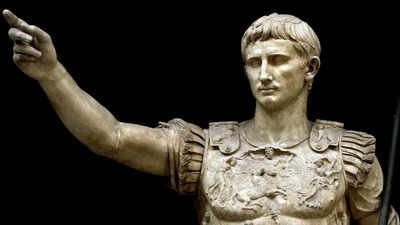
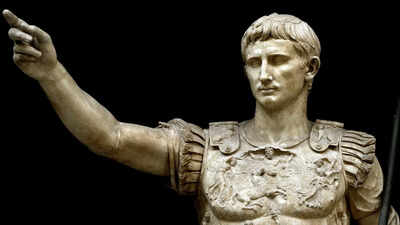
Across many websites, social media pages, and quote collections, this powerful reflection is often wrongly credited to the first Roman Emperor, Augustus Caesar. However, there is no historical evidence that Augustus, who ruled from 27 BC until his death in AD 14, ever said or wrote these words.The real origin of the quote is not ancient history but modern literature. It was written by British author Neil Gaiman for his famous comic book series The Sandman. The line appears in Issue 30, titled “August”, which was published in 1991 and later included in the collection Fables & Reflections.In this story, Gaiman creates a fictional and philosophical version of Augustus. The emperor, hiding his identity as a simple beggar, spends a day sitting in the dirt with his companion, a dwarf named Lycius, thinking about the weight of power and the certainty of decline.When dwarf Lycius mentions that Augustus had the month of Sextilis renamed “August” after himself, the fictional emperor replies: “That will not last. In another decade this month will probably be called Tiberius… We write our names in the sand; and then the waves roll in and wash them away. But we can leave things behind us. I am leaving an empire.”Gaiman’s decision to place these words in Augustus’s mouth is deeply meaningful. The real Augustus was a master of creating his own image. The historian Suetonius recorded that Augustus claimed he found Rome a city of bricks and left it a city of marble. Yet, by giving this thoughtful and uncertain statement to the founder of Pax Romana, Gaiman shows the hidden fear even powerful people experience: The fear that all human achievements may eventually disappear.
The philosophy of impermanence
The message behind the quote connects with the ancient idea of memento mori, a Latin phrase reminding people that death is unavoidable, as well as the Eastern idea of impermanence. In both arguments, time is the only constant.Throughout history, humans have struggled with the contradiction of existence. We have minds that can imagine eternity, but we live in bodies that last only a short time. To deal with this reality, people build monuments, write books, and create institutions, hoping their names and achievements will survive beyond their own lives, hoping their dreams will last forever…This idea appears in Percy Bysshe Shelley’s famous 1818 poem, Ozymandias. In the poem, a traveller discovers the remains of a huge statue belonging to an ancient king in the desert. The statue carries the words: “My name is Ozymandias, King of Kings; Look on my Works, ye Mighty, and despair!” Yet around this proud and egoistic message, nothing remains except “boundless and bare, the lone and level sands stretch far away.”The sand in both Shelley’s poem and Gaiman’s dialogue represents the same force: Time. Like waves washing over a beach, years slowly break down even the greatest achievements. Whether someone is an emperor ruling millions or an ordinary person living a quiet life, time eventually changes everything.
Why do we try so hard to write our name on the sand?
In today’s digital world, the pressure to write our names in the sand has become stronger than ever. Social media platforms encourage people to create personal brands, record every moment, and preserve their lives in an attempt to achieve digital immortality. We treat online profiles like permanent monuments, forgetting that digital platforms, servers, and entire online systems can disappear just like ancient buildings and forgotten kingdoms. All this can happen with just one click of a button.Understanding the idea of the washed-away name can actually be freeing rather than depressing. When we accept that our legacy will eventually change or disappear, we release ourselves from the exhausting pressure of creating a permanent monument to our own existence.In business and leadership, this idea changes the focus from personal fame to responsible leadership. Instead of trying to attach their names to buildings or companies forever, strong leaders focus on improving their organisations and helping the people around them. They understand that their time in power is temporary and that their responsibility is to leave things better for those who come after them.On a personal level, accepting impermanence can reduce the fear of failure. If the waves will eventually wash away every mark in the sand, then our mistakes do not have to define us forever. We can approach our careers, creativity, and relationships with more curiosity and less fear of creating a perfect image.Real value is not measured by how long our names remain written on the shore, but by how meaningfully we spend the time we have while walking along it. By focusing on the present instead of worrying about how future generations will judge us, we can live more honestly.The beauty of writing a name in the sand comes from knowing it will not last forever. It is a quiet reminder that we existed, we experienced the moment, and we were willing to let the tide return. Another great reminder is that humans will have long ceased to exist before Mother Nature does.