
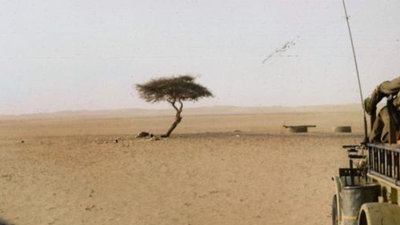
Deep in Niger’s Ténéré Desert once stood what was widely regarded as the world’s loneliest tree, an umbrella thorn acacia that survived for around 300 years despite having no other tree within roughly 400 kilometres. Hidden beneath the scorching Sahara, its roots stretched more than 30 metres underground to reach precious groundwater, allowing it to endure one of Earth’s harshest environments. For generations, it guided Tuareg caravans, explorers and motorists across an otherwise featureless sea of sand, becoming one of the few individual trees ever marked on maps. After surviving centuries of drought and isolation, the remarkable tree met an unexpected end in 1973 when it was struck by a truck. Today, a metal monument stands where the legendary tree once grew.
How the world’s loneliest tree survived alone in the Sahara for 300 years
The Tree of Ténéré stood in the remote Ténéré Desert of northeastern Niger, one of the driest places on Earth. Annual rainfall is minimal, while daytime temperatures frequently exceed 45 degrees Celsius, creating conditions where almost no vegetation can survive.The tree was an umbrella thorn acacia (Vachellia tortilis), believed to have been around 300 years old. Scientists think it was the last survivor of a much greener Sahara. Thousands of years ago, this region contained rivers, lakes and woodlands before gradual climate change transformed it into the vast desert seen today. As the landscape dried, nearly every other tree disappeared, leaving this solitary acacia standing alone.
Roots over 30 metres deep kept the tree alive
For years, explorers wondered how a lone tree could survive in such an unforgiving landscape.The answer emerged in 1938 when engineers excavated a nearby well. They discovered the tree’s roots extended between 33 and 36 metres beneath the desert floor, reaching hidden groundwater that had remained trapped underground for thousands of years.This extraordinary root system supplied the tree with enough water to survive despite receiving almost no rainfall. It also allowed the acacia to withstand relentless heat, powerful sandstorms and decades of drought that destroyed virtually every other tree in the surrounding region.
The accident that ended its remarkable story
After surviving centuries of relentless drought, scorching temperatures, shifting sand dunes and complete isolation, the Tree of Ténéré seemed almost impossible to defeat. Nature had tested it for around 300 years, yet it continued to stand as the only tree for hundreds of kilometres across the Sahara.Its remarkable journey ended in 1973 in a way that few could have imagined. According to widely reported accounts, a reportedly drunk Libyan truck driver somehow veered off course and crashed into the solitary acacia. The irony was almost unbelievable. In a desert where there was no other tree for roughly 400 kilometres in any direction, the driver somehow managed to collide with the only one.The impact snapped the legendary tree and ended the life of one of the world’s most extraordinary natural landmarks. What centuries of drought, fierce desert winds and extreme heat had failed to destroy was erased in a matter of seconds by a single human mistake.
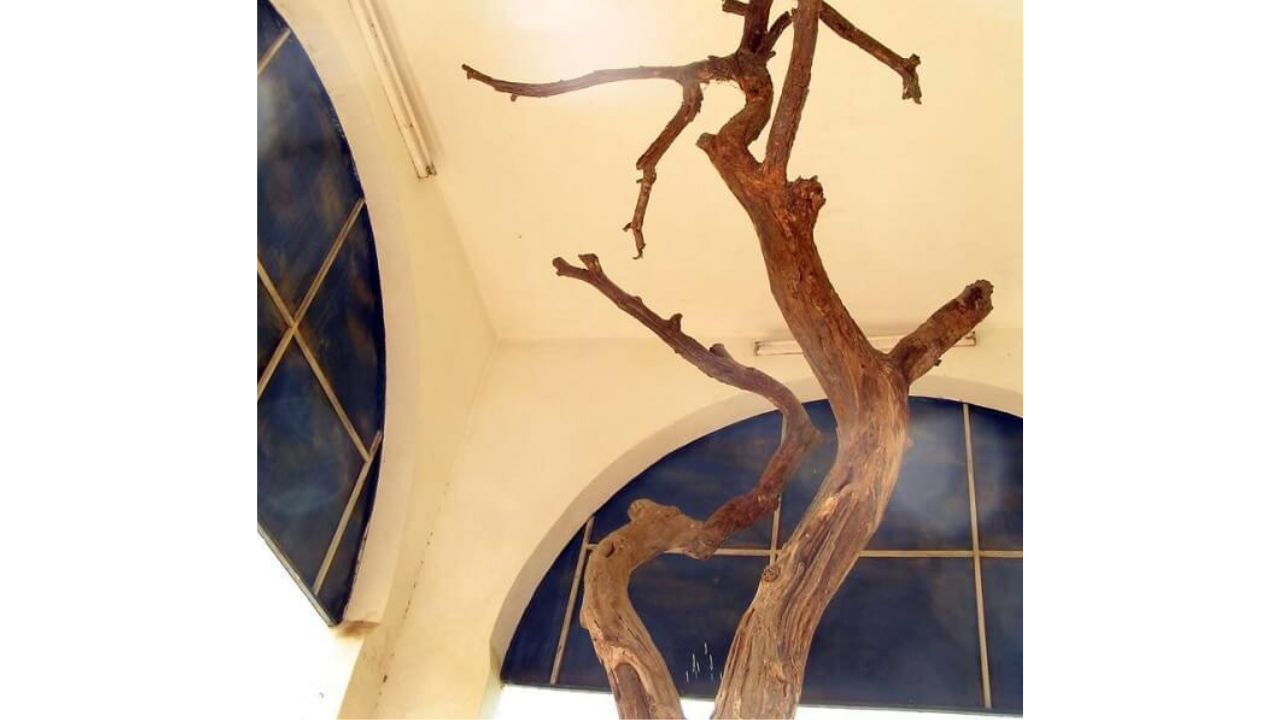
The preserved remains of the Tree of Ténéré at the National Museum of Niger.
Why it became the world’s most isolated tree
The Tree of Ténéré earned international recognition because there was no other tree within approximately 400 kilometres in any direction.Long before GPS or satellite navigation, it became one of the Sahara’s most important landmarks. Tuareg caravans, camel traders, French military expeditions and later motorists all relied on the solitary tree to navigate the vast desert. Its significance was so great that cartographers marked the single acacia on maps covering enormous areas of North Africa, something rarely done for an individual tree.For travellers crossing endless dunes, the sight of the lonely tree often meant they were on the correct route through one of the most featureless landscapes on Earth.
A tree respected by generations of travellers
Despite growing in a place where firewood was scarce, the Tree of Ténéré was rarely damaged by people.Local Tuareg communities respected the tree and deliberately avoided cutting its branches or allowing their camels to feed on its leaves. A well beside the tree also provided an important stopping point for caravans crossing the Sahara, making the location both a navigational aid and a place of rest.Over time, the acacia became more than just a tree. It symbolised hope, endurance and survival in one of the world’s harshest landscapes, and many travellers considered reaching it a reassuring sign that they had successfully navigated one of Earth’s most unforgiving deserts.
What replaced the legendary tree
Following the accident, the remains of the original tree were carefully transported to the National Museum of Niger in the capital, Niamey, where they remain preserved today.At the exact spot where the acacia once stood, a striking metal sculpture was erected in its likeness. Rather than trying to replace the living tree, the monument serves as a permanent reminder of one of the Sahara’s most remarkable natural landmarks. A second artistic replica was later installed in the historic city of Agadez, helping preserve the tree’s legacy for future generations.
Why another tree was never planted
Many people wonder why conservationists did not simply plant another tree in its place.The answer lies beneath the desert floor. The original acacia survived only because its roots slowly reached groundwater more than 30 metres below the surface over many decades. A newly planted sapling would almost certainly die before developing such an extensive root system without constant irrigation and long-term care.In one of the driest environments on the planet, recreating the natural conditions that sustained the original tree would be almost impossible. The monument therefore honours not just the tree itself, but also the extraordinary geological conditions that allowed it to survive for centuries.
The enduring legacy of the Tree of Ténéré
Although the original tree disappeared more than five decades ago, its story continues to fascinate scientists, historians and travellers around the world.The Tree of Ténéré remains one of the greatest examples of resilience in nature. It survived alone for centuries in the heart of the Sahara, drawing life from hidden groundwater while guiding countless people safely across one of Earth’s most unforgiving landscapes. It also stands as a reminder that some of the world’s most extraordinary natural landmarks are often the most fragile.Today, visitors no longer find a living acacia rising above the sand, but its story continues through the monument that marks its former home and the preserved trunk displayed in Niger’s National Museum. More than half a century after its destruction, the Tree of Ténéré remains one of the most remarkable tales of survival, endurance and irony in natural history.