As the Russia-Ukraine war enters its fourth year, the battlefield is undergoing a dramatic transformation. What began in 2022 as a conventional conflict fought with tanks, artillery and infantry is increasingly becoming a war of machines, with robots, drones and remotely operated vehicles now carrying out missions that once required thousands of soldiers.Ukraine, grappling with mounting troop shortages and an extended war of attrition against Russia, has rapidly expanded its use of unmanned systems. From explosive-laden ground robots and drone swarms to robotic supply vehicles and remotely operated machine-gun platforms, technology is increasingly replacing soldiers on some of the war’s most dangerous frontlines.
Robots take over frontline combat
Ukrainian military units are now conducting assaults using fleets of ground robots carrying explosives, controlled by operators sitting miles away from the battlefield. The machines navigate trenches, tree lines and fortified Russian positions before detonating their payloads, CNN reported. According to Ukrainian President Volodymyr Zelensky, unmanned systems carried out more than 22,000 missions in the first months of 2026. He also claimed Ukraine recently captured a Russian position using only robots and drones, without deploying a single soldier on the ground.Commanders say that the shift is being driven by necessity. Ukraine’s population is significantly smaller than Russia’s, while years of fighting have taken a heavy toll on frontline troops. Military units estimate that some operations previously requiring thousands of soldiers can now be carried out by a handful of robotic vehicles directed remotely.Russian troops have reportedly nicknamed the explosive-carrying robots ‘silent death’ because they often hear them only moments before detonation.
A new era of warfare
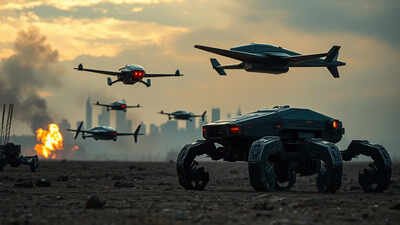
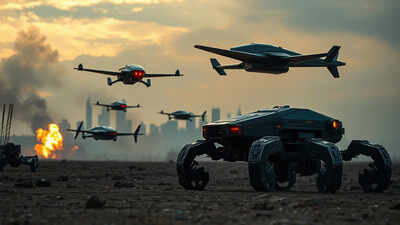
The growing role of automation is reshaping how wars are fought.Alongside attack robots, Ukraine now deploys unmanned vehicles to transport ammunition, food and water to frontline positions, evacuate wounded soldiers and provide reconnaissance. Some robotic systems are fitted with heavy machine guns and can remain hidden for days before engaging targets.Engineers and software specialists have become as important as traditional combat troops. Young programmers and technicians are designing communication systems, navigation software and counter-jamming technology to keep the machines operating despite Russian electronic warfare efforts.The battlefield has also become a contest of technology. Operators frequently face GPS interference, forcing them to navigate robots using recorded drone footage and manually plotted routes.Military analysts say Ukraine’s early investment in drone warfare has helped offset Russia’s numerical advantage and has inflicted significant casualties on Russian forces.
Manpower crisis drives innovation
The technological revolution is largely being driven by Ukraine’s worsening manpower shortage.Many Ukrainian soldiers are spending months at a time on the front lines under constant drone attacks. Some troops have reportedly remained in frontline positions for nearly a year before being rotated out.The strain has forced Kyiv to seek alternatives that reduce risks to personnel while maintaining pressure on Russian forces.Ukrainian commanders argue that robots are saving lives. One assault unit estimated that 164 robot-led missions achieved results that would otherwise have required around 2,300 soldiers and could have resulted in hundreds of casualties.Veterans who fought in brutal battles such as Bakhmut and Avdiivka say the arrival of robotic systems would have saved many comrades had the technology been available earlier in the war.
Machines changing the future of war
The rapid spread of robotic warfare is transforming the conflict into a testing ground for future military technology.What were once experimental systems have become routine equipment within months. Ground robots now carry supplies, deliver explosives, provide firepower and perform surveillance tasks that previously exposed soldiers to extreme danger.While human troops remain essential, military commanders increasingly believe technology will determine success on the battlefield.As drones buzz overhead and robotic vehicles crawl through trenches, the war in Ukraine is offering a glimpse into the future of combat, one in which machines are no longer supporting soldiers, but increasingly replacing them in some of the most dangerous roles on the battlefield.