
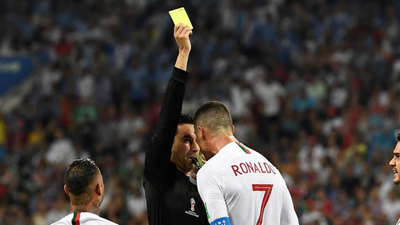
A rule that shapes who plays and who misses the biggest matches is set to change at the FIFA World Cup 2026, and it will apply across all 48 teams in the expanded tournament.The competition, spread across the United States, Canada and Mexico, is bigger than anything the World Cup has staged before. It is no longer a 32-team event that moves quickly from the group stage into a compact knockout bracket, but a 48-team tournament with more matches, more rounds and a longer path to the final.That extended structure is exactly why FIFA is rethinking how yellow cards are carried and cleared as the tournament unfolds.
How the 2026 format actually works, step by step
The tournament begins with 48 teams divided into twelve groups, from Group A through to Group L, each containing four teams. Every team plays three matches in this phase, facing each of the other teams in their group once. From there, qualification into the knockouts happens in two layers. The first part is simple: the teams that finish first and second in each group go through automatically, which accounts for 24 teams. The second part is where this format differs from earlier World Cups. All twelve teams that finish third are placed into a single table and ranked using their results, points first, then goal difference, then goals scored, and the best eight of those twelve also move forward. That gives you 32 teams, which is where the knockout phase begins. This is a straight elimination bracket. The Round of 32 is effectively the first knockout round, where those 32 teams are paired off and half of them are eliminated in one match. The 16 winners move into the Round of 16, which works the same way, cutting the field down to eight teams for the quarter-finals. From there, the tournament narrows to four in the semi-finals, and finally to two teams contesting the final.
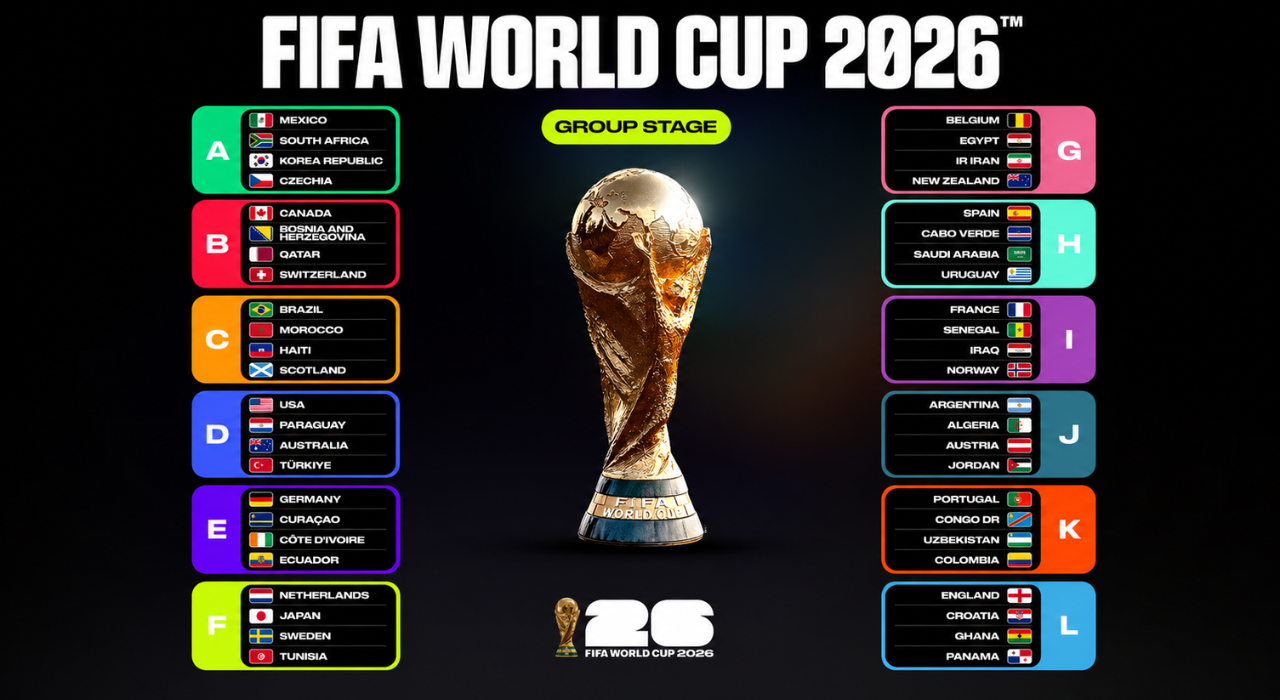
FIFA World Cup 2026 Groups/ FIFA
Because of that added Round of 32, a team that reaches the final now plays eight matches instead of seven, and the entire tournament stretches to 104 games. That extra match before the quarter-finals is the small structural change that has forced FIFA to rethink how yellow cards are handled.
What a yellow card actually does, and what “wiping” means
A yellow card is a formal caution given by the referee for fouls or misconduct. One yellow card on its own does not suspend a player, but it stays on their record during the tournament. If a player collects two yellow cards in separate matches, they are suspended for the next game. The phrase “wiping” or “clearing” yellow cards simply means those earlier cautions are erased from the player’s running total. Once a wipe happens, the player effectively starts again with a clean slate, and any previous yellow cards no longer count towards a suspension. Without that reset, yellow cards would keep stacking up across multiple rounds, making it easier for a player to reach that two-card limit over a long stretch of matches.Must read: Everything that needs to go right for Messi and Ronaldo to meet at the World Cup, one last time
What used to happen in previous World Cups
In earlier editions of the World Cup, before 2010, yellow cards were reset after the group stage rather than later in the knockout rounds. That meant any bookings picked up from the Round of 16 onwards carried through the rest of the tournament, increasing the risk of suspension deep into the knockout phase.Under those rules, a player who received two yellow cards across the Round of 16, quarter-finals and semi-finals would incur a one-match suspension, even if that meant missing the final. There was no late-stage reset to protect players, so a single caution in the semi-final could prove decisive if it followed an earlier booking.That system led to some of the most painful moments in World Cup history. At the 2002 tournament, Michael Ballack had already been booked in the knockout stage, receiving his first yellow card in the Round of 16 against Paraguay. When he picked up another caution in Germany’s semi-final against South Korea for a tactical foul on Lee Chun-soo, it triggered an automatic suspension.
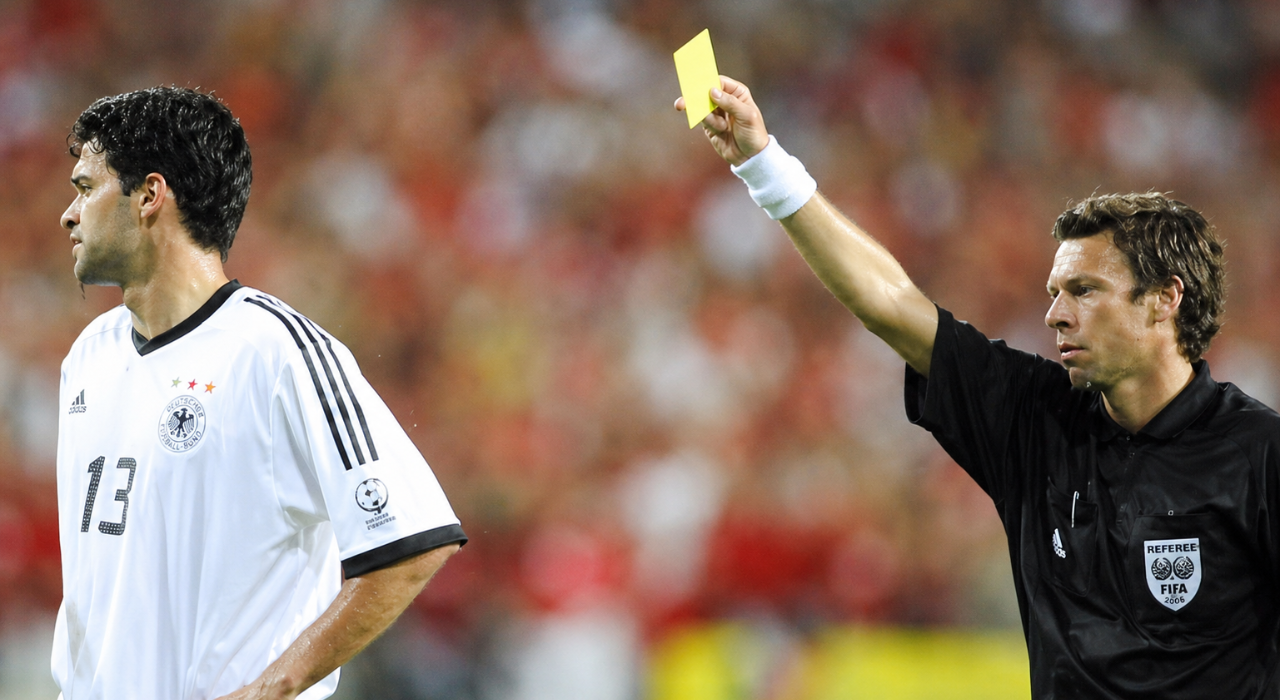
Swiss referee Urs Meier (right) gives Germany`s Michael Ballack (left) a yellow card at their World Cup semi-final match against South Korea in Seoul June 25, 2002. Ballack will miss the World Cup final because of a suspension after picking up two yellow cards. Germany won 1-0 and will play in the World Cup final on June 30.
Germany went on to lose 2–0 to Brazil in the final, and Ballack, arguably their most influential midfielder, could only watch from the sidelines. His absence became one of the defining examples of how the old system could impact the biggest match, and it later contributed to FIFA introducing a rule change from 2010 onwards, when yellow cards began to be cleared after the quarter-finals to prevent similar situations. That is the kind of scenario the system has always risked: a player missing the biggest match because of two cautions spread across different rounds.
Why the old system does not fit the new format
The expansion to 48 teams introduces an extra knockout round, which means more matches before the quarter-finals are even reached. Under the old rules, a player could now collect two yellow cards across five matches, three in the group stage, then the Round of 32 and the Round of 16, and be suspended before the tournament even reaches its final stretch. FIFA’s concern, as reported by The Athletic and BBC Sport, is that too many players would end up carrying bookings deep into the competition and missing key knockout fixtures simply because the accumulation window has become longer.
What changes in 2026, and how it works in practice
To deal with that, as per the reports, FIFA plans to introduce a second reset point. Yellow cards will now be wiped at the end of the group stage, and then again after the quarter-finals. In simple terms, the tournament is split into two separate blocks for disciplinary purposes. The three group-stage matches form one block. If a player is booked twice within those three games, they will be suspended, but once the group stage ends, those yellow cards are cleared completely. The knockout rounds from the Round of 32 through to the quarter-finals form the second block. A player who picks up two yellow cards within that sequence will also be suspended, but again, those bookings are wiped after the quarter-finals. What this does is shorten the window in which yellow cards can accumulate. A booking in the group stage no longer follows a player into the knockouts, and a booking early in the knockout phase does not linger all the way to the semi-finals.
Why FIFA believes this is fairer
The principle has not changed, two yellow cards still lead to a suspension, but the context in which those cards count has been tightened to match the longer format. Instead of a player being punished for cautions spread across half the tournament, the system now looks at shorter, more immediate sequences of matches. It reduces the chances of key players missing decisive knockout games while still maintaining a clear disciplinary line. In a tournament that has grown in size, length and complexity, this is a small rule change, but it is one designed to keep the biggest matches decided by the players on the pitch rather than by the accumulation of cautions from weeks earlier.